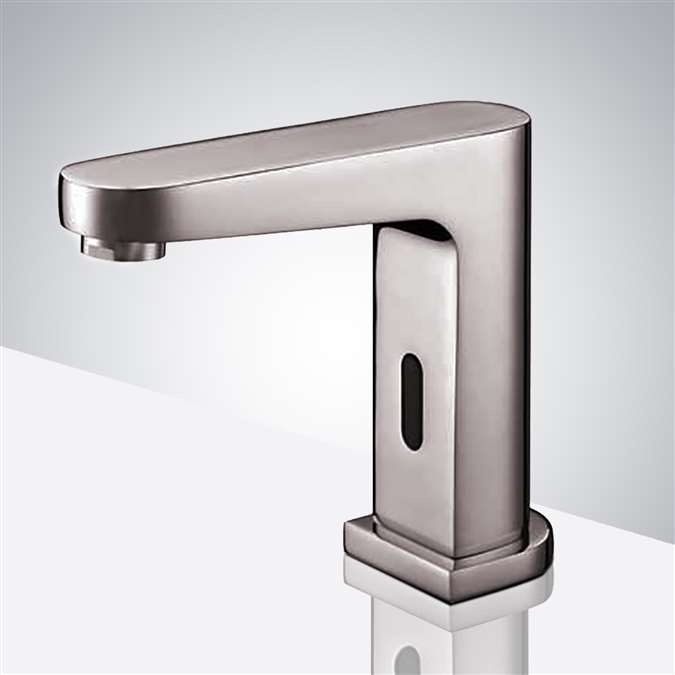
Best Faucet for Hard Water Areas
For most hard water homes and commercial washrooms, the best faucet is a solid brass model with a brushed finish—especially brushed nickel or another low-glare brushed/PVD-style surface—paired with a quality ceramic cartridge, an easy-clean aerator, and a design that gives maintenance teams fast access to the outlet and valve components.
That recommendation sounds simple, but it matters because hard water is a daily stress test. Calcium and magnesium leave scale on the spout, build up inside the aerator, stain polished surfaces faster, shorten the life of weak cartridges, and make cleaning more frequent than most owners expect. The best faucet for hard water is not just the most attractive one. It is the faucet that keeps its finish looking cleaner longer, resists corrosion, survives repeated descaling, and stays serviceable when mineral deposits inevitably appear.
- Best Overall: Brushed Nickel
- Best Construction: Solid Brass
- Best for Maintenance: Easy-Clean Aerator
- Best Commercial Option: Touchless Sensor Faucet
Contents
Best Overall
A solid brass brushed nickel faucet is the safest all-around answer for hard water areas. Brushed nickel visually softens water spotting, does not show every deposit as harshly as mirror-polished chrome, and works in both transitional and modern AEC schemes.
Best for Commercial Restrooms
A serviceable touchless sensor faucet with protected electronics, easy aerator access, and stable temperature management is usually the stronger long-term choice for heavy-use spaces where hygiene, water control, and fast cleaning matter.
Best for Visual Durability
Brushed and matte finishes generally outperform highly reflective finishes in hard water regions because they camouflage spotting and reduce the “always dirty” look that mineral-heavy water often creates on shiny surfaces.
Why hard water changes faucet selection
Hard water is not usually destructive in one dramatic moment. It is destructive in slow, repetitive cycles. Each use leaves a microscopic residue on the spout tip and around joints, and that residue gradually becomes scale. When the faucet dries, the minerals remain. Over time, owners notice white chalky edges at the aerator, cloudy spotting on the body, crust around the base, slower flow, and rough-feeling movement in lower-grade cartridges. In commercial environments, those problems appear even faster because cleaning frequency is higher, water use is heavier, and the faucets are expected to remain visually presentable for public-facing washrooms.
That is why the phrase “best faucet for hard water” should not be reduced to finish alone. The best model must perform in four areas at the same time: finish resilience, internal component quality, cleanability, and maintenance access. A beautiful faucet that looks perfect on day one but becomes spotty, clogged, and difficult to descale by month eight is not the best specification. The correct choice is the faucet that maintains function and appearance while reducing labor. For designers, facility teams, builders, and owners, that makes the decision a life-cycle issue rather than a short-term styling decision.
Hard water also changes how finish color reads in real space. On polished surfaces, water spots catch light and look brighter than the fixture itself. On brushed surfaces, the same residue often blends into the texture, which means the faucet looks cleaner between cleaning cycles. This matters in hospitality suites, luxury homes, multifamily amenity spaces, boutique office restrooms, healthcare wash stations, and school renovations where visual cleanliness affects how the entire room is perceived.
Best faucet type by application
For most residential bathrooms, a single-hole or widespread solid brass faucet with a brushed finish is the strongest starting point. Single-hole models simplify deck cleaning and reduce the number of joints where deposits can gather. Widespread configurations remain a premium option when the design language calls for a more classic or luxury composition, but they introduce more surfaces and connection points that will need attention over time.
For high-use commercial restrooms, a touchless deck-mount or wall-mount sensor faucet often becomes the best hard-water choice because hands-free activation can help reduce unnecessary run time, improve hygiene, and make surrounding surfaces easier to sanitize. The key is not simply choosing “sensor” as a category. It is choosing a sensor faucet with serviceable aerators, accessible control boxes or valves, reliable power strategy, and a finish that still looks good after repeated wipe-downs.
What to look for first
- Solid brass body: preferred for long-term durability, corrosion resistance, and overall construction confidence.
- Ceramic disc cartridge: smoother operation and generally better long-term performance than weaker alternatives.
- Easy-clean aerator: one of the most important details in hard water regions because mineral buildup starts here.
- Brushed, matte, or forgiving finish: helps hide spotting and reduces daily visual maintenance pressure.
- Simple geometry: overly ornate shapes collect deposits in decorative creases and are slower to descale.
- Accessible replacement parts: essential in commercial, multifamily, or builder-grade repeat installations.
A hard water faucet should be judged the way an architect or facility manager judges any durable fixture: by how well it ages, how easy it is to service, and how little disruption it creates over its life cycle.
Best finishes for hard water areas
If the question is purely visual—“Which finish will look cleaner the longest in hard water?”—the answer usually favors brushed nickel, followed by other brushed metallic finishes and some matte surfaces. The reason is simple: texture breaks reflection. Instead of turning every droplet into a bright highlight, a brushed finish diffuses light and softens the contrast between the surface and the mineral deposit.
| Finish | Hard Water Performance | Visual Maintenance | Best Use Case |
|---|---|---|---|
| Brushed Nickel | Excellent overall balance for hiding spotting and keeping a premium appearance. | Lower visible spotting than mirror-polished surfaces. | Best all-around residential and commercial recommendation. |
| Oil-Rubbed Bronze | Very good at concealing residue visually; warm tone softens mineral marks. | Often forgiving between cleaning cycles. | Traditional, transitional, hospitality, and warm-toned interiors. |
| Matte Black | Can perform well visually, but pale mineral spotting may still contrast in some lighting. | Better than polished chrome in many cases, but depends on water chemistry. | Contemporary and commercial architectural washrooms. |
| Chrome / Polished | Functional, but least forgiving visually because spotting reflects strongly. | Requires more frequent wipe-downs to look pristine. | Projects prioritizing bright reflective finish and lower initial cost. |
| Antique Brass / Aged Finishes | Good visual resilience in many traditional settings. | Generally forgiving when scale is minor and routine maintenance is consistent. | Luxury classic, boutique hospitality, and heritage-inspired bathrooms. |
Chrome still has value because it is classic, widely available, and easy to coordinate. But in hard water areas, owners are often frustrated not because chrome fails structurally, but because it shows everything. It can look spotted almost immediately after use. By contrast, brushed nickel and oil-rubbed bronze usually buy more time between wipe-downs. That makes them stronger recommendations for clients who want a premium look without constant polishing.
AEC specification priorities for hard water faucet selection
Architects, designers, contractors, and facility teams should treat hard water faucet selection as a coordinated performance package rather than a single product decision. The finish, internal valve quality, installation method, and access for descaling all influence long-term project success.
Body Material
Specify solid brass where durability and corrosion resistance are priorities.
Finish Strategy
Use brushed or low-glare finishes where spotting control matters.
Serviceability
Choose easy-access aerators, cartridges, and replacement parts.
Water Control
Coordinate flow, mixing, and maintenance to reduce scale stress.
- Prefer faucet shapes that avoid deep crevices and decorative cavities where residue collects.
- Coordinate hard water conditions with filtration or softening strategy whenever the project allows.
- For public restrooms, use finishes that preserve a clean architectural look between janitorial cycles.
- Where labor cost matters, choose faucet families with predictable replacement parts and clear maintenance pathways.
- In premium interiors, do not sacrifice serviceability for sculptural form; both must coexist.
Residential recommendation
In most homes, the strongest answer is a brushed nickel bathroom faucet with solid brass construction. It fits a wide range of styles, softens the appearance of deposits, and usually feels timeless enough for remodel longevity. If the owner wants a warmer, more classic look, oil-rubbed bronze and antique brass can also work very well in hard water regions, especially when the cleaning routine is gentle and consistent.
Single-hole faucets are especially practical in small vanity settings because they leave fewer edges to clean. Widespread faucets remain attractive for larger luxury vanities, but should be selected with realistic expectations about extra surfaces and fittings.
Commercial recommendation
In office buildings, hospitality, healthcare, education, and public spaces, touchless commercial sensor faucets deserve serious consideration. Hard water tends to expose weaknesses quickly in high-traffic installations, so specifying a commercial-grade platform with accessible components is critical. The right sensor faucet can support hygiene goals, reduce unnecessary water run time, and create a more premium experience while staying practical for janitorial teams.
Maintenance and life-cycle strategy
Even the best faucet for hard water areas still needs a maintenance plan. That does not mean the product is weak; it means the water chemistry is aggressive. The smartest specification is the one that performs well and is realistic about maintenance. In hard water zones, the outlet should be checked regularly, aerators should be cleaned before flow visibly drops, and cleaning teams should avoid harsh abrasives that can damage the finish while trying to remove scale.
A common mistake is choosing a visually delicate finish and then fighting hard water with aggressive chemistry. That shortens the life of the appearance even if the faucet body itself remains sound. Instead, a durable finish plus moderate, repeated maintenance almost always beats a high-shine finish plus infrequent harsh cleaning. This is especially true for multifamily turnovers, hotel room resets, healthcare environments, and family bathrooms with heavy daily usage.
Recommended routine
- Wipe dry when possible to reduce visible spotting.
- Descale aerators before flow performance drops sharply.
- Use non-abrasive soft cloths for finish preservation.
- Coordinate faucet selection with water treatment when feasible.
- Standardize replacement parts in multi-unit projects.
What owners appreciate most
- A faucet that still looks clean between maintenance visits.
- Aerators and cartridges that are not difficult to access.
- Finish consistency across related fixtures and categories.
- Lower visual stress in daily use, especially around the spout tip.
- Reliable flow and temperature behavior over time.
Mistake #1
Choosing polished appearance over operational reality. A finish can look spectacular in a showroom and still be the wrong answer in a mineral-heavy environment.
Mistake #2
Ignoring aerator maintenance. Many hard water complaints start at the outlet. If the aerator is hard to service, the faucet becomes frustrating long before the body wears out.
Mistake #3
Buying for trend alone. The best hard water faucet should satisfy design intent, but it must also survive real water conditions and repeated cleaning.
Best hard water picks at a glance
Best overall: solid brass brushed nickel faucet.
Best visual concealment: brushed nickel or oil-rubbed bronze.
Best for modern commercial restrooms: touchless sensor faucet with serviceable design.
Best for traditional luxury interiors: antique brass or warm-toned aged finish with simple, cleanable geometry.
So what is the single best answer?
If only one answer can be given, it is this: the best faucet for hard water areas is a brushed nickel solid brass faucet with a ceramic cartridge and easy-clean aerator. That combination offers the strongest blend of appearance retention, serviceability, finish forgiveness, and long-term usability.
For commercial specifications, the answer evolves slightly: a brushed or matte commercial sensor faucet with accessible maintenance points often becomes the best choice because it adds hygiene and operational consistency to the hard water conversation.
Either way, the best faucet is not the one that only photographs well. It is the one that still looks and works like a premium fixture after months of mineral-heavy use.
Hard-Water Faucet Selection
Choosing Faucets for Hard-Water Areas
Hard water can leave mineral deposits on aerators, cartridges, sensors and decorative finishes. A durable, serviceable faucet with accessible filters and replaceable components can reduce maintenance difficulty, although no finish or faucet eliminates mineral accumulation completely. Install isolation valves, flush supply lines, protect electronic controls and confirm that aerators and cartridges remain accessible. A treatment or filtration strategy may also be appropriate where mineral levels are severe.