Chrome vs Brushed Nickel Bathroom Fixtures: Problems, Differences, and Choosing the Right Finish
Chrome and brushed nickel are two of the most popular bathroom fixture finishes, yet they behave very differently in daily use. Do not choose based on appearance alone!—many low-cost options sacrifice material quality, durability, and long-term performance.

Compare reflective shine versus softer matte warmth.
Understand which finish shows spots, smudges, and scratches more easily.
See how finishes perform with moisture, cleaning, and daily use.
Match the finish to your budget, design style, and usage level.
Comparison Methodology and Buying Guidance
The best finish choice depends on more than appearance alone. Chrome and brushed nickel should be evaluated based on how they look under real lighting, how often they need cleaning, how visible water spots and fingerprints become, how easily they coordinate with surrounding hardware, and how well they hold up in bathrooms with regular moisture exposure.
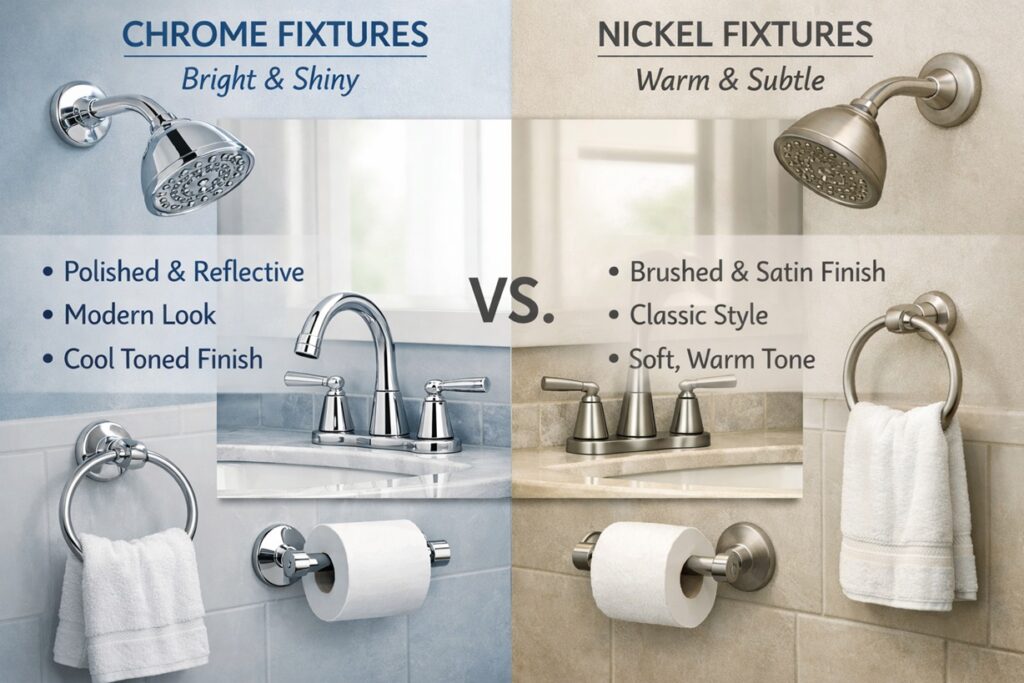
Chrome vs Brushed Nickel in Hard-Water Bathrooms
Water quality can change how chrome and brushed nickel fixtures look between cleanings. In bathrooms with mineral-rich hard water, evaporating droplets may leave visible deposits on either finish. Because polished chrome has a highly reflective surface, spotting and dried mineral residue can create stronger visual contrast. Brushed nickel does not prevent mineral buildup, but its directional satin texture may make light spotting less noticeable from normal viewing distances.
For homes where hard-water spotting is a recurring concern, finish selection should therefore be considered together with cleaning frequency and water quality. Neither finish eliminates calcium or mineral deposits, and both benefit from regular wiping with a soft cloth and finish-compatible cleaning methods. The practical difference is primarily how visible the deposits appear, not whether deposits can form.

Evaluate how the finish behaves with fingerprints, hard water, and frequent bathroom use.
Think about whether the room benefits more from bright reflectivity or softer, muted warmth.
Consider cleaning effort, finish consistency, and cost before deciding.
20 Chrome vs Brushed Nickel Fixture Issues with Solutions
Chrome fixtures show fingerprints too easily
Brushed nickel fixtures are harder to match across brands

Chrome shows water spots more clearly
Brushed nickel costs more than chrome

Chrome looks too cold for some bathrooms
Brushed nickel looks too muted in high-contrast spaces
Chrome scratches feel more visible

Brushed nickel requires careful cleaning
Chrome fixtures need frequent polishing
Brushed nickel can stain or tarnish over time
Chrome does not blend with warm materials

Brushed nickel does not brighten small bathrooms
Brushed nickel finish wears unevenly in high-use zones

Chrome can feel too commercial for some homes
Brushed nickel looks inconsistent under different lighting
Chrome can feel too shiny for spa-like bathrooms
Cleaning staff use wrong products on brushed nickel
Chrome makes soap film more obvious
Buyers struggle to choose between look and maintenance
The wrong finish reduces long-term satisfaction
FAQ: Chrome vs Brushed Nickel Bathroom Fixture Questions
Brushed nickel hides fingerprints and water spots better than chrome.
Chrome’s reflective surface supports clean, minimalist design.
Complex finish process and premium positioning.
Chrome is durable, but scratches are more visible due to reflectivity.
Brushed nickel is the winner for hiding spots and fingerprints.
Final Buying Insight
Chrome and brushed nickel both remain strong fixture choices, but they solve different design and maintenance priorities. Chrome offers brightness, clarity, and a more polished modern edge, while brushed nickel offers softness, warmth, and a finish that tends to look cleaner between wipe-downs.
Brushed Nickel vs Chrome Finish: Engineering and Design Considerations
Choosing between brushed nickel and chrome finishes often involves evaluating both aesthetic preferences and practical performance. Chrome finishes are known for their highly reflective mirror-like surface, while brushed nickel offers a softer matte appearance that helps conceal water spots, fingerprints, and minor surface scratches.
Detailed Comparison Table: Chrome vs Brushed Nickel
| Feature | Chrome Bathroom Fixtures | Brushed Nickel Bathroom Fixtures |
|---|---|---|
| Visual Appeal | Highly reflective, mirror-like, cool modern tone | Muted, matte finish with warm undertone |
| Scratch & Spot Resistance | Scratches and water spots are noticeable | Excellent at hiding fingerprints and water spots |
| Maintenance | Needs regular non-abrasive cleaning | Low maintenance; mild solutions work |
| Durability | Very durable but may show wear | Durable, corrosion resistant, texture conceals imperfections |
| Cost | More budget-friendly | Typically 10–15% more expensive |
| Design Compatibility | Ultra-modern, industrial, contemporary | Traditional, transitional, warm palettes, wood textures |
Polished Nickel vs Chrome
Polished nickel is more expensive than chrome due to the manufacturing process, while chrome is generally considered more durable. Polished nickel has a warm yellowish tone and develops a natural patina over time, giving it an aged antique look.
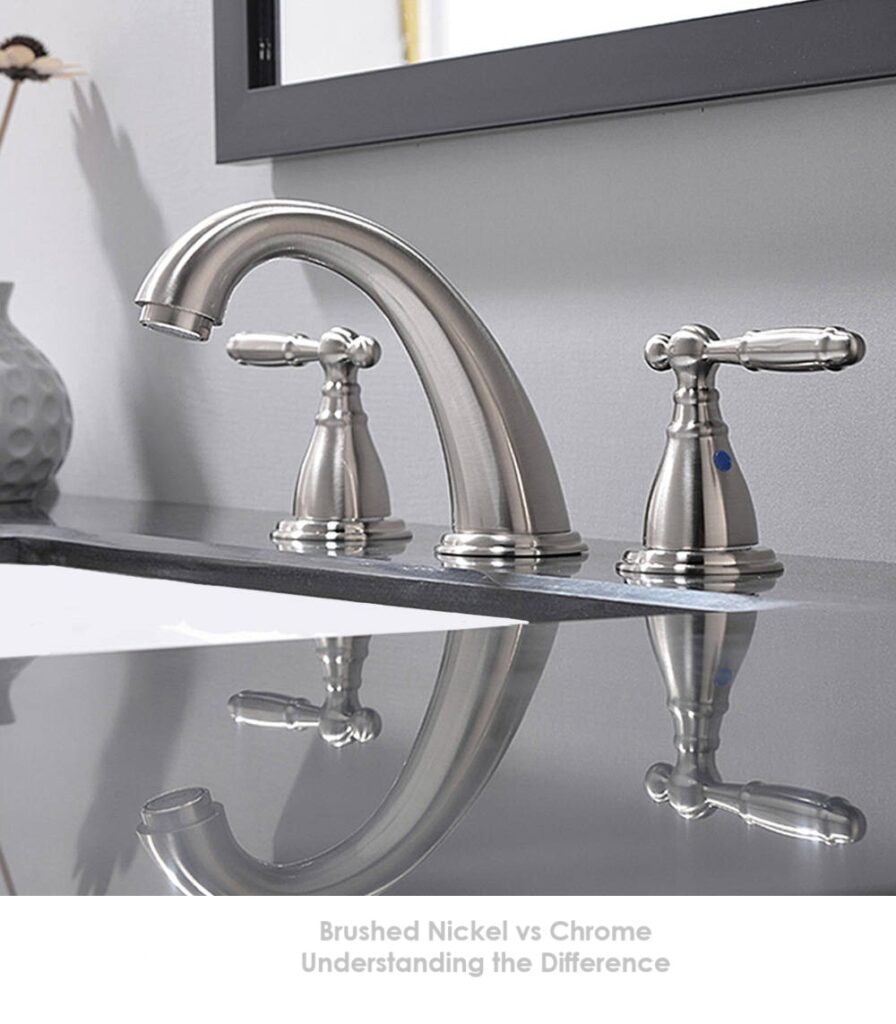
How to Fix Scratches on Brushed Nickel Faucet
- Clean the Area – Mix mild soap and water. Use a soft cloth to remove dirt.
- Assess the Scratch – Light scratches need polishing; deep scratches need sanding.
- Polish Light Scratches – Apply nickel polish in circular motions.
- Sand Deeper Scratches – Use 600-grit sandpaper wet, rubbing in the direction of the grain.
- Final Polish & Clear Coat – Restore shine and optionally apply a clear coat spray.
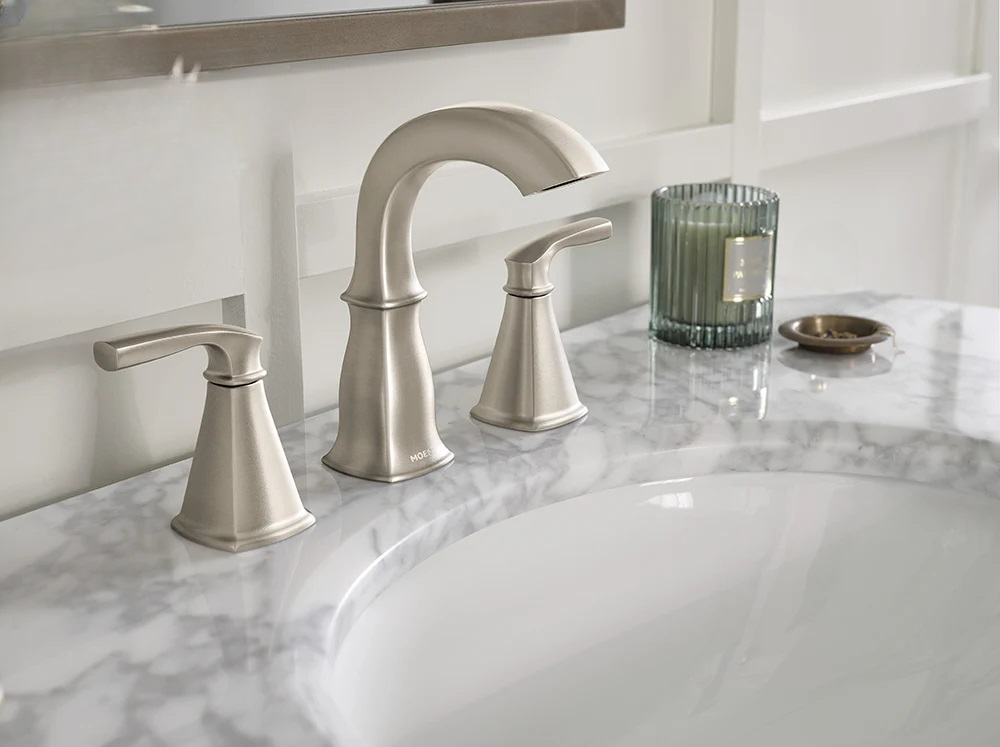
Maintenance Tip: Steer clear of ammonia-based or acidic cleaners, which can damage the protective coating.
Chrome vs Brushed Nickel After 5–10 Years: Which Finish Ages Better?
The long-term appearance of chrome and brushed nickel depends less on the finish name alone and more on the quality of the fixture, plating or coating process, cleaning habits, water conditions, and frequency of use. A well-manufactured fixture in either finish can maintain its appearance for years, while lower-quality surface treatments may show deterioration much sooner.
How Chrome Typically Ages
How Brushed Nickel Typically Ages
Long-term buying insight: Do not choose chrome or brushed nickel based only on which finish appears more durable in a showroom. For long service life, consider the fixture’s construction quality, finish process, warranty, replacement-part availability, water conditions, and manufacturer-recommended maintenance. These factors can matter more than the decorative finish itself.
Drawbacks and Challenges Associated with Brushed Nickel Finish
- Matching Finishes – Different brands result in color/texture variations.
- Cost – High-end pricing due to raw materials.
- Stains and Tarnish – Not impervious to chemicals.
- Cleaning Problems – Abrasive pads scratch the surface.
- Wear and Tear – Heavy-use areas show wear faster.
- Temperature Sensitivity – Extreme temps cause expansion.
- Installation Scratches – Tools can damage finish.
- Not Compatible with Harsh Cleaners – Bleach, ammonia ruin coating.
- Limited Exterior Use – Not recommended for outdoor.
- Upfront Investment – Higher initial cost.
When to Avoid Brushed Nickel (Best Alternatives)
Polished chrome or stainless steel resists moisture better.
Matte black or powder-coated surfaces minimize spotting.
Oil-rubbed bronze or antique brass disguise wear better.
Polished chrome or stainless steel matches icy blues/grays.
Dos and Don’ts when Selecting a Brushed Nickel Faucet
- Choose a model with ceramic disc valves
- Look for PVD-coated finish to prevent fingerprints
- Ensure it includes a water-saving aerator
- Verify compatibility with your sink type
- Mix brushed nickel with highly reflective finishes like chrome
- Overlook spout height and reach
- Ignore maintenance requirements
- Buy purely based on price
- Forget about water pressure compatibility
Related Links & Collections
Conclusion
Chrome and brushed nickel are both strong bathroom fixture finishes, but they create different visual and practical experiences. Chrome is brighter, cooler, and more polished. Brushed nickel is warmer, softer, and more forgiving in daily use.
The better choice depends on the room’s style, maintenance expectations, budget, and finish character. The key is to choose the finish as part of the full design language of the bathroom.
© 2026 BathSelect. All Rights Reserved. Visit BathSelect
Real Finish Performance Experience
What We Learned From 30+ Years of Real Bathroom Installations Using Chrome and Brushed Nickel Fixtures
Choosing between chrome and brushed nickel involves much more than appearance. To better understand how each finish performs over time, we reviewed installation observations of over 700 cases involving customer ownership experiences, maintenance patterns, contractor feedback, and product specifications across residential and commercial bathroom projects. While both finishes can provide excellent durability when manufactured to high standards, they behave differently during everyday use, cleaning, and long-term ownership.
Our evaluation emphasizes practical performance after installation rather than showroom appearance alone. Real-world observations frequently highlight factors such as water spotting, fingerprint visibility, cleaning frequency, resistance to everyday wear, finish consistency, compatibility with surrounding fixtures, and the overall visual appearance after months or years of use. These characteristics often influence long-term satisfaction more than the initial purchase price.
Real Ownership Evaluation
- Daily cleaning requirements
- Water spot visibility
- Fingerprint resistance
- Scratch visibility over time
- Finish consistency after installation
- Resistance to household cleaning products
- Long-term appearance in humid bathrooms
- Overall owner satisfaction
- Maintenance frequency
- Visual aging after continuous use
Professional Specification Review
- Commercial restroom suitability
- Hospitality installation experience
- Architectural specification compatibility
- Solid brass construction evaluation
- Quality of finish application
- Corrosion resistance
- Replacement component availability
- Warranty considerations
- Lifecycle maintenance expectations
- Overall long-term value
Practical buying observation:
Many buyers initially select a finish based on appearance alone, yet long-term satisfaction is usually determined by maintenance requirements and how the finish ages under everyday conditions. Chrome provides a bright, reflective appearance that complements contemporary interiors but typically reveals fingerprints, water spots, and smudges more readily. Brushed nickel offers a softer, textured appearance that naturally disguises minor marks and everyday wear, making it a practical choice for busy family bathrooms and high-use environments. The manufacturing quality of the finish and the underlying fixture construction remain just as important as the finish itself. High-quality plating, durable base materials, and proper installation generally have a greater impact on long-term performance than the finish selection alone.
Editorial Evaluation Methodology
This comparison is informed by practical installation observations, customer ownership experiences, contractor feedback, finish maintenance patterns, product specifications, and comparative evaluation across multiple manufacturers. Rather than relying exclusively on manufacturer descriptions, the assessment considers the characteristics that homeowners, designers, architects, and facility managers most frequently evaluate after a fixture has been installed and used in everyday conditions.
Verified Customer Experiences: Chrome vs Brushed Nickel Bathroom Fixtures
Chrome and Brushed Nickel remain two of the most popular bathroom fixture finishes because both combine durability with timeless design. Chrome delivers a bright reflective appearance that complements contemporary bathrooms, while Brushed Nickel offers a softer satin finish that helps conceal fingerprints and water spots. The verified BathSelect customer reviews below highlight actual homeowner, designer, contractor, and project experiences with faucets, touchless fixtures, shower heads, and complete shower systems, providing practical insight into appearance, finish quality, installation, maintenance, and long-term satisfaction.
Chrome Bathroom Fixture Experiences
FAUCETS • TOUCHLESS • SHOWER HEADS • SHOWER SYSTEMS
Why this review matters
Provides a traditional faucet comparison point and shows how polished chrome works on a standard bathroom sink fixture rather than only on sensor products.

STANDARD FAUCET
BathSelect Versailles Chrome Bathroom Sink Faucet
Customers consistently describe the Versailles faucet as an attractive, modern-looking fixture that is straightforward to install and provides strong value for a polished chrome bathroom application.
★★★★★ Verified BathSelect Customer Reviews
Why this review matters
Shows how polished chrome performs in a frequently cleaned, high-use touchless faucet application.

TOUCHLESS FAUCET
BathSelect Chrome Automatic Touchless Sensor Faucet
“We have incorporated this BathSelect faucet in several hospitality renovations. The chrome finish retains its polish under daily cleaning cycles. The automatic function ensures touch-free operation.”
★★★★★ L. Bryant, GreenSpec Eng. • Raleigh, NC
Why this review matters
Shows the visual effect of chrome on a much larger reflective surface than a faucet body.

SHOWER HEAD
BathSelect Romo Chrome RGB Rain Shower Head
“The chrome finish looks crisp, and the showerhead feels more solid than many similar LED products. Water flow is smooth, the spray pattern is even, and the RGB feature adds visual interest.”
★★★★★ Liam F. • Atlanta
Why this review matters
Demonstrates how chrome interacts with marble, glass, shower hardware, and a larger coordinated fixture installation.

SHOWER SYSTEM
BathSelect Bravat Chrome Thermostatic Shower System
“This Bravat Wall Mount Chrome Shower Set is a 100% hit. Great shower system. It made the beauty of the marble and glass of the walk-in shower more dramatic and eye catching.”
★★★★★ Joseph • Oregon
Brushed Nickel Bathroom Fixture Experiences
FAUCETS • TOUCHLESS • SHOWER HEADS • SHOWER SYSTEMS
Why this review matters
Adds a non-touchless brushed nickel sink faucet so the comparison reflects conventional bathroom fixtures as well.

STANDARD FAUCET
BathSelect Lyon Brushed Nickel Bathroom Sink Faucet
“The Brushed Nickel finish looks premium, and the smooth handle action and precise control makes this sink faucet feel more engineered than generic alternatives.”
★★★★★ Natalie G. • New York
Why this review matters
Shows how brushed nickel coordinates with lighting and surrounding finishes in a complete commercial interior.

TOUCHLESS FAUCET
BathSelect Wella Brushed Nickel Sensor Faucet
“The brushed nickel finish complements the light fixtures, so everything looks great together. We used this hands-free faucet throughout the restaurant bathroom renovation.”
★★★★★ ecosistema urbano architects • Baltimore, MD
Why this review matters
Demonstrates how brushed nickel appears on a larger rainfall surface and how easily it coordinates with surrounding fixtures.

SHOWER HEAD
BathSelect Brushed Nickel Rainfall Shower Head
“Our guest bathroom brushed nickel rainfall shower head was exactly what we wanted as this matched the fixtures and style of our bathroom. This shower head is a perfect match.”
★★★★★ Jing • California
Why this review matters
Shows how brushed nickel performs visually across an entire coordinated shower system rather than on a single fixture.

SHOWER SYSTEM
BathSelect Brushed Nickel Shower System with Body Jets
“Love this BathSelect Brushed Nickel Shower. It’s so beautiful. The pressure is great. It feels amazing. I don’t even want to get out of the shower.”
★★★★★ Sian • Idaho
Why this review matters
Retains one of the original review cards and provides additional evidence for Brushed Nickel in a premium bathroom installation.

EXISTING REVIEW RETAINED
BathSelect Milano Brushed Nickel Thermostatic Faucet
“We selected this unit for a high-end residential renovation and were impressed by the consistent water pressure even during peak morning usage. The brushed finish resists spotting better than previous fixtures we installed.”
★★★★★ Reynolds Luxury Interiors Studio • Los Angeles, CA
What These Customer Experiences Show
Looking across faucets, touchless fixtures, rainfall shower heads, and complete shower systems provides a more useful picture than comparing faucet finishes alone. Chrome is repeatedly valued for its crisp reflective appearance and ability to emphasize contemporary lines, glass, tile, and polished bathroom surfaces. Brushed Nickel receives particularly favorable feedback where softer reflectivity, finish coordination, reduced visual evidence of handling, and a warmer overall bathroom character are priorities. In either finish, construction quality, coating quality, cleaning practices, installation, and water conditions remain important to long-term appearance.
Professional Technical Comparison: Chrome vs. Brushed Nickel Bathroom Fixtures
Chrome and Brushed Nickel remain two of the most specified bathroom fixture finishes in both residential and commercial construction. Although they often share identical fixture designs and internal components, the finishing process creates noticeably different visual characteristics, maintenance requirements, and design compatibility. Professional designers typically evaluate lighting conditions, surrounding materials, maintenance expectations, durability, and long-term design goals before selecting either finish.
1. Visual Appearance
Chrome produces a bright mirror-like reflective finish that emphasizes clean lines and creates a modern appearance. Brushed Nickel offers a softer satin texture with reduced reflectivity for a warmer, more subtle aesthetic.
2. Reflectivity
Chrome reflects considerably more surrounding light, making bathrooms appear brighter. Brushed Nickel diffuses light, producing a softer and less reflective appearance.
3. Fingerprint Visibility
Brushed Nickel generally disguises fingerprints better because of its textured satin finish, while Chrome may show fingerprints more readily until cleaned.
4. Water Spot Resistance
Hard-water deposits are often less noticeable on Brushed Nickel. Chrome can show mineral spotting more quickly because of its highly polished surface.
5. Scratch Visibility
Minor surface marks generally blend more easily into Brushed Nickel’s directional finish, whereas Chrome’s reflective surface can make scratches more noticeable under direct lighting.
6. Design Compatibility
Chrome complements contemporary, modern, minimalist and transitional interiors. Brushed Nickel works exceptionally well with traditional, transitional, farmhouse and luxury residential bathrooms.
7. Cleaning Requirements
Routine cleaning using mild soap and a soft microfiber cloth is recommended for both finishes. Abrasive pads and harsh chemical cleaners should be avoided.
8. Long-Term Performance
Overall durability depends primarily on manufacturing quality, protective coating technology, installation quality, and maintenance rather than finish color alone.
Professional Buying Checklist
Choose the finish that complements the overall architectural style rather than following current trends.
Coordinate faucets, shower systems, drains, towel bars, mirrors, cabinet hardware and accessories whenever possible.
Observe finish samples under the bathroom’s actual lighting before making a final decision.
Homes with hard water may require more frequent cleaning regardless of finish.
Verify cartridge availability, trim compatibility and future serviceability before purchasing.
Plan all visible fixtures together to maintain finish consistency throughout the bathroom.
Continue Your BathSelect Research
- Bathroom Faucets
- Luxury Shower Systems
- Rain Shower Heads
- Thermostatic Shower Systems
- LED Shower Heads
- Body Spray Systems
- Touchless Bathroom Faucets
- Bathroom Sinks
- Brushed Nickel vs. Polished Nickel
- Oil Rubbed Bronze vs. Antique Bronze
- Oil Rubbed Bronze vs. Matte Black Showers
- Brushed Gold vs. Shiny Gold Shower Systems
- Best Shower Heads
- Best Shower Sets
- Touchless Smart Bathroom Fixtures Guide
- Hotel Shower Suites
Professional Standards & Technical References
- EPA WaterSense
- U.S. Department of Energy – Water Efficiency
- American Society of Plumbing Engineers (ASPE)
- IAPMO
- International Code Council
- NSF International
- ADA.gov
- U.S. Access Board
- USGBC LEED
- International WELL Building Institute (WELL)
- National Kitchen & Bath Association (NKBA)
- Air-Conditioning, Heating, and Refrigeration Institute (AHRI)
Expert Design Recommendation
Choosing between Chrome and Brushed Nickel involves much more than selecting a finish color. Interior designers, architects, builders, and homeowners typically evaluate lighting conditions, maintenance preferences, surrounding materials, and the overall design concept before specifying bathroom fixtures. Both finishes offer outstanding durability and long-term performance when manufactured with quality materials and properly maintained, but each creates a distinctly different visual effect.
Chrome is recognized for its bright mirror-like reflective surface that enhances natural and artificial light, making bathrooms appear larger and more open. It remains one of the industry’s most widely specified finishes for contemporary, modern, minimalist, and commercial projects because of its clean appearance and timeless versatility.
Brushed Nickel provides a softer satin appearance with subtle texture that reduces reflections while creating a warmer atmosphere. It is frequently selected for transitional, farmhouse, traditional, luxury residential, and hospitality bathrooms where understated elegance is preferred over high reflectivity.
Rather than asking which finish is universally better, professionals typically recommend selecting the finish that best complements the overall bathroom design, lighting environment, cabinetry, tile selection, maintenance expectations, and long-term visual goals. Coordinating faucets, shower systems, drains, accessories, cabinet hardware, and mirrors within the same finish family generally produces the most cohesive result.
Professional Comparison Matrix
Did You Know?
Frequently Asked Questions
Which finish is easier to maintain?
Both finishes are relatively easy to maintain with routine cleaning. Chrome’s reflective surface may show fingerprints and mineral deposits more readily, while Brushed Nickel’s satin texture often helps disguise them.
Which finish works best in modern bathrooms?
Chrome is frequently selected for modern and minimalist interiors because of its bright reflective appearance. Brushed Nickel is also suitable for contemporary spaces but provides a softer visual effect.
Does Chrome resist corrosion better than Brushed Nickel?
Bathroom Finish Comparison
Chrome vs. Brushed-Nickel Fixtures
Chrome and brushed nickel are versatile bathroom finishes, but they respond differently to lighting, water spots and daily handling. Chrome has a bright, cool and reflective surface that can make compact bathrooms feel cleaner and more luminous. Its widespread availability also makes matching replacement components easier, although fingerprints and dried droplets remain highly visible. Brushed nickel has a warmer, muted texture that usually disguises light spotting and fingerprints more effectively, but its tone can vary between manufacturers. Neither finish prevents mineral buildup or guarantees the quality of the underlying fixture. Review physical samples beside the tile, countertop and lighting before making a decision. Keep faucets, shower trim and accessories within a coordinated finish family, and use soft cloths with manufacturer-approved cleaners after installation.
Corrosion resistance depends primarily on the fixture’s base material, manufacturing quality, protective coating, installation, and maintenance rather than the decorative finish alone.
Can Chrome and Brushed Nickel fixtures be mixed?
Although some designers intentionally mix finishes for contrast, using one primary finish throughout the bathroom generally creates a more cohesive and timeless appearance.
Does finish affect shower or faucet performance?
No. Water delivery, pressure, valve operation, and fixture performance are determined by engineering, plumbing design, and installation quality—not by the finish color.
What should buyers consider before selecting a finish?
Evaluate the bathroom’s architectural style, lighting, surrounding materials, cleaning preferences, finish coordination, durability, and long-term maintenance expectations to select the finish that best supports the overall design.