
High-Traffic Specification Guide
Priority Planning Methods
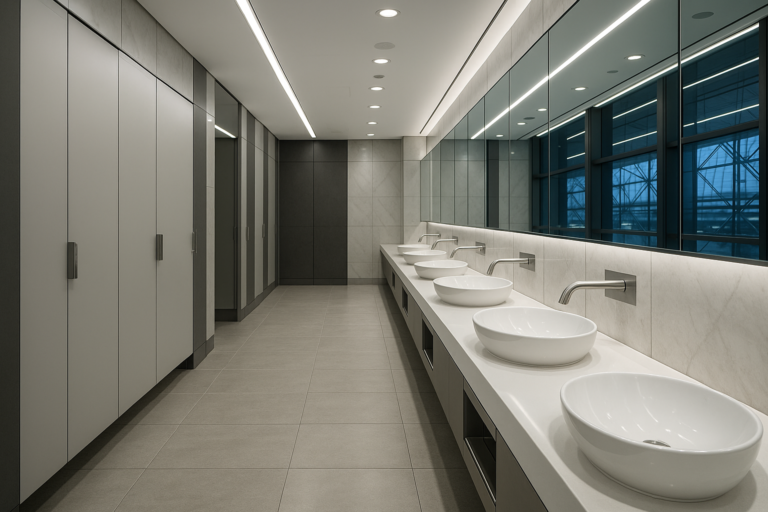
Airport restroom touchless faucet and soap dispenser systems should be specified with accurate sensor range, dependable power access, stable water pressure, and coordinated sink spacing. These details help support fast user flow, reduced surface contact, and more consistent activation during peak travel periods.
Facility teams should also consider accessible maintenance zones, compatible soap viscosity, vandal-resistant construction, and finish durability. In high-volume restrooms, routine sensor inspections, aerator cleaning, and dispenser refill planning help reduce downtime while preserving a cleaner, more professional public restroom environment.
Performance Risk Factors
Avoid placing soap dispensers inside overlapping faucet sensor zones, because conflicting infrared activation may interrupt smooth hands-free operation. Poor sink depth, reflective countertop surfaces, and incorrect mounting height may also increase splash concerns and reduce user comfort.
Harsh chemical cleaners, neglected battery monitoring, and inconsistent maintenance schedules can gradually affect finish quality and sensor reliability. Careful planning helps preserve restroom efficiency, lower service interruptions, and maintain a polished appearance in demanding transportation facilities.
Airport Restroom Selection Matrix
| Selection Factor | Best Specification Focus | Why It Matters |
|---|---|---|
| Passenger Volume | Commercial-grade sensor faucet and dispenser sets | Supports repeated use during peak airport traffic. |
| Maintenance Access | Serviceable sensor, solenoid, aerator, and soap reservoir layout | Reduces downtime and simplifies facility servicing. |
| Hygiene Control | Hands-free activation with reliable sensor calibration | Limits surface contact in public restroom environments. |
| Water Management | Controlled flow rate and automatic shutoff | Helps reduce unnecessary water use in large facilities. |
Specifying touchless restroom systems for airport terminals requires more than basic hands-free activation; fixture selection should account for passenger-volume surges, sensor stability, water-pressure variation, vandal resistance, accessible service zones, power continuity, and coordinated basin geometry. Airport planners can reference BathSelect’s commercial restroom specification and BIM guidance, evaluate vandal-resistant infrared sensor faucet engineering for high-traffic facilities, and review commercial touchless faucets suited to airports and intensive-use public restrooms when coordinating reliable terminal washrooms around throughput, serviceability, and lifecycle performance.
Airport Restroom Systems
Touchless Faucet and Soap Systems for Airports
Airport restrooms require touchless systems capable of handling continuous traffic, rapid cleaning and varied user behavior. Automatic faucets and dispensers improve hygiene and control consumption, while failed sensors or inaccessible components can disrupt several stations. Specify commercial-grade construction, reliable power, accessible filters and pumps, suitable flow rates and coordinated detection zones, then test a full sink mock-up before deployment.