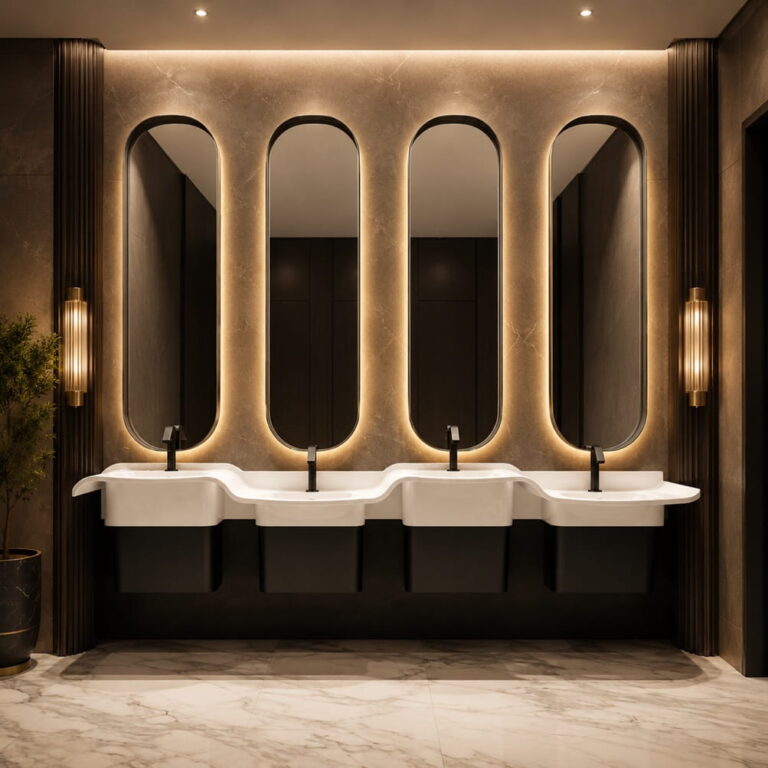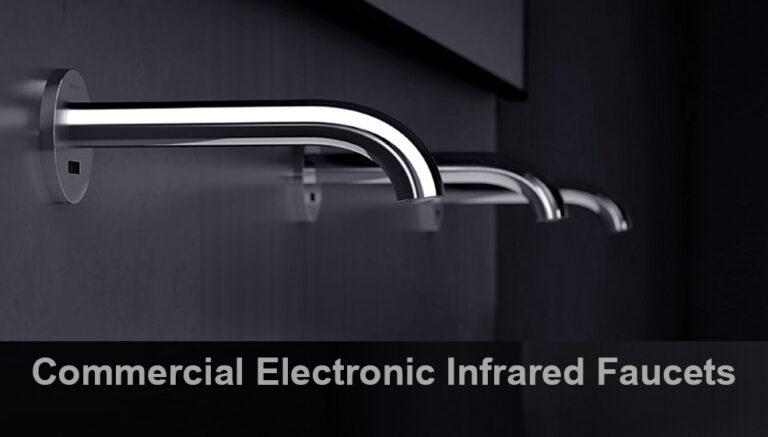
Commercial Touchless Faucets for Hospitals
Hospitals demand more from lavatory fixtures than ordinary commercial buildings. Every faucet in a patient tower,
outpatient clinic, emergency department, staff restroom, laboratory support zone, or public washroom plays a role
in hygiene workflow, cleaning efficiency, user comfort, maintenance planning, and lifecycle performance. That is
why commercial touchless faucets have become such an important part of healthcare restroom and handwashing design.
For architects, interior designers, MEP engineers, contractors, infection-control planners, and facility managers,
a touchless faucet is not simply a modern convenience. It is a practical component in a broader healthcare plumbing
strategy. The right hospital faucet specification helps reduce shared touchpoints, improve the handwashing experience,
simplify environmental services routines, and support a more durable and predictable sink zone across departments.
Helps reduce faucet-handle contact in high-use hospital sink zones.
Supports design coordination for architects, engineers, and healthcare facility teams.
Useful for public restrooms, patient bathrooms, staff stations, and outpatient settings.
Why Hospitals Prefer Commercial Touchless Faucets
In healthcare environments, handwashing is part of operational discipline. A well-planned touchless faucet can help
strengthen that workflow while making the sink area easier to clean and easier to use.
Reduced Contact at the Lavatory
The most obvious advantage of a touchless faucet in a hospital is the reduction of shared hand contact. Users do
not need to grasp or twist handles before or after washing, which helps create a cleaner and more intuitive
sequence. In high-turnover spaces such as waiting-area restrooms, outpatient clinics, or staff washrooms, that
matters because the faucet becomes part of a repeatable hygiene routine rather than a manual touchpoint that
everyone shares.
This is especially helpful in healthcare design because the lavatory is used by patients, visitors, clinicians,
cleaning staff, and support personnel with different physical abilities and different time pressures. A sensor
faucet simplifies the action: hands enter the sensing field, water flows, hands move away, water stops. The
predictability of that interaction supports cleaner use habits and can make wash stations feel more modern,
more accessible, and more aligned with infection-control goals.
What Matters Most in Hospital Faucet Selection
Sensor Accuracy and User Confidence
In hospitals, faucet activation must feel intuitive. A poorly tuned sensor that triggers inconsistently or
activates when no user is present creates frustration, wastes water, and adds avoidable maintenance complaints.
That is why commercial-grade touchless faucets are preferred over decorative consumer-oriented models. Hospital
teams should prioritize stable activation logic, reliable shutoff, and sensor positioning that works naturally
with the selected basin geometry.
Power Strategy
Power planning is a major part of long-term hospital performance. Some projects favor hardwired installations
for consistent serviceability. Others may choose battery-supported or hybrid arrangements depending on renovation
constraints, maintenance workflow, or sink-bank access. The correct choice depends on how the hospital manages
preventive maintenance and how much flexibility the project requires during installation.
Temperature Management
Temperature control matters in patient-facing spaces. Hospitals are not only concerned with touchless activation;
they also need comfortable and controlled water delivery. In patient room bathrooms, family restrooms, outpatient
treatment areas, and many shared healthcare spaces, a temperature-control touchless faucet can provide a better
balance between hands-free convenience and user comfort.
Accessibility and ADA-Oriented Review
Healthcare design must serve a wide range of users, including patients with reduced strength, temporary injuries,
joint limitations, or mobility challenges. Touchless faucets can help remove one of the most common barriers:
the need to operate a manual handle. That makes them useful in ADA-oriented public restrooms, family restrooms,
patient bathrooms, and other clinical spaces where easier operation improves daily usability.
Cleaning Efficiency
A faucet in a hospital must be simple to wipe down and practical to service. The most visually dramatic fixture
is not always the best healthcare choice if it creates hard-to-clean surfaces or difficult service access.
Hospitals benefit from faucet shapes, finishes, and mounting strategies that support fast, repeatable cleaning
and do not complicate sink-deck maintenance.
Standardization Across Departments
Large hospitals often gain operational value by standardizing a smaller number of touchless faucet platforms
across many rooms. That can simplify replacement parts, technician training, upkeep procedures, and purchasing
consistency while still allowing variation in finish or mounting type when design goals require it.
Best-Practice Planning Notes
- Match the faucet spout and sensor position to the selected basin depth and splash profile.
- Choose deck-mount or wall-mount based on cleaning workflow, backsplash conditions, and renovation scope.
- Review power requirements early so electrical and plumbing coordination stay aligned.
- Use temperature-control models where patient comfort and predictable water delivery are priorities.
- Coordinate soap dispenser placement with faucet reach and deck crowding.
- Favor durable, repeatable commercial platforms that support long-term serviceability.
Deck-Mount vs. Wall-Mount in Hospital Projects
One of the most important AEC decisions in a healthcare restroom is whether the hospital should use deck-mounted
or wall-mounted touchless faucets. Both approaches can work well, but they create different installation and
maintenance stories.
Deck-mounted touchless faucets are often easier to integrate into renovation projects where the
existing sink or countertop already supports a deck installation. They can be practical in phased upgrades and
may reduce the amount of wall rework needed in occupied healthcare environments.
Wall-mounted touchless faucets are especially attractive when teams want a cleaner sink deck,
easier wipe-down access, and a more architectural appearance. In hospitals, that can be useful in premium patient
areas, outpatient clinics, high-visibility public restrooms, and any project where cleaning efficiency and visual
order are both important.
The best decision depends on the sink itself, not the faucet alone. Basin dimensions, backsplash height, wall
construction, maintenance access, and infection-control cleaning routines should all be reviewed together.
and appropriate for the full sink-zone system around it.
Where Touchless Faucets Add the Most Value in Hospitals
| Hospital Area | Why Touchless Helps | Best Direction |
|---|---|---|
| Public Restrooms | Supports cleaner user flow in high-traffic areas with frequent turnover. | Commercial sensor faucets with durable finishes and reliable activation. |
| Patient Room Bathrooms | Improves ease of use and helps reduce contact at a frequently used fixture. | Temperature-control models and accessibility-conscious sink coordination. |
| Staff Restrooms | Handles repeated daily use while helping simplify handwashing routines. | Heavy-duty touchless platforms with serviceable installation logic. |
| Outpatient Clinics | Supports efficient turnover and a more intuitive experience for patients and visitors. | Deck- or wall-mount touchless faucets based on sink layout and renovation scope. |
| Family / ADA Restrooms | Reduces physical effort to operate the sink and improves usability for diverse users. | ADA-oriented commercial faucet selections with clear reach and basin fit. |
Why the BathSelect Category Structure Is Useful
For hospital research, BathSelect is useful because the site does not force every sensor faucet into one generic
bucket. Instead, it separates the selection process into practical paths: the main commercial sensor faucet category,
wall-mount touchless options, temperature-control touchless faucets, ADA-oriented commercial faucet selections, and
integrated touchless faucet plus soap dispenser groupings. That structure helps specifiers move from broad planning
into more exact healthcare needs.
The commercial sensor faucet category is the strongest general entry point for hospitals because it explicitly speaks
to high-traffic restrooms and lists hospitals among the intended application environments. The temperature-control
category is especially relevant where patient comfort and controlled delivery matter. The wall-mount category helps
AEC teams compare cleaner-deck installations. The ADA category assists with access-oriented design review. The faucet
and soap dispenser category is useful when the sink area is being planned as a full handwashing station rather than
as a faucet-only replacement decision. :contentReference[oaicite:1]{index=1}
Verified BathSelect Main Hub and Related Categories
These are the corrected links only. I removed anything I could not verify.
How to Use These Categories on a Hospital Project
For New Construction
Start with the main commercial sensor faucet category to define the overall performance direction. Then narrow
into wall-mount or temperature-control models depending on room type. Use the ADA commercial faucet category as
a parallel reference for public and family restrooms, and review the combined faucet-and-soap category when the
full sink deck is being designed as a coordinated hygiene point.
For Renovation or Retrofit Work
Begin by matching the selected faucet type to the existing sink and service conditions. Deck-mounted replacements
may be the simplest path in some projects, while wall-mount upgrades can be more attractive where the renovation
scope allows reworking the sink area. In either case, standardizing a practical commercial touchless platform can
help reduce future maintenance complexity across departments.
FAQ
Are touchless faucets appropriate for hospitals?
Yes. They are especially useful in hospitals because they help reduce shared contact at the sink while improving
the handwashing sequence and supporting easier daily cleaning.
Should hospitals choose wall-mounted touchless faucets?
Sometimes. Wall-mounted models can improve deck cleanliness and architectural presentation, but they should be
chosen only after reviewing sink geometry, wall conditions, maintenance access, and project scope.
Why are temperature-control touchless faucets important in healthcare?
They combine hands-free activation with more predictable water delivery, which is useful in patient-facing spaces
and other hospital environments where comfort and consistency matter.
Should the faucet and soap dispenser be selected together?
In many hospital projects, yes. Coordinating both products helps create a more organized and more effective
handwashing station with better spacing, finish consistency, and daily usability.
Commercial Touchless Review • Pair 14
Technical Review of Two Commercial Sensor Fixture Specifications
This paired review looks at two BathSelect commercial touchless products through an architect and designer lens, focusing on finish coordination, sensor interaction, lavatory-deck planning, restroom circulation, maintenance access, and suitability for repeated commercial use.


Architect & Designer Takeaway
Together, these two products give specifiers a useful comparison between brushed nickel and satin nickel design directions. The key consideration is not simply appearance; it is whether each touchless fixture supports intuitive handwashing flow, reduces unnecessary contact, coordinates with the surrounding restroom package, and remains visually controlled in a high-traffic commercial setting.