Hotel Bathroom Water Management & Plumbing Design Guide: Pressure, Hot-Water Delivery, Legionella Risk, Low-Flow Fixtures & Commissioning
A luxury hotel bathroom is the visible endpoint of a much larger building-water system. Guest satisfaction depends on pressure and temperature arriving predictably; building performance depends on distribution, recirculation, water age, fixture selection, maintenance and commissioning working together. This BathSelect™ professional guide connects bathroom specification with the MEP and water-management decisions behind the wall.
1. Pressure: Design for the Fixture Under Flow
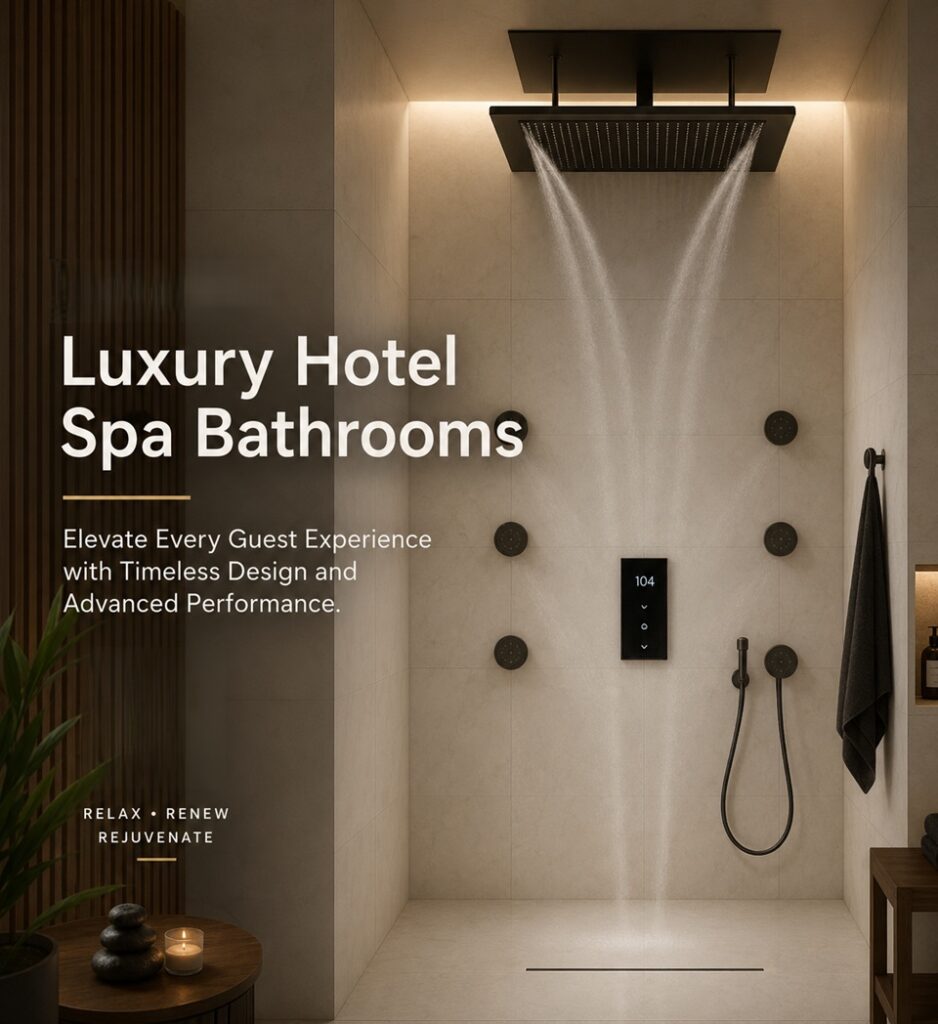
Static pressure is only the starting point. What the guest experiences is affected by dynamic pressure, pipe sizing, elevation, fittings, valves, simultaneous demand and the operating characteristics of the selected outlet. Multi-function showers require particular attention because rainfall, hand shower and body-spray combinations can create very different demand scenarios.
2. Hot-Water Delivery Is Both a Guest-Experience and Water-System Issue
Long waits for hot water encourage guests to run fixtures unnecessarily and can signal distribution or recirculation problems. Yet simply lowering storage temperatures is not a responsible universal solution. Building-water temperature management must reconcile distribution design, scald protection, local requirements and the project’s water management program.
CDC’s potable-water guidance recommends storing hot water above 140°F (60°C), maintaining circulating hot water at or above 120°F (49°C), and locating thermostatic mixing valves close to fixtures to help prevent scalding while permitting higher circulating temperatures. These are building-water recommendations that must be implemented by qualified project professionals within applicable codes and the facility’s water management program.
3. Legionella Risk Management Begins Beyond the Fixture
Legionella risk is a building-water-system issue rather than a faucet-brand issue. CDC identifies sediment and biofilm, temperature, water age and disinfectant residual as important factors affecting growth. Its guidance recommends eliminating dead legs, considering the risks of low-flow and mechanically complex fixtures such as electronic sensor faucets, maintaining water-system components, and using a comprehensive water management program rather than relying on one control measure.
ASHRAE Standard 188 establishes minimum legionellosis risk-management requirements for building water systems and addresses design, construction, commissioning, operation, maintenance, repair, replacement and expansion. For hotel projects, this makes water management a lifecycle discipline—not merely an opening-day plumbing test.
4. Water Age: The Hidden Variable in Low-Use Rooms
Hotels can have highly variable occupancy. Some guestrooms or fixture branches may remain unused for extended periods, increasing water age. CDC recommends eliminating dead legs, flushing low-flow piping runs and regularly flushing infrequently used fixtures as needed to maintain water-quality parameters within control limits.
The design team should therefore consider pipe volume, branch configuration and likely use patterns. Oversized or unnecessarily complex distribution can work against rapid turnover of water.
5. Low-Flow Does Not Mean Low Performance
Water efficiency should be specified together with performance. EPA WaterSense-labeled showerheads use no more than 2.0 gpm and must satisfy efficiency and performance criteria. For private lavatory faucets—including hotel guestroom bathroom sinks—WaterSense-labeled models use a maximum of 1.5 gpm and are independently certified to EPA criteria.
EPA also makes an important distinction: public lavatory faucets in non-private toilet facilities generally should be 0.5 gpm or less to be considered efficient and meet plumbing-code requirements, while EPA states that flow rates of 0.5 gpm or less are not appropriate for private lavatories. A hotel guestroom vanity and a lobby restroom therefore should not automatically receive the same flow specification.
6. Sensor Faucets Add Controls to the Plumbing System
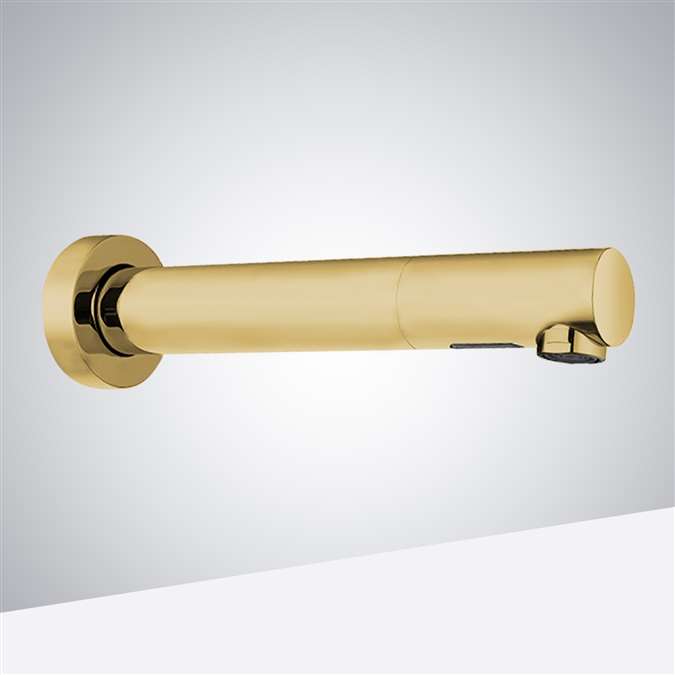
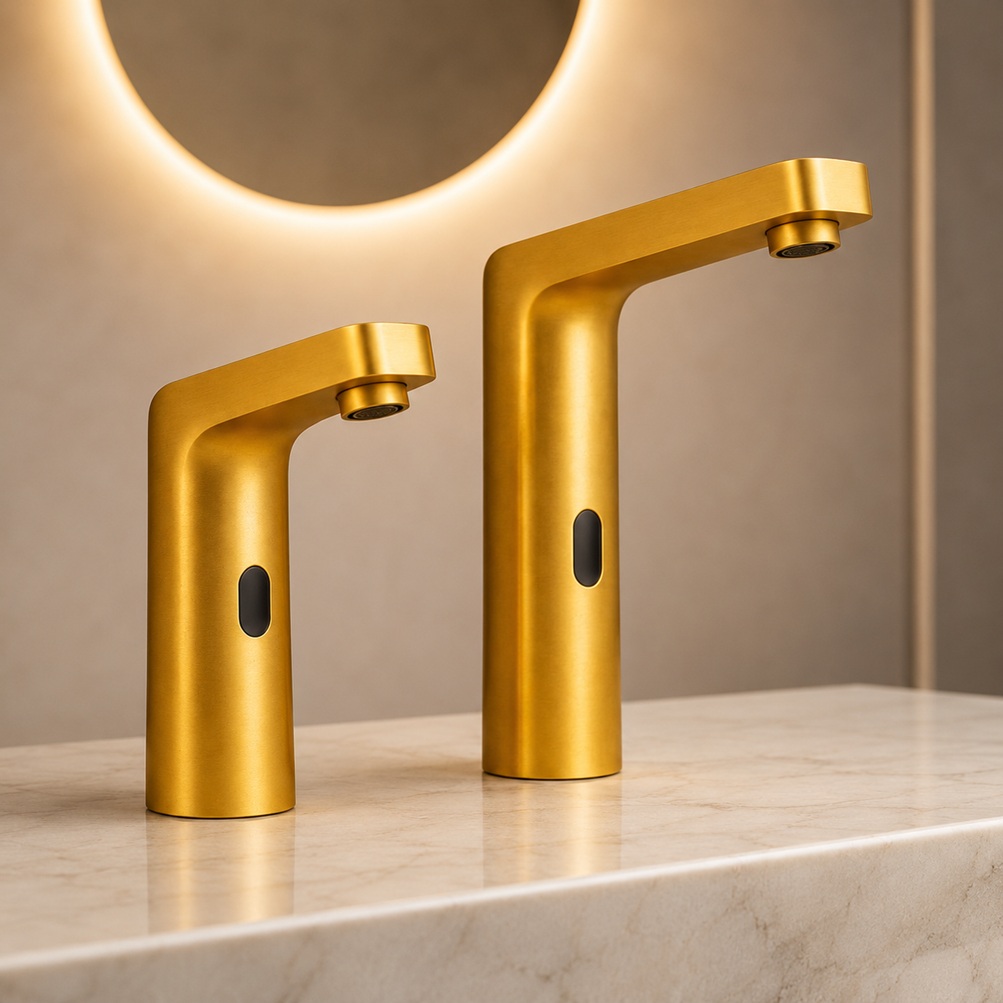
Touchless fixtures add sensors, solenoid valves and power components to the conventional water path. This changes maintenance and commissioning. Sensor range, shutoff behavior, power access, valve access and intended flow should all be verified.
CDC specifically calls attention to mechanically complex fixtures such as electronic sensor faucets when evaluating Legionella risks. That does not mean sensor fixtures should be avoided; it means they should be incorporated intelligently into the building’s water-management and maintenance program.
7. Mixing Valves Require Maintenance Access
A thermostatic mixing valve is not a permanently invisible component. CDC recommends regularly cleaning and maintaining water-system components including thermostatic mixing valves, aerators, showerheads, hoses and filters. The architectural design should therefore preserve realistic service access rather than trapping critical components behind permanent stone or millwork.
8. Showerheads and Aerators Are Water-System Components
At the guest level, showerheads and aerators are viewed as finish fixtures. From a water-management perspective they are terminal components exposed to water chemistry, scale and biofilm. Inspection, cleaning and replacement procedures should be included in hotel engineering documentation.
9. Commissioning Must Include Water at Real Operating Conditions
A plumbing system is not fully verified by checking that connections do not leak. Commissioning should evaluate actual fixture operation: hot-water arrival, temperature stability, pressure, simultaneous shower functions, drainage, sensor behavior and accessible-control operation where applicable.
ASHRAE’s water-system risk-management framework explicitly includes commissioning within the lifecycle of building-water systems. The approved hotel bathroom mockup is an ideal location to establish acceptance criteria before room-by-room repetition.
10. Water Efficiency Belongs at Facility Scale
EPA’s WaterSense at Work program frames commercial water efficiency as a management practice involving measurement, operation, maintenance, retrofits and lifecycle economics—not merely efficient fixtures. For hotels, the strongest approach connects guestroom fixtures with metering, leak response, maintenance procedures and broader facility water-use objectives.
Hotel Bathroom Water-Management Coordination Matrix
| Issue | Design question | Operational verification |
|---|---|---|
| Pressure | What dynamic pressure is available at peak conditions? | Test representative high-demand fixture combinations. |
| Hot-water delivery | How is circulation maintained near remote rooms? | Measure delivery and temperature behavior. |
| Water age | Are there dead legs or oversized low-use branches? | Include low-use conditions in the WMP. |
| Mixing | Where are thermostatic mixing components located? | Verify settings and service access. |
| Guestroom faucet | What flow supports private-lavatory use? | Confirm basin compatibility and guest performance. |
| Public faucet | Is the flow appropriate for non-private lavatory use? | Verify sensor cycle and intended efficiency. |
| Shower | What outlets can operate simultaneously? | Wet-test flow, temperature and drainage. |
| Maintenance | Can aerators, showerheads and valves be serviced? | Document cleaning and replacement procedures. |
| Commissioning | What are the acceptance criteria? | Record results before turnover. |
BathSelect™ Hospitality & Plumbing Specification Resources
Central access to shower, faucet, touchless, bathtub, vanity and professional bathroom fixture resources.
Sensor faucet configurations for hospitality and premium commercial washroom planning.
Thermostatic, pressure-balance and digital shower-system planning.
Technical planning for digital mixing, controls, diverters, wiring and commissioning.
Independent Engineering & Water-Management References
- CDC — Controlling Legionella in Potable Water Systems — Building-water design, temperature, water age, disinfectant residual, low-flow fixtures, flushing and maintenance.
- ASHRAE — Water System Risk Management — Standard 188 and Guideline 12 resources for design, commissioning, operation and maintenance.
- ANSI/ASHRAE Standard 188 — Minimum legionellosis risk-management requirements for building water systems.
- EPA WaterSense — Bathroom Faucets — Private-lavatory efficiency, performance and hotel guestroom application context.
- EPA WaterSense — Showerheads — Efficiency, spray force and coverage performance criteria.
- EPA WaterSense at Work — Best Management Practices — Commercial and institutional facility water-management guidance.
- U.S. Access Board — Bathing Rooms — Accessible shower controls, hand-held spray units, reach and water-temperature provisions.
- CDC — Public Health Strategies for Legionella Control — Exposure sources including showers, faucets and electronic/manual fixtures.
Hotel Plumbing & Water-Management FAQ
Does a hotel guestroom faucet have the same efficiency target as a lobby restroom faucet?
No. EPA treats hotel guestroom bathroom sinks as private lavatories for WaterSense purposes and distinguishes them from public non-private lavatories.
Are low-flow fixtures automatically a Legionella problem?
No. CDC advises recognizing water-management risks associated with low-flow and mechanically complex fixtures within the overall system. Risk management depends on system design, water age, temperature, disinfectant residual, maintenance and the WMP.
Why does water age matter in hotels?
Occupancy varies and some branches or rooms can remain unused. Stagnation and low-flow conditions can increase water age, which CDC identifies as an important Legionella growth factor.
Should mixing valves be accessible?
Yes. They are serviceable water-system components. CDC includes thermostatic mixing valves among components that should be regularly cleaned and maintained.
What should shower commissioning test?
Verify temperature behavior, pressure, outlet combinations, controls, spray performance, drainage and any project-specific acceptance criteria under real water flow.
Does WaterSense only measure low flow?
No. WaterSense-labeled products must meet EPA efficiency and performance criteria and undergo independent certification.
Who owns hotel water management after opening?
Responsibility is project- and organization-specific, but the program requires coordinated ownership across facility management and qualified water-system professionals rather than being treated as a fixture-only issue.
What should architects contribute?
Architects can protect service access, coordinate fixture geometry and accessible layouts, document intended shower functions, and ensure architectural decisions do not obstruct engineering and maintenance requirements.
Conclusion: The Guest Sees the Fixture; Performance Comes From the System
A hotel guest judges water performance in seconds: how quickly hot water arrives, whether the shower feels consistent, whether controls make sense and whether the vanity works without splash. Achieving that simplicity requires disciplined engineering behind the wall.
The strongest hotel bathroom specifications therefore connect fixture selection to pressure, hot-water circulation, temperature control, water age, water efficiency, service access, maintenance and commissioning. Building-water risk management belongs at the system level, while BathSelect™ fixtures form the carefully specified point of interaction between that system and the guest.
Professional and health note: This article is educational and does not constitute engineering, plumbing-code, public-health or Legionella-control advice for a specific facility. Building water management should be developed and implemented by appropriately qualified professionals using current regulations, standards, manufacturer requirements and facility-specific conditions.