The Lifecycle Cost of a Luxury Bathroom: What Architects, Hotels & Developers Should Specify Beyond Purchase Price
The purchase price of a faucet, shower, vanity or bathtub is only the first visible number in a much longer cost story. Installation, water and energy use, cleaning, finish care, replacement parts, service access, downtime and renovation all influence what a luxury bathroom ultimately costs to own. This BathSelect™ professional guide explains how to evaluate premium bathroom fixtures through a lifecycle lens rather than a first-cost lens.
1. First Cost Is Only the Entry Point
Traditional fixture schedules make acquisition price highly visible because it appears directly in bids and procurement packages. Many downstream costs are less visible because they occur later and are paid by different teams: the contractor absorbs installation complexity, the owner pays utilities, housekeeping absorbs cleaning time, engineering handles service calls, and renovation teams confront concealed access problems years later.
A lifecycle specification brings those costs into the same conversation. For hotels and multi-unit developments, even a small recurring maintenance issue can multiply across hundreds of bathrooms. The relevant question is therefore not merely “What does this fixture cost?” but “What does this fixture cause the building to spend?”
2. Installation Cost: Complexity Has a Price
Installation cost is shaped by rough-in accuracy, valve architecture, structural support, electrical requirements, access, waterproofing penetrations and commissioning. A fixture that requires unusual field modification can consume labor savings achieved during procurement.
3. Water and Energy: Operating Cost Flows Through the Fixture
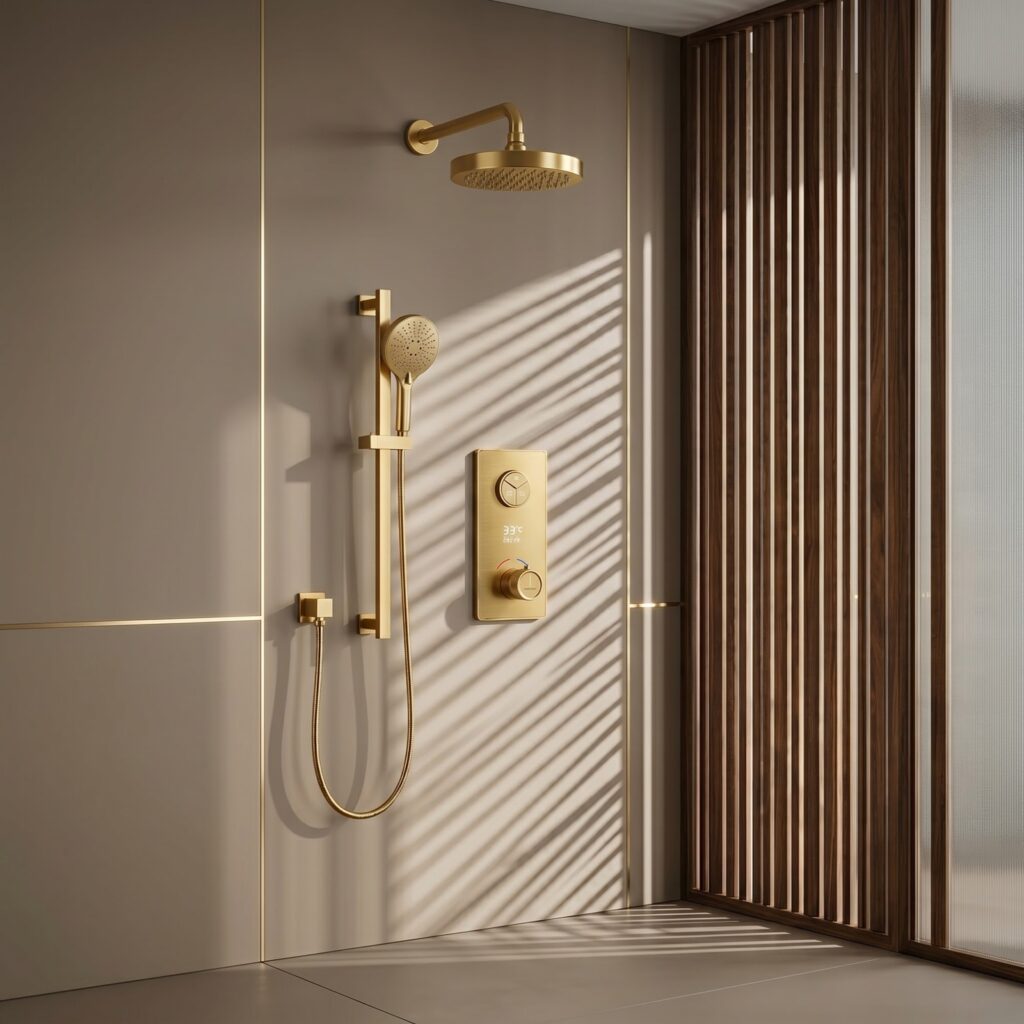
Bathroom fixtures influence both water consumption and, when hot water is used, energy demand. EPA WaterSense states that labeled bathroom faucets use a maximum of 1.5 gpm and can reduce sink flow by 30% or more compared with the 2.2 gpm standard flow while meeting performance criteria. EPA also states that WaterSense-labeled showerheads use no more than 2.0 gpm and are independently certified for efficiency and performance.
For a hotel or multifamily property, those differences can accumulate across occupancy cycles. However, efficiency should be evaluated in context. Private guestroom lavatories and public lavatories are not identical applications: EPA notes that public lavatory faucets in non-private facilities should generally use 0.5 gpm or less to be considered efficient and meet plumbing-code requirements.
| Lifecycle variable | Why it matters | What to specify |
|---|---|---|
| Faucet flow | Repeats across every handwashing cycle | Application-appropriate efficient flow |
| Shower flow | Influences water and hot-water demand | Performance + efficiency, not flow alone |
| Leaks | Create continuous waste | Maintainable cartridges, connections and shutoffs |
| Scale buildup | Can restrict performance | Cleanable outlets and maintenance plan |
4. Cleaning Cost: The Finish Must Survive the Maintenance Program
Luxury finishes are operational surfaces. They are exposed to water droplets, minerals, skin oils, soap residue and repeated cleaning. In hospitality and commercial environments, the cleaning frequency can be far higher than in a private residence.
EPA maintenance guidance recommends periodic inspection of showerheads and faucets for scale or calcium buildup and attention to leaks and connections. For premium projects, this reinforces an important specification principle: cleaning and maintenance requirements should be understood before finish approval.
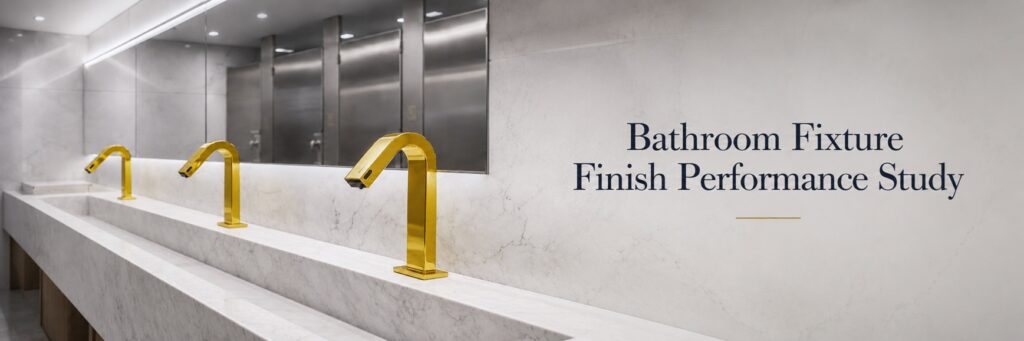
Cleaning labor belongs in lifecycle analysis
A finish or fixture geometry that requires additional wiping, special treatment or difficult access can add recurring labor. Across a hotel room inventory or commercial restroom portfolio, small cleaning differences can become meaningful operating costs. Mockups should therefore be reviewed by housekeeping and facility teams as well as designers.
5. Maintenance Access: The Most Expensive Part May Be the Wall Around the Fixture
A replaceable cartridge or electronic component may be relatively inexpensive. Accessing it can be expensive if the installation requires removal of stone, tile, cabinetry or waterproofed assemblies. Lifecycle-minded design separates component failure from architectural destruction.
Concealed valves, transformers, solenoids, pumps and digital modules should be located with realistic service paths. The access strategy should be documented in drawings and verified during construction rather than improvised after a failure.
6. Touchless Fixtures: Evaluate Power, Sensors and Service as One System
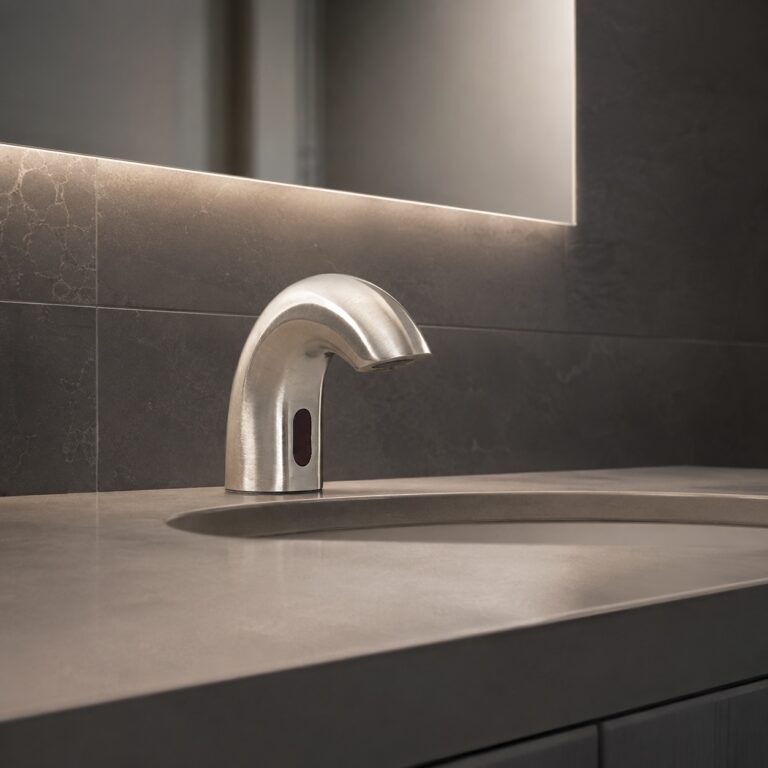
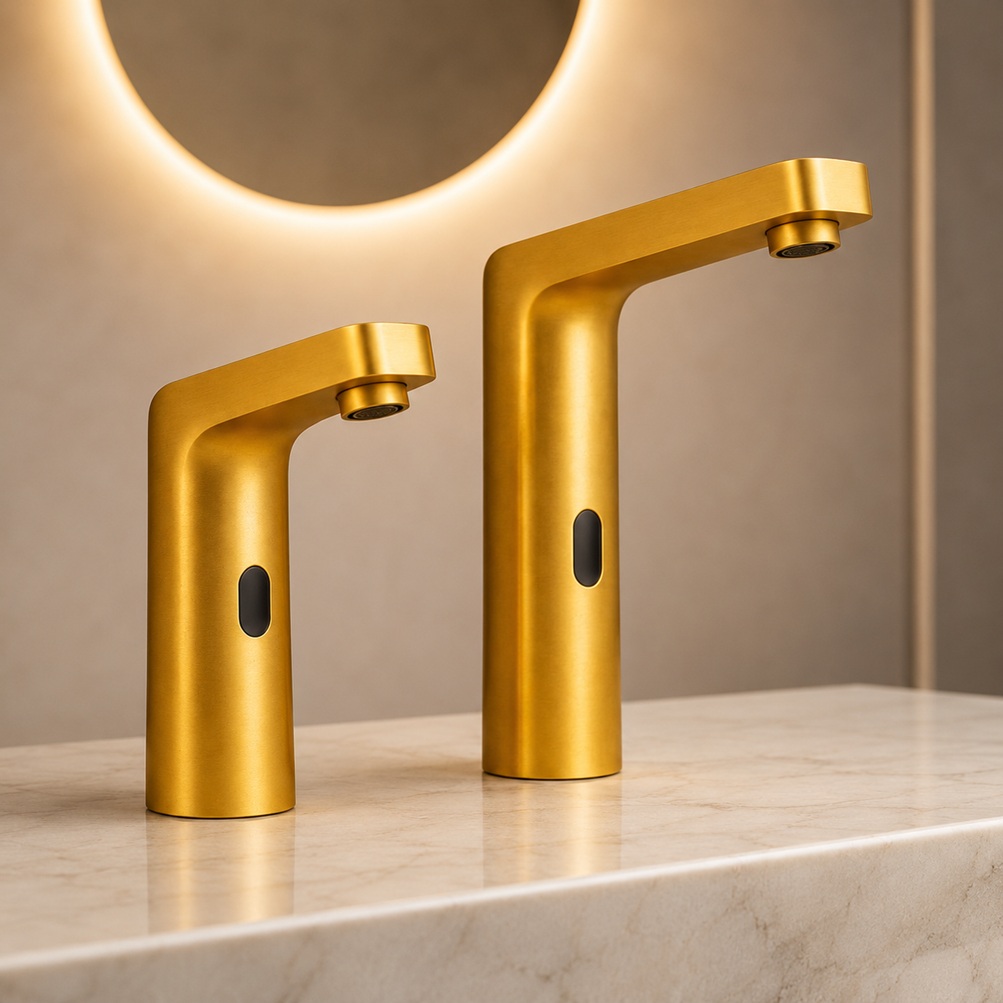
Touchless faucets can support efficient, intuitive handwashing, particularly in hospitality and commercial restrooms. Their lifecycle cost depends on sensor behavior, power architecture, solenoid accessibility, basin coordination and maintenance procedures—not simply the faucet body.
BathSelect Hospitality™ specifically identifies sensor placement, basin geometry, power strategy, hydraulic conditions and service access as specification priorities for its touchless faucet systems.
7. Downtime: A Hidden Cost in Hotels and Commercial Buildings
When a private bathroom fixture needs repair, inconvenience is usually the largest immediate consequence. In a hotel, a maintenance issue can affect room availability. In a commercial building, a fixture problem can close a washstation or restroom. Downtime therefore has an economic dimension.
Serviceable fixtures, accessible shutoffs, standardized components and documented maintenance procedures can reduce the time between diagnosis and return to service. Owners should consider this during procurement, especially when specifying large quantities of identical fixtures.
8. Accessibility Has Lifecycle Value
Accessible design is fundamentally about usability, but it can also reduce future retrofit risk. The U.S. Access Board requires compliant lavatories and sinks in accessible toilet and bathing rooms and defines clear floor space, knee/toe clearance and other criteria. Bathing rooms have their own accessible shower, bathtub, control and clearance provisions.
Planning these conditions correctly during design is far more efficient than altering finished bathrooms later. For hotels, commercial facilities and multifamily environments, accessibility should be part of the initial room and fixture strategy—not a late-stage correction.
9. Water Quality and Scale Can Change the Maintenance Equation
Water chemistry affects visible finishes and internal water pathways. Mineral buildup can restrict aerators and shower nozzles; sediment and biofilm can affect building water systems. CDC guidance for Legionella control identifies water heaters, mixing valves, aerators, showerheads, hoses and filters among components that require cleaning and maintenance as indicated by water-quality measurements.
For larger buildings, fixture selection should therefore connect to the broader water-management strategy. Easily maintained outlets and accessible mixing components can support operations long after initial installation.
10. Replacement Strategy: Standardization Without Design Monotony
Hotels and developers frequently renovate in phases. A fixture specified today may need a matching replacement years later. Lifecycle planning should consider whether cartridges, aerators, valves, electronic components and finish families can be identified and serviced without replacing an entire assembly.
Standardizing hidden components while varying visible design elements can sometimes give owners both design flexibility and operational consistency. The objective is not to make every bathroom identical; it is to reduce unnecessary maintenance complexity behind the finish.
11. Warranty Is Not the Same as Lifecycle Cost
A warranty can protect against qualifying defects, but it does not eliminate the importance of installation, maintenance or access. BathSelect™’s current warranty and product-support guidance distinguishes qualifying manufacturing defects from conditions such as installation labor, mineral buildup, sediment, poor maintenance, demolition and access costs. That distinction is important for owners: even when a component itself is covered, the surrounding project costs may not be.
For that reason, project documentation should retain order records, product identification, finish information, installation instructions and photographs where appropriate. Good documentation shortens future diagnosis and replacement decisions.
12. Renovation Cost: Design Today’s Bathroom for Tomorrow’s Work
Luxury bathrooms are rarely permanent. Hotels refresh guestrooms, residences change owners, accessibility needs evolve and technology advances. The best lifecycle design anticipates change without forcing complete demolition.
Service access, replaceable trim, logical rough-in locations, documented concealed conditions and durable waterproofing can all reduce the disruption of future renovation. A beautiful bathroom that cannot be economically altered is less adaptable than it appears.
A Practical Luxury Bathroom Lifecycle Cost Model
| Cost layer | Typical questions | Potential specification response |
|---|---|---|
| Purchase | What is included? Are concealed parts separate? | Compare complete installed assemblies. |
| Installation | Does it require special rough-in, power or support? | Review before bid and mockup. |
| Water + energy | What are application-appropriate flow rates? | Use efficient performance criteria. |
| Cleaning | How frequently will surfaces require attention? | Coordinate finish with cleaning program. |
| Maintenance | What parts wear and how are they accessed? | Specify serviceable components and access. |
| Downtime | What happens while a fixture is unavailable? | Standardize spares and service procedures. |
| Replacement | Can components be identified years later? | Retain schedules, model and finish records. |
| Renovation | Will replacement destroy surrounding finishes? | Plan adaptable rough-ins and access paths. |
BathSelect™ Lifecycle & Project Resources
Current product-support framework covering documentation, installation, maintenance and qualifying warranty conditions.
Hospitality sensor-faucet planning with emphasis on detection, basin geometry, power strategy and service access.
Central access to shower systems, faucets, vanities, bathtubs, hospitality fixtures and touchless categories.
Hospitality-oriented resource connecting premium fixture selection to project applications.
Independent Professional References
Lifecycle Specification FAQ
What is the biggest mistake when comparing luxury bathroom fixture prices?
Comparing only purchase price. Installation complexity, water and energy use, cleaning, maintenance, service access, downtime and replacement can materially affect ownership cost.
Can a more expensive fixture have a lower lifecycle cost?
Yes. If it performs efficiently, is easier to service, lasts longer in the intended environment or reduces recurring maintenance, higher initial cost can be offset over the service life. The result depends on the project and should be evaluated rather than assumed.
Why should hotels care about fixture downtime?
A bathroom problem can affect guest satisfaction or room availability. Fast diagnosis, accessible shutoffs, standardized parts and service access can reduce disruption.
How does water efficiency affect lifecycle cost?
Lower application-appropriate flow can reduce water use and, for hot-water fixtures, associated energy demand. Performance must remain suitable for the intended use.
Why is scale buildup a lifecycle issue?
Mineral buildup can affect flow, spray quality and appearance, increasing cleaning and maintenance requirements. Water quality and maintenance practices should inform fixture selection.
What should be documented for future fixture replacement?
Retain model numbers, finish names, valve and cartridge information, installation instructions, photographs of concealed conditions and approved substitutions where possible.
Why does accessibility belong in lifecycle planning?
Correct accessible planning reduces the risk of costly post-construction alterations and helps the building serve a broader range of users over time.
What is the most important lifecycle question for a concealed fixture?
Ask how it will be serviced. A modest component replacement can become expensive if access requires demolition of premium finishes.
Conclusion: Specify the Cost of Ownership, Not Just the Cost of Purchase
A luxury bathroom creates value when it continues to perform after the installation photographs are taken. Water should remain controlled. Finishes should remain maintainable. Components should be serviceable. Accessible geometry should remain useful. Replacement should not require unnecessary demolition, and future renovation should not begin by rediscovering what is hidden behind the wall.
For architects, hotels and developers, lifecycle thinking changes the specification conversation from “Which fixture costs less today?” to “Which system creates the strongest balance of experience, efficiency, durability, serviceability and long-term project value?”
BathSelect™ supports that broader project perspective through premium residential, hospitality and commercial fixture categories together with product-support and specification resources intended to help teams plan beyond the initial purchase.
Professional note: Lifecycle outcomes depend on product selection, installation, water quality, usage, maintenance, local codes and operating conditions. Project teams should confirm current product specifications, manufacturer instructions and applicable requirements before procurement or construction.