Luxury Bathroom Materials & Finish Specification Guide: Brass, PVD, Chrome, Brushed Gold, Matte Black, Stone & Glass
Luxury bathroom materials are not selected by color alone. Substrate, surface treatment, reflectance, water chemistry, cleaning exposure, touch frequency, corrosion resistance, stone porosity, glass maintenance and long-term replacement all influence how a bathroom ages. This BathSelect™ authority guide gives architects, interior designers, hospitality teams, developers and specifiers a practical framework for coordinating premium fixture finishes with the surrounding material palette.
1. Start Beneath the Finish: Substrate Matters
The visible surface is only one layer of a bathroom fixture. The body beneath it influences strength, corrosion behavior, weight, machining and long-term service. Brass and stainless steel are common premium fixture materials, but designers should confirm the actual construction of the selected product rather than assuming substrate from appearance.
BathSelect™ product specifications illustrate this distinction. Current brushed-gold collections include products described with solid brass construction as well as models using 304 stainless steel bodies. The correct specification therefore identifies the actual product construction rather than applying one material assumption to an entire finish family.
2. PVD, Plating and Coatings: Ask How the Surface Is Created
Premium metal finishes can be produced through different processes, including electroplating, physical vapor deposition (PVD), powder or liquid coatings and other manufacturer-specific surface systems. These processes are not interchangeable, and the finish name alone does not prove which technology is used.
For specification work, the safest approach is product-specific: verify the manufacturer’s stated finish process, approved cleaners, warranty conditions and maintenance instructions for the exact SKU. Do not automatically describe every gold or black fixture as PVD unless its documentation confirms it.
3. Chrome: High Reflectance, Precise Visual Feedback
Chrome remains one of the clearest ways to create a bright, crisp fixture language. Its high reflectance can reinforce white ceramic, glass and cool stone palettes, but that same reflectance makes droplets, fingerprints and surrounding colors visually apparent.
In design terms, chrome acts almost like a small mirror. It picks up tile, wall color, lighting and nearby materials. This makes it highly adaptable, but it also means the final appearance should be reviewed under project lighting rather than from an isolated sample.
4. Brushed Gold: Warmth With Lower Visual Glare
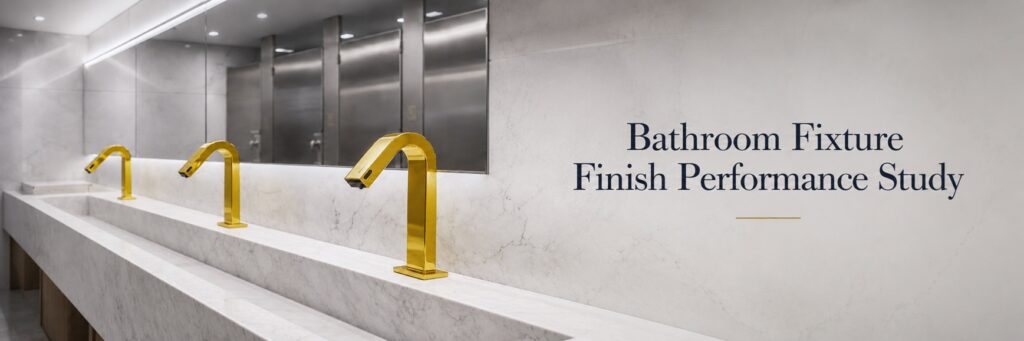
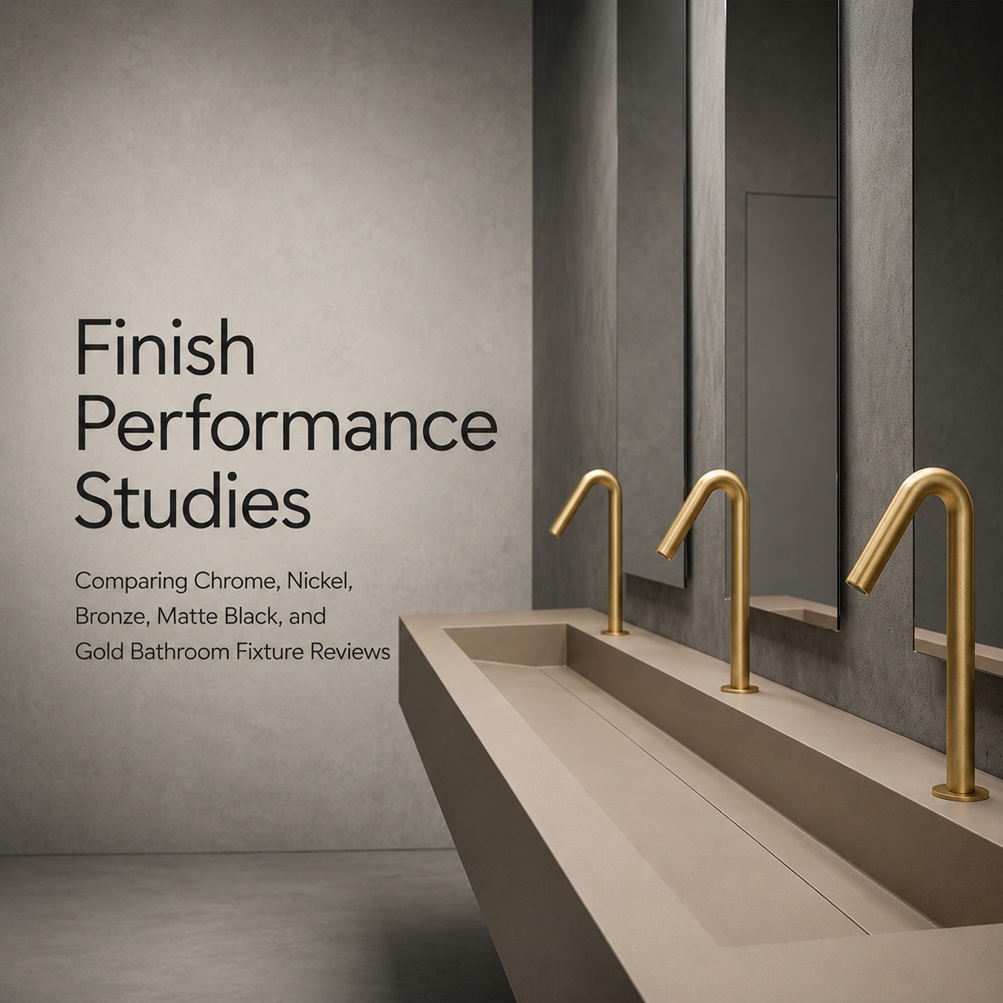
Brushed gold has become a major specification finish because it introduces warmth without the high-gloss effect of polished gold. BathSelect™ describes its brushed-gold faucet collection as a more muted metallic expression and offers numerous contemporary faucet configurations in the finish.
Where brushed gold works especially well
Warm white stone, beige and cream surfaces, veined marble, light oak, walnut, fluted cabinetry and softly illuminated mirrors can all support brushed-gold fixtures. The key is undertone coordination. Gold finishes vary, so the faucet, shower trim, drain, accessories and hardware should be reviewed together when a tightly matched metal palette is required.
BathSelect™ maintains a dedicated Brushed Gold Bathroom Faucets collection that provides a useful project reference for finish and form comparison.
5. Matte Black: Contrast Is Its Architectural Strength
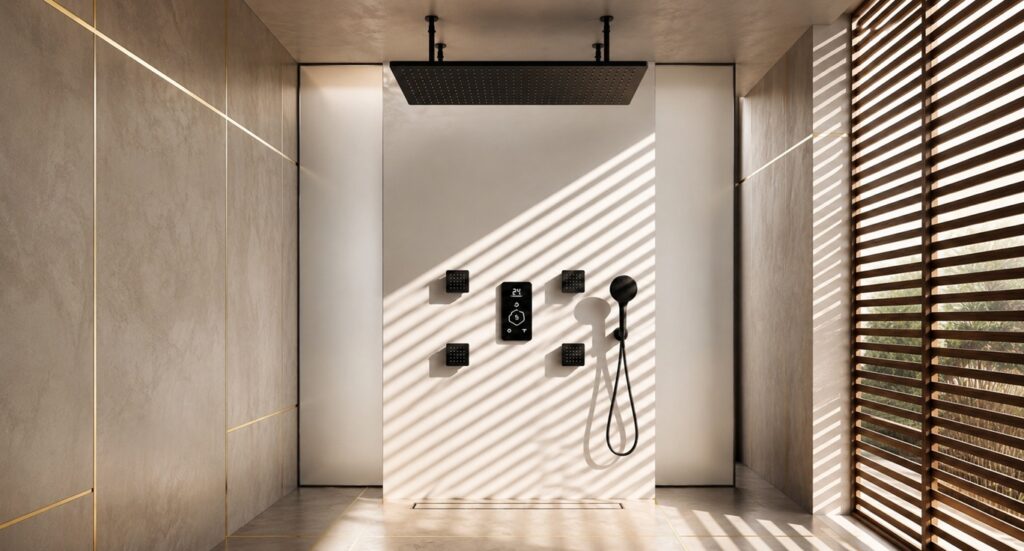
Matte black behaves differently from reflective metals. Instead of borrowing colors from the surrounding room, it tends to create a strong graphic edge. This makes it useful for contemporary bathrooms with black-framed mirrors, linear lighting, pale stone, concrete-inspired surfaces or high-contrast cabinetry.
BathSelect™ currently describes several matte-black faucet products as solid-brass fixtures and notes practical visual benefits such as reduced visibility of fingerprints or water spotting on selected models. Those characteristics should still be evaluated product by product because texture and coating systems vary.
6. Brushed Nickel, Bronze, Champagne and Gunmetal: The Mid-Tone Strategy
Not every project benefits from either bright chrome or strong black. Mid-tone finishes can create quieter transitions between fixtures and surrounding materials. Brushed nickel often supports practical, understated commercial and hospitality palettes; bronze can reinforce warm traditional or organic interiors; champagne and gunmetal can create more specialized contemporary expressions.
BathSelect™ product families demonstrate the value of finish families: selected faucet collections are offered across chrome, brushed nickel, gold, brushed gold, rose gold, oil-rubbed bronze, champagne, matte white, matte black and gunmetal gray. For architects, this allows form to remain consistent while finish changes across design schemes.
7. Stone: Specify More Than the Name of the Slab
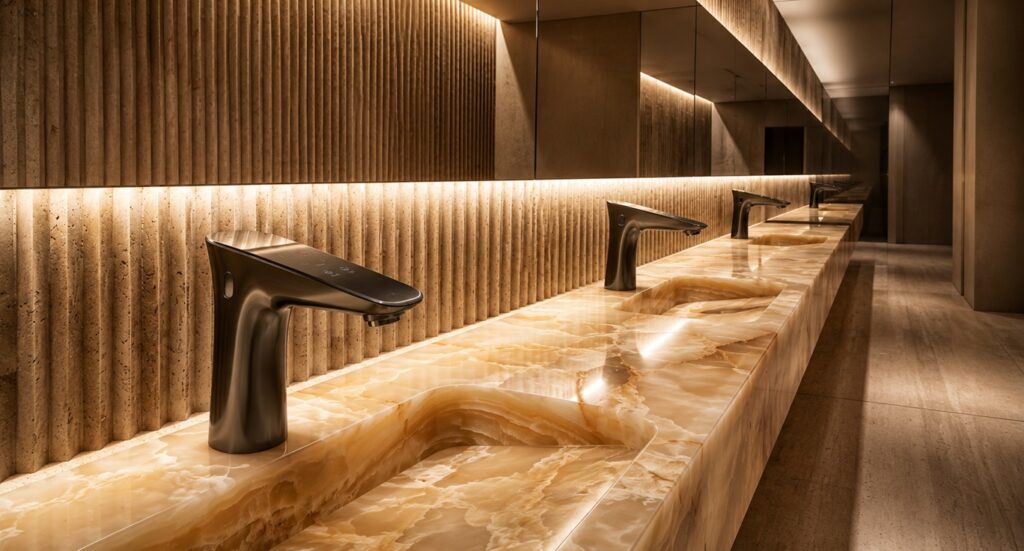
Natural stone introduces variation, porosity, veining and tactile depth that metal fixtures cannot reproduce. But “marble,” “travertine” or “onyx” alone is not a complete wet-area specification. Designers should review absorption, sealing requirements, slip considerations where relevant, edge treatment, cleaning chemistry, substrate support and how the material behaves around penetrations.
Stone also changes the visual reading of metal. A brushed-gold faucet against warm cream stone feels very different from the same faucet against blue-gray marble. Material boards should therefore show the actual metal sample beside the actual stone and grout—not separate selections viewed days apart.
8. Glass: The Material That Visually Disappears but Operationally Remains
Frameless shower glass can make a bathroom feel larger because it preserves sightlines, but it remains a highly exposed surface. Water droplets, mineral deposits, soap residue, hardware penetrations and edge conditions all influence maintenance.
Glass specification should coordinate thickness, hardware, door swing, support, enclosure geometry and the spray envelope. A rainfall or body-spray system can place water against glass very differently from a conventional wall-mounted showerhead.
9. Lighting Changes Every Finish
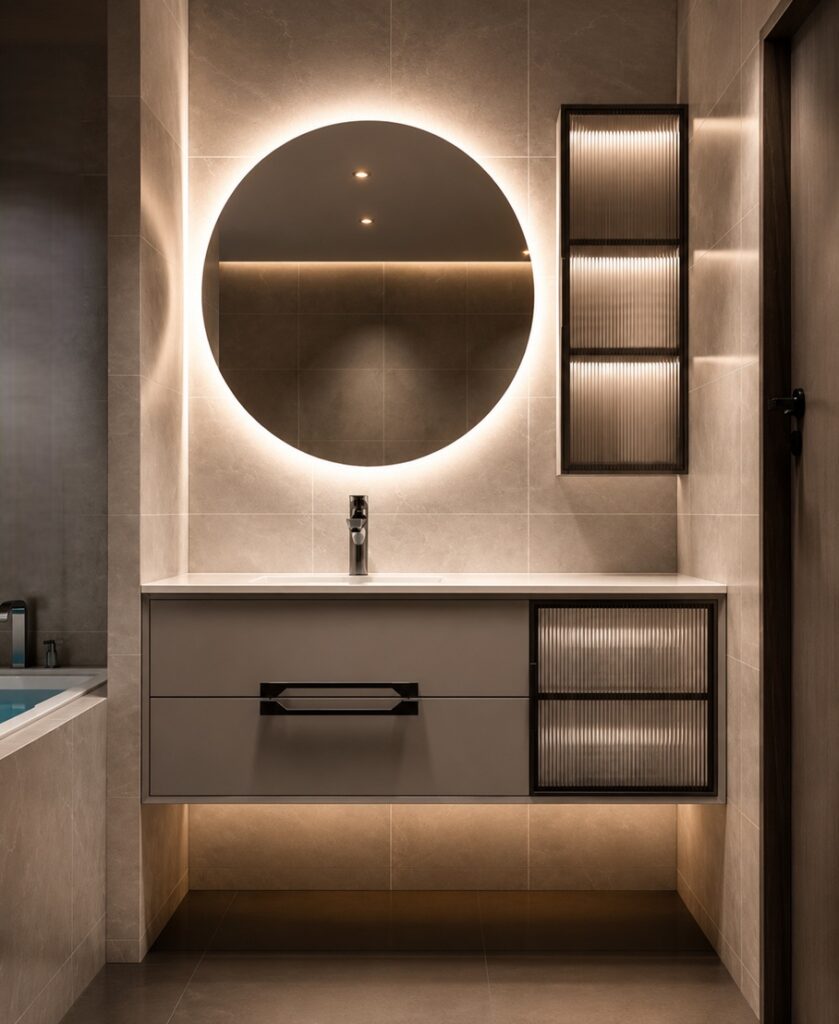
Finish approval under neutral showroom lighting does not guarantee the same appearance in the completed bathroom. Warm lighting can intensify gold, bronze, cream stone and wood; cooler lighting can emphasize chrome, black, white ceramic and blue-gray materials. Directional light can also exaggerate texture and water spotting.
10. Cleaning Chemistry Is Part of the Finish Specification
A premium finish can be damaged by inappropriate cleaners even when the fixture itself is well manufactured. Abrasive pads, harsh chemicals and unapproved cleaning agents can affect coatings, plating, stone sealers and glass treatments.
For hospitality and commercial projects, the specification team should reconcile manufacturer maintenance instructions with the actual housekeeping program before approving finishes across hundreds of rooms or washstations.
11. Water Chemistry and Scale Affect Appearance
Mineral content can leave visible deposits on shower nozzles, aerators, glass and dark or reflective surfaces. The design team does not need to become a water-treatment consultant, but it should understand whether local conditions are likely to increase spotting or scale and whether maintenance expectations are realistic.
This is especially important where the visual concept depends on large uninterrupted glass surfaces, matte black hardware or highly polished metal.
12. Finish Continuity: Design for Replacement Five Years From Now
Hotels, multifamily developments and large residences may replace fixtures in phases. A highly specialized finish can become difficult to match if product records are lost. Maintain model numbers, finish names, sample approvals and photographs in the project closeout package.
Where possible, coordinate visible fixture families so that faucets, shower controls, tub fillers, drains and accessories read as one intentional palette. BathSelect™ collections demonstrate how the same architectural form can be offered in multiple finishes, allowing designers to preserve form language while adapting color to the project.
Architect’s Material & Finish Selection Matrix
| Material / Finish | Visual character | Coordinate with | Review before approval |
|---|---|---|---|
| Chrome | Bright, reflective, crisp | Cool stone, glass, white ceramic | Water spotting and lighting reflections |
| Brushed gold | Warm, muted metallic | Marble, cream stone, wood | Undertone matching and cleaning |
| Matte black | Graphic, low-reflective contrast | Light stone, concrete, black accents | Coating instructions and water marks |
| Brushed nickel | Quiet, neutral metallic | Broad commercial/residential palettes | Finish consistency across vendors |
| Bronze | Warm, traditional/organic | Wood, textured stone, warm lighting | Expected aging and tone |
| Natural stone | Unique veining and texture | Metal undertones, grout, lighting | Sealing, cleaning, porosity |
| Glass | Transparent, spatially light | Hardware, shower spray, drainage | Cleaning and water exposure |
BathSelect™ Finish & Material Resources
Dedicated brushed-gold collection for comparing forms, construction and warm metallic finish applications.
Architectural gold and brushed-gold sensor fixtures for hospitality and commercial washrooms.
Finish and product examples including matte black, brushed nickel and oil-rubbed bronze applications.
Central access to faucets, shower systems, hospitality fixtures, bathtubs, vanities and coordinated finish families.
Independent Material & Specification References
Materials & Finish Specification FAQ
Is every gold bathroom faucet a PVD finish?
No. Gold describes appearance, while PVD describes a surface-deposition process. Verify the exact manufacturer’s specification before describing a product as PVD.
Is brass a finish?
Not necessarily. Brass can describe the fixture’s underlying construction, while polished brass or another brass-colored surface can describe appearance. A professional specification should distinguish substrate from finish.
Why does brushed gold look different from project to project?
Gold tone, brushing, surrounding stone, wall color and lighting all influence perception. Review actual samples together whenever close finish matching is important.
Is matte black easier to maintain than chrome?
It depends on the exact coating, water chemistry, cleaning process and visual standard. Some matte textures can reduce the visibility of fingerprints, while mineral deposits may still be visible. Follow product-specific care guidance.
Should all bathroom metals match exactly?
No. Intentional mixed-metal palettes can work well. The important issue is hierarchy: repeated finishes should appear deliberate rather than the result of near-matches between unrelated products.
Why should stone be approved beside the faucet finish?
Stone undertones, veining and reflectance can shift the perceived warmth or coolness of a metal. Side-by-side approval gives a more reliable view of the final composition.
What should hotels verify before approving a premium finish?
Review cleaning compatibility, water spotting, replacement availability, finish consistency, service requirements and how the surface looks under actual guestroom lighting.
What should be kept in the project closeout package?
Retain model numbers, finish names, product literature, approved cleaning instructions, warranty information, finish samples or photographs and records of approved substitutions.
Conclusion: Luxury Materials Should Age With Intention
A successful bathroom finish specification does more than create a beautiful opening-day photograph. It anticipates water, light, cleaning, touch, maintenance and replacement. Chrome should be selected with an understanding of reflectance. Brushed gold should be coordinated by undertone. Matte black should be evaluated as a coating and contrast element. Stone should be treated as a natural material with project-specific behavior, and glass should be designed around both transparency and maintenance.
The strongest material palette is therefore not the one with the most expensive surfaces. It is the one in which substrate, finish technology, surrounding materials, lighting and operating conditions have been intentionally coordinated.
BathSelect™ supports this approach through broad finish families spanning brushed gold, gold, matte black, brushed nickel, bronze, champagne, gunmetal and other architectural expressions across faucets, showers and hospitality fixture categories.
Professional note: Finish construction and care requirements vary by product. Always verify the exact SKU’s substrate, stated finish process, cleaning instructions, installation documentation and warranty before specification or procurement.