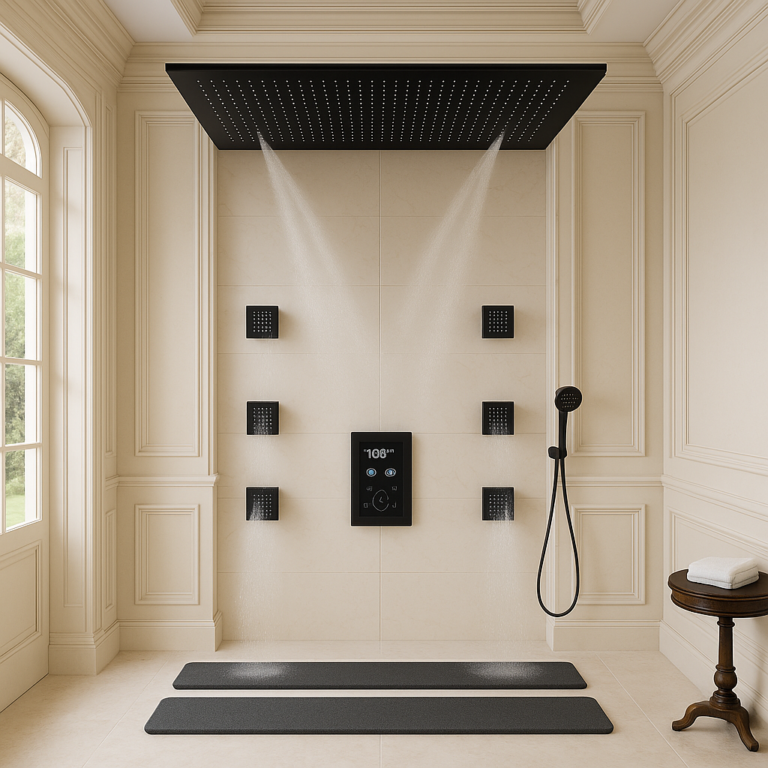
Luxury Hotel Bathroom Design Standards: An Architect & Specifier Guide
A hotel bathroom must accomplish something a private residential bathroom rarely has to do: deliver a premium, intuitive experience to thousands of different users while remaining accessible, water-conscious, cleanable, serviceable and consistent across many rooms. This BathSelect Hospitality™ reference examines the design standards and coordination principles behind high-performing guestrooms, suites, spa bathrooms and public hospitality washrooms.
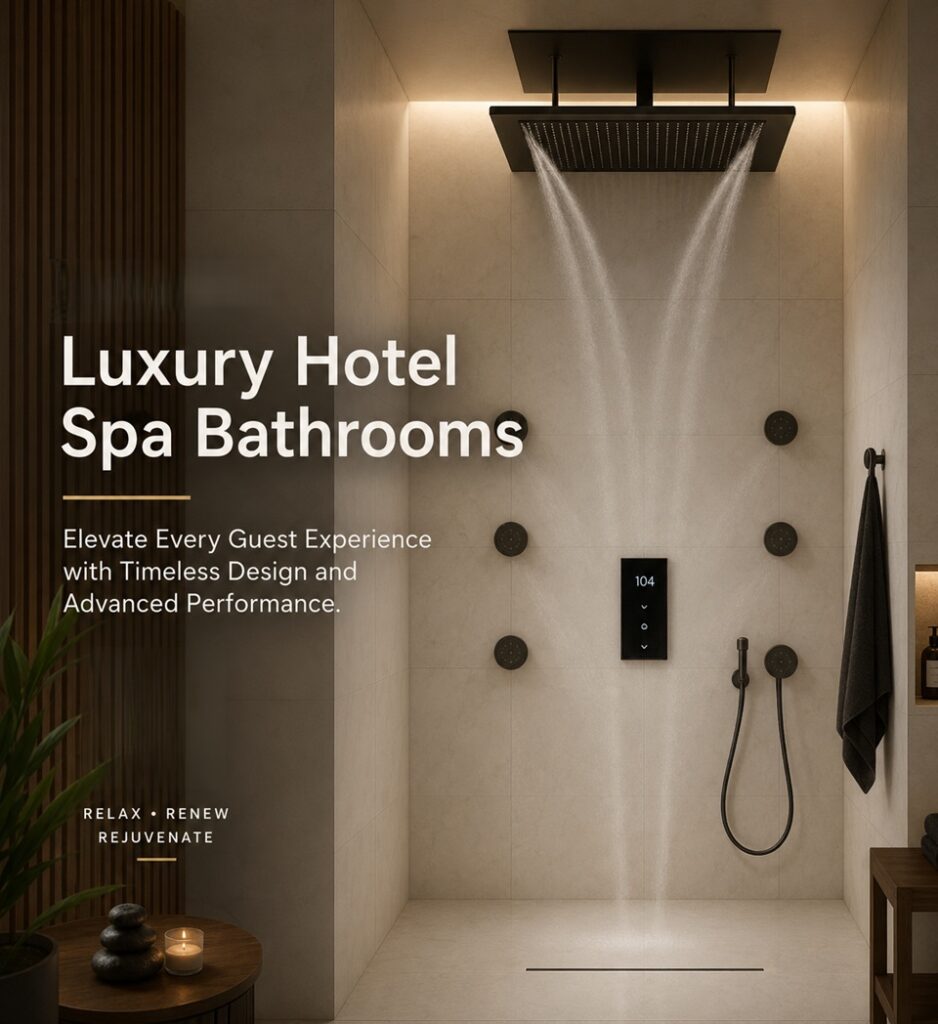
1. Begin With the Guest Journey, Not the Fixture Schedule
A hotel guest enters a bathroom without training. The room should therefore communicate its use almost immediately. Faucet operation, shower temperature, outlet selection, mirror lighting, towel location and nighttime illumination should be understandable without reading a manual.
This principle becomes more important as bathrooms incorporate digital controls, multi-function showers, touchless fixtures and lighting scenes. Technology should reduce effort, not add uncertainty. A guest who cannot determine how to start a shower does not experience the fixture as advanced; they experience the room as difficult.
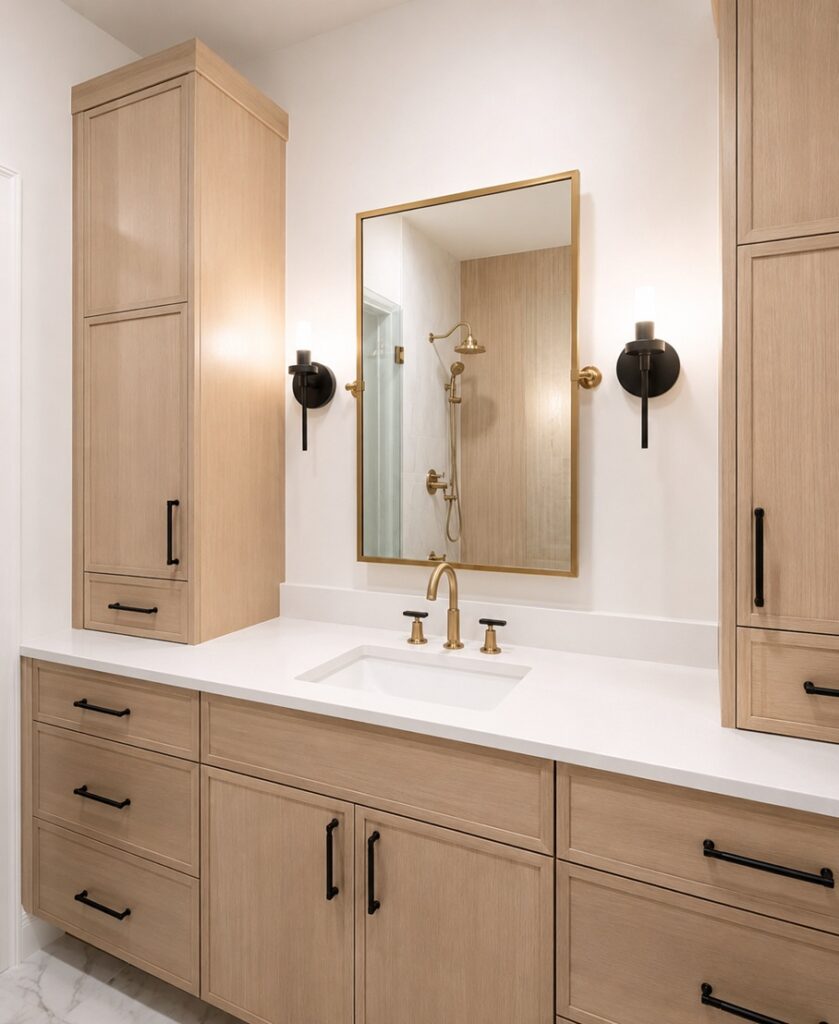
2. Guestroom Showers: Balance Luxury, Water Efficiency and Repeatability
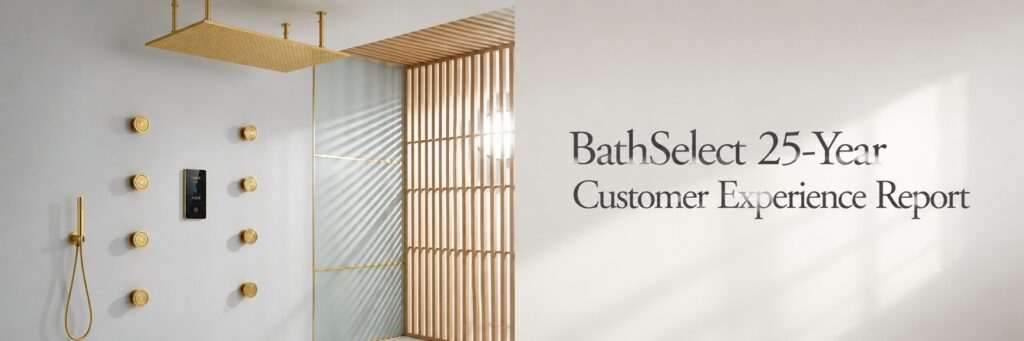
For many hotel guests, the shower is the defining bathroom feature. The experience depends on water coverage, temperature stability, control clarity, hand-shower placement, enclosure geometry and drainage—not simply the physical size of the showerhead.
EPA WaterSense states that labeled showerheads use no more than 2.0 gallons per minute and must satisfy independent performance criteria addressing spray force, spray coverage and pressure compensation. That is a useful design lesson for hospitality: water efficiency and guest satisfaction should be evaluated together rather than treated as opposing goals.
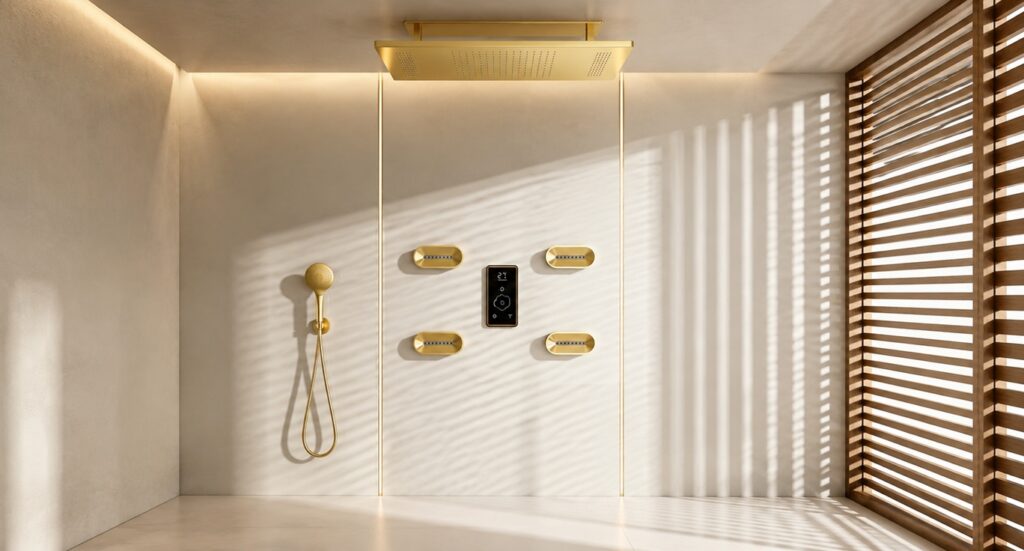
Thermal stability belongs in the guest-experience brief
The 2024 International Plumbing Code requires individual shower and tub/shower valves to use balanced-pressure, thermostatic or combination technologies conforming to referenced standards, and requires a means of limiting the maximum setting to 120°F (49°C). Project teams must still confirm the adopted code and local requirements, but the underlying design principle is universal: predictable water temperature is both a comfort and risk-management issue.
| Shower decision | Hotel design question | Coordinate with |
|---|---|---|
| Rainfall head | Does spray coverage feel generous at the selected flow? | Pressure, valve capacity, mounting height |
| Hand shower | Can standing and seated users reach it comfortably? | Accessibility, slide bar, hose length |
| Body sprays | Do outlet heights suit different guest statures? | Wet-wall layout, simultaneous demand |
| Controls | Can an unfamiliar guest understand them immediately? | Valve architecture, graphics, reach |
| Drainage | Can the wet zone contain expected flow? | Slope, drain capacity, enclosure |
3. Accessible Hotel Bathrooms Must Be Planned at the Room-Inventory Level
Accessibility in transient lodging is not simply a matter of adding a grab bar to selected bathrooms. The ADA Standards contain scoping requirements for transient lodging guest rooms, and the U.S. Access Board notes that a portion of accessible guest rooms must provide roll-in showers with folding seats. Doors, turning space, plumbing fixtures, mirrors, dispensers, shelves, controls and other elements are part of the accessible bathing-room framework.
This affects early hotel planning because accessible room types must be integrated into the room matrix, structural grid, plumbing stack strategy and interior-design language. The best accessible rooms feel like part of the same hotel rather than visibly downgraded versions of the standard guestroom.
4. Vanities and Sinks: Design the Guest’s Daily Work Surface
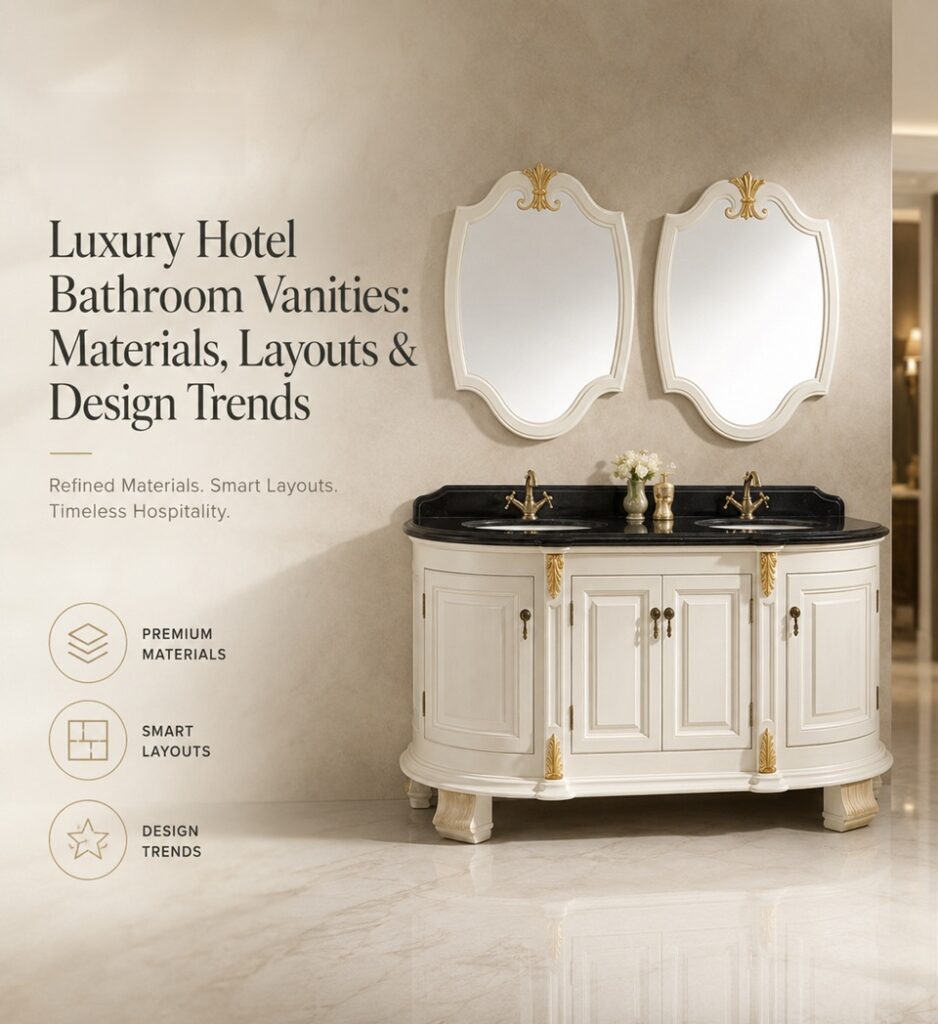
The hotel vanity performs far more work than a residential powder-room counter. Guests may place cosmetics, medication, shaving equipment, phones, jewelry, toiletry bags and travel accessories around the sink. A visually dramatic basin that leaves no usable landing space can reduce real-world comfort.
Faucet height and reach should be coordinated with the sink so that the water stream lands appropriately inside the basin. Vessel, pedestal, under-mount and integrated sinks require different relationships. BathSelect Hospitality™ makes this coordination explicit in its dedicated Hospitality Bathroom Sink Series, which organizes project considerations around basin geometry, faucet compatibility, splash control and maintenance.
5. Bathtubs in Luxury Suites: Treat the Tub as Architecture, Not Furniture
Freestanding tubs create a strong visual identity in suites and spa guestrooms, but their apparent simplicity can hide significant coordination. The project team should review the filled weight of the tub, occupant load, floor structure, rim and entry height, filler reach, drain location, waterproofing strategy and access to components.
Hydromassage or electrically powered bathing systems add another layer of coordination because pumps, power and service zones must remain accessible. BathSelect Hospitality™ specifically frames its Hospitality Bathtub Series around comfort, structural loading, drainage, utilities and lifecycle access for hotel suites, resorts, spas and branded residences.
6. Public Hotel Restrooms: Touchless Design Becomes a Systems Decision
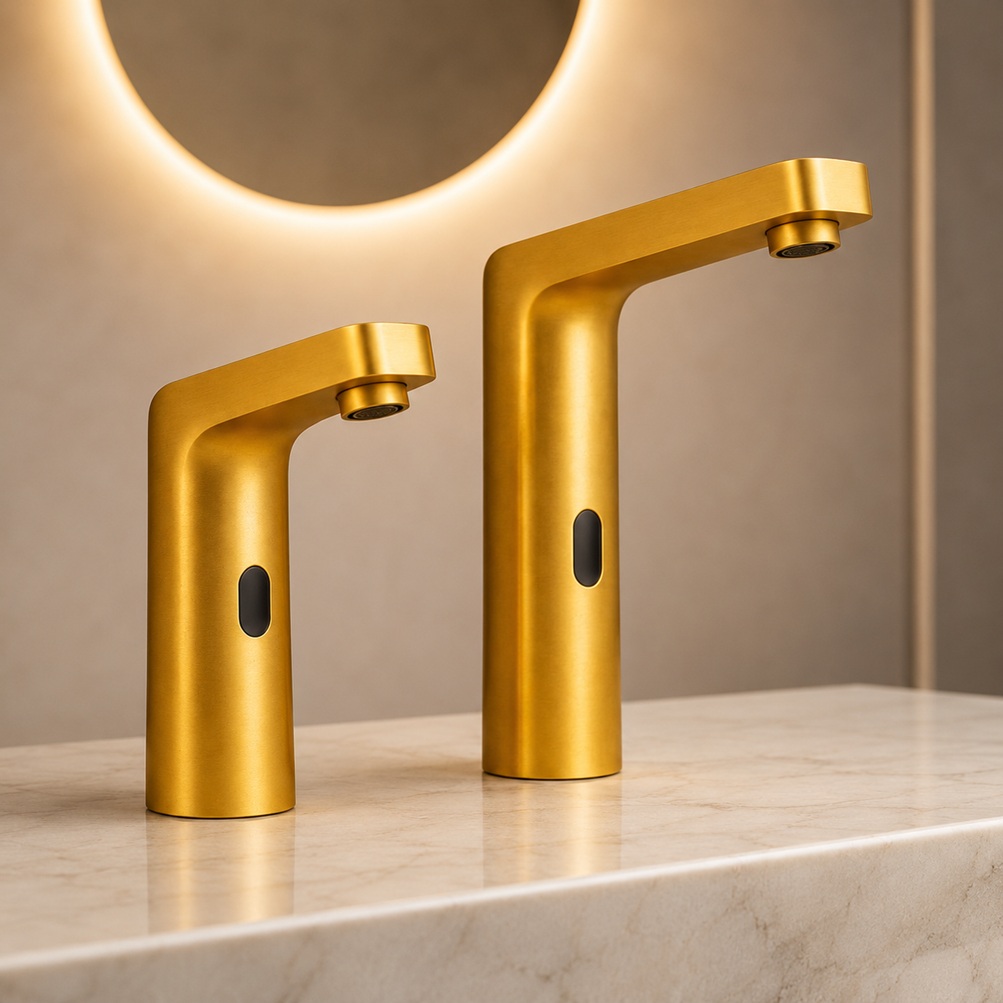
Lobby, restaurant, ballroom, spa and conference restrooms operate differently from private guestrooms. They experience more users, more cleaning cycles and greater pressure on maintenance teams. Touchless fixtures can simplify the handwashing sequence, but successful performance depends on much more than sensor activation.
Sensor range, water landing, basin geometry, soap location, power supply, solenoid access and shutoff behavior should be coordinated as one handwashing station. BathSelect Hospitality™ addresses this directly through its Coordinated Handwashing Systems and Hospitality Touchless Faucet Series.
Private and public lavatory efficiency are not the same specification
EPA WaterSense currently applies its bathroom-faucet labeling criteria to private lavatories such as hotel guestroom sinks. EPA notes separately that public lavatory faucets in non-private toilet facilities should have flow rates of 0.5 gpm or less to be considered efficient and meet plumbing-code requirements. Architects should therefore distinguish guestroom faucets from lobby or public-restroom faucets in water-efficiency schedules rather than applying one flow assumption everywhere.
7. Materials and Finishes: Hospitality Luxury Must Tolerate Housekeeping
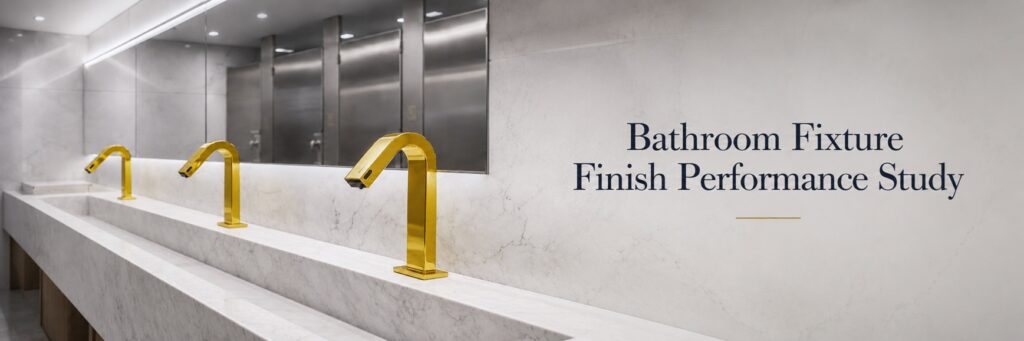
Hotel fixtures are touched, wiped, disinfected and exposed to water repeatedly. Finish selection should therefore consider more than sample-board appearance. Substrate, coating system, approved cleaners, abrasion, water chemistry, mineral deposits and replacement consistency across future room renovations can all matter.
| Finish question | Why hospitality teams should care |
|---|---|
| Can housekeeping use the approved cleaner safely? | An attractive finish that is incompatible with actual cleaning practice can age prematurely. |
| Will water spots be highly visible? | Housekeeping labor and perceived cleanliness are linked to surface behavior. |
| Can matching replacement fixtures be sourced later? | Hotels often renovate in phases; finish continuity matters across room inventory. |
| Does lighting alter the approved finish? | Gold, bronze, chrome and black can read differently under warm and cool light. |
8. Lighting, Mirrors and Nighttime Use
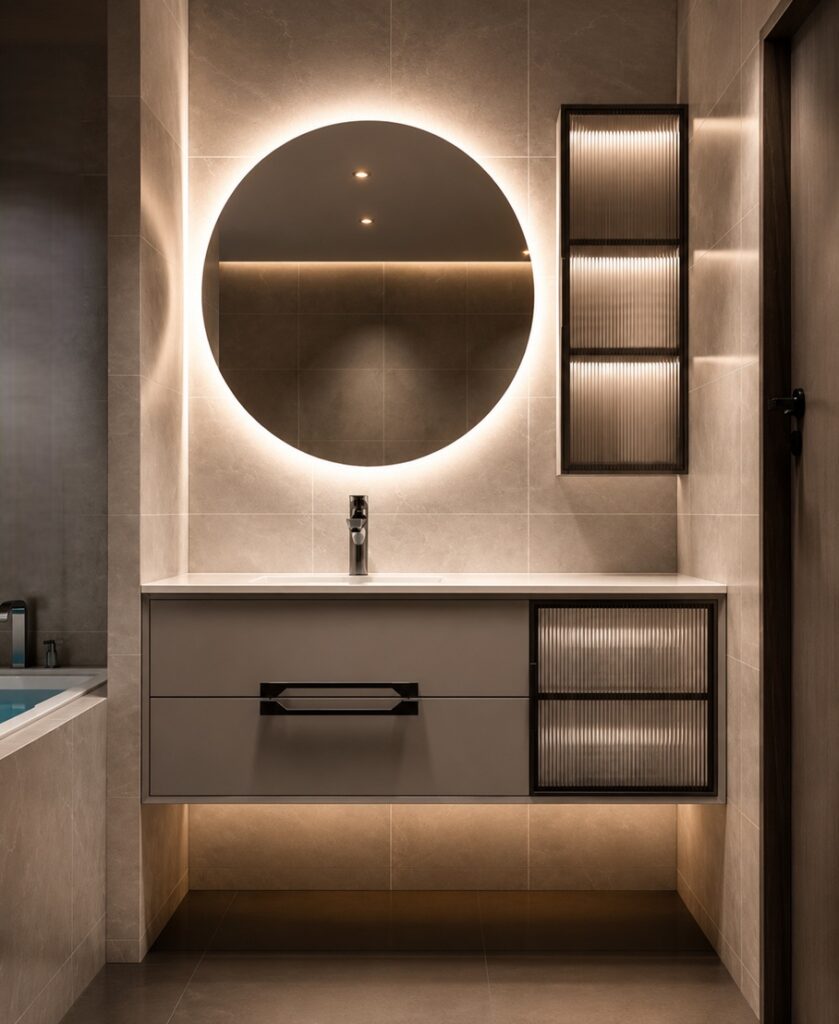
Hotel bathroom lighting must work for a guest who may be preparing for a business meeting at dawn, applying cosmetics under mirror light, using the bathroom at night or creating a spa-like atmosphere in the evening. Layering is therefore preferable to relying on one strong overhead source.
Mirror lighting should provide useful facial illumination without harsh glare. Night lighting should support orientation without forcing full brightness. Integrated LEDs and digital controls should remain visually understandable even when the room is dim.
9. Water Management: The Hidden Hospitality Standard
Hotels contain complex hot- and cold-water distribution systems with many guestrooms, intermittent occupancy patterns and aerosol-generating fixtures such as showers and faucets. For certain buildings, water management therefore extends beyond utility savings into operational water quality.
CDC guidance for potable water systems identifies showers, sink faucets and mixing valves among relevant building-water components and emphasizes controls such as temperature management, flushing and system maintenance within Legionella water-management programs.
10. Sustainability: Reduce Resource Use Without Making Luxury Feel Reduced
Hospitality sustainability becomes credible when it is integrated into performance rather than treated as a marketing overlay. Efficient showerheads can reduce both water use and the energy associated with heating water. Efficient guestroom faucets reduce demand without necessarily reducing usability. Durable products can reduce replacement frequency. Serviceable systems can extend useful life.
LEED and WELL offer broader frameworks that help teams connect water efficiency with environmental performance and human experience. The strongest luxury projects do not ask guests to choose between comfort and responsible resource use; they engineer both into the same experience.
11. Housekeeping and Maintenance Should Influence Design Before Opening Day
A hotel bathroom may be cleaned hundreds of times per year. Every extra ledge, inaccessible joint, difficult-to-reach fixture base and complicated control can affect housekeeping time. The most successful premium bathrooms often look visually simple because unnecessary complexity has been removed.
Engineering teams face a different question: can the valve, sensor, transformer, pump, drain connection or control module be serviced without destructive work? A high-cost fixture with poor service access can create greater lifecycle cost than a better-coordinated premium fixture.
12. The Hotel Bathroom Mockup: Where Design Becomes Evidence
For multi-room hospitality projects, a full-scale bathroom mockup is one of the most valuable quality-control tools available. It allows the project team to test actual reach, faucet splash, lighting, mirror height, shower controls, storage, door swings, towel placement, cleaning access and maintenance clearances before hundreds of rooms repeat the same detail.
The mockup should be evaluated by design, ownership, operations, housekeeping, engineering, accessibility consultants and—where appropriate—brand representatives. The objective is not merely approval of appearance. It is verification of the complete user and operational experience.
Hospitality Bathroom Specification Matrix
| Zone | Primary design objective | Critical coordination | Operational concern |
|---|---|---|---|
| Guestroom vanity | Comfort + counter usability | Faucet reach, basin, mirror, lighting | Splash and cleaning |
| Guestroom shower | Predictable premium experience | Flow, thermal control, drainage, enclosure | Scale, seals, valve access |
| Suite bathtub | Wellness + visual identity | Structure, filler reach, drain, service | Cleaning and access |
| Accessible room | Equivalent premium usability | Scoping, clearances, controls, shower type | Fixture durability |
| Public restroom | Fast intuitive handwashing | Sensor faucet, soap, basin, power | High-cycle maintenance |
| Spa/wellness bathroom | Thermal and sensory comfort | Water, lighting, acoustics, materials | Humidity and service |
BathSelect Hospitality™ Professional Resources
These live BathSelect Hospitality™ resources connect the design principles above to dedicated hospitality fixture categories.
Automatic sensor faucets for hotels, resorts, restaurants, spas and premium public restrooms.
Faucet, soap-delivery, basin and service-planning coordination for guest-facing public washrooms.
Vessel, marble, ceramic and architectural basins organized for hospitality vanity planning.
Deck-mounted and freestanding tub-filler solutions for suites, resorts and spa bathrooms.
Freestanding soaking and hydromassage bathing systems with project-planning considerations.
Central access to hospitality, shower, touchless, vanity, sink and commercial bathroom categories.
Independent Professional Hospitality References
The following sources were selected because they support code, accessibility, water-performance, sustainability, wellness and building-water decisions relevant to hospitality bathrooms.
Luxury Hotel Bathroom FAQ for Architects, Designers & Developers
What should be specified first in a hotel bathroom: finishes or plumbing?
The planning should be coordinated rather than sequential, but concealed plumbing geometry, fixture rough-ins, accessibility clearances and wet-zone dimensions should be established early enough that finish decisions do not force expensive field changes.
How can a hotel reduce shower water use without making the guest experience feel reduced?
Evaluate independently certified performance rather than flow alone. EPA WaterSense showerhead criteria include spray force, coverage and pressure compensation as well as a maximum labeled flow of 2.0 gpm.
Are WaterSense faucet rules the same for hotel guestrooms and public hotel restrooms?
No. EPA currently applies WaterSense faucet labeling to private lavatories, which can include hotel guestroom bathrooms. EPA separately notes that public lavatory faucets should use 0.5 gpm or less to be considered efficient and meet plumbing-code requirements.
Why should housekeeping review the hotel bathroom mockup?
Housekeeping can identify difficult-to-clean joints, splash problems, awkward fixture bases, insufficient counter space and other operational details that may not be obvious in drawings or design presentations.
Why are service panels important in luxury hotel bathrooms?
Accessible service zones can allow engineering teams to repair valves, pumps, electronic modules and connections without damaging premium wall or floor finishes or unnecessarily extending room downtime.
How should accessible hotel bathrooms fit the design language of the property?
They should maintain the same level of material, fixture and visual quality as other guestrooms while meeting the required geometry, clearances, controls and bathing configurations. Accessibility should not signal a lower design standard.
What makes a touchless hotel restroom system successful?
Faucet sensing, water landing, basin geometry, soap placement, power, shutoff behavior and component access must be coordinated. Specifying the sensor faucet alone does not guarantee a good handwashing station.
Why does water management matter in hotels?
Hotels contain complex water systems with many outlets and variable occupancy. CDC guidance identifies showers, faucets and mixing valves as relevant components in building-water management and Legionella control strategies.
Conclusion: A Five-Star Bathroom Is a Performance Standard, Not a Finish Package
Luxury hospitality bathrooms succeed when the guest notices the experience rather than the engineering behind it. The shower is intuitive. Temperature is stable. The vanity has useful space. Lighting makes the room comfortable at different times of day. Accessible rooms feel equally premium. Public restrooms support efficient handwashing. Housekeeping can clean the space effectively, and engineering staff can service its systems without unnecessary damage.
Those outcomes are created before the hotel opens—through disciplined coordination between architecture, interiors, plumbing, electrical systems, accessibility, procurement, housekeeping and operations.
BathSelect Hospitality™ supports this approach through hospitality-focused collections spanning sensor faucets, coordinated handwashing, architectural sinks, bathtub fillers and luxury soaking systems, connecting fixture design to the practical requirements of hotel and resort projects.
Professional note: This article is an educational planning reference. Codes, accessibility obligations and engineering requirements vary by jurisdiction and project. Always confirm the adopted codes, accessibility criteria and current manufacturer documentation before specification, procurement or construction.