
The Science of the Luxury Bathroom: Water, Temperature, Light, Materials & Human Experience
A luxury bathroom is not defined by expensive finishes alone. Its quality emerges from the interaction of hydraulic performance, thermal control, visual comfort, material behavior, ergonomics, accessibility, maintenance and the way a person physically experiences water. This BathSelect™ reference examines the bathroom as a coordinated human environment rather than a collection of isolated fixtures.
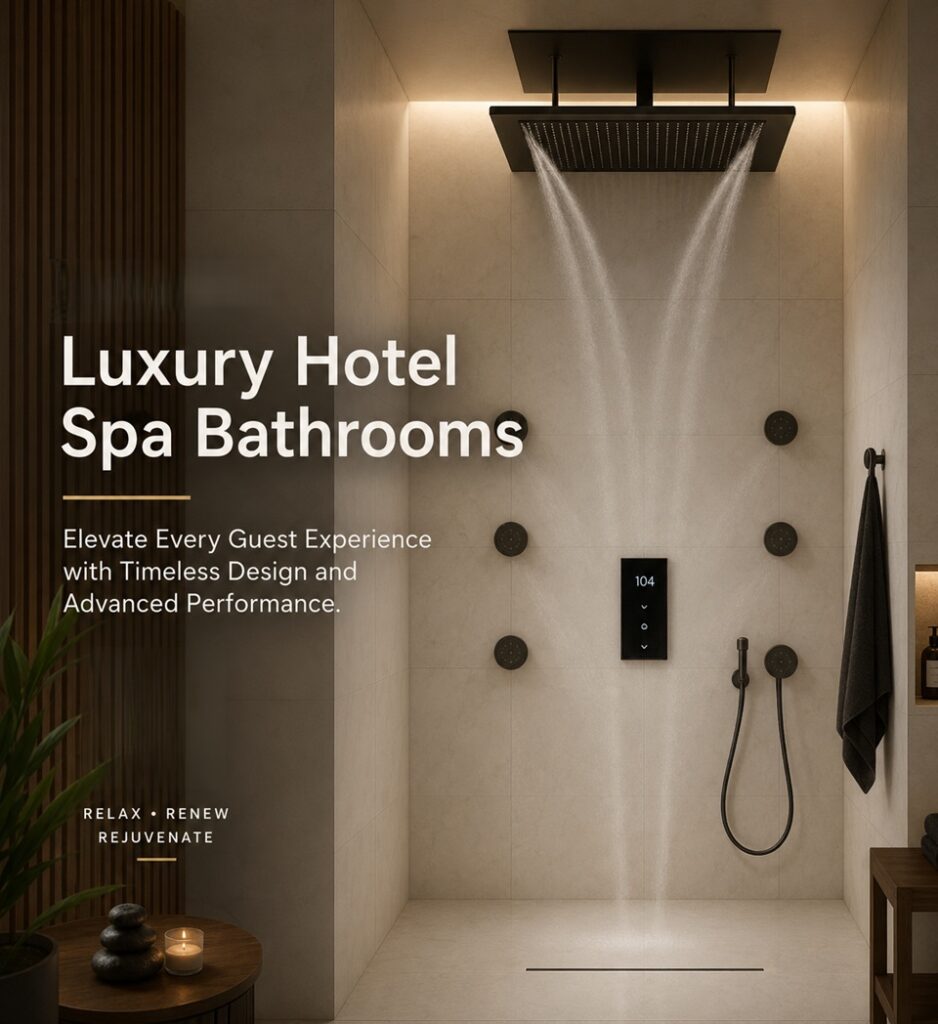
The central idea: the modern luxury bathroom behaves like a small environmental system. Water must arrive at the right pressure and flow; temperature must remain predictable; light must support both function and atmosphere; materials must tolerate moisture, cleaning and repeated touch; and every control, edge, surface and fixture must make sense to the person using it. When those systems are coordinated early, luxury becomes measurable as comfort, clarity, reliability and ease—not simply ornament.
1. Water: Luxury Begins With Controlled Hydraulics
In a well-designed bathroom, water is not treated as a decorative effect. It is a controlled resource moving through valves, supply lines, outlets, drains and user interfaces. A rainfall head that looks impressive in a rendering can still deliver a disappointing experience if the available pressure, valve capacity, simultaneous outlet demand or hot-water supply is not coordinated with the selected fixture configuration.
This is especially important in multi-function shower systems. A ceiling rainfall head, handheld shower and body sprays may each perform well independently, but a designer must consider what happens when two or more outlets operate together. Pipe sizing, pressure loss, valve flow capacity and hot-water recovery can become more important than the visual dimensions of the shower head itself.
Flow rate and perceived performance are not the same thing
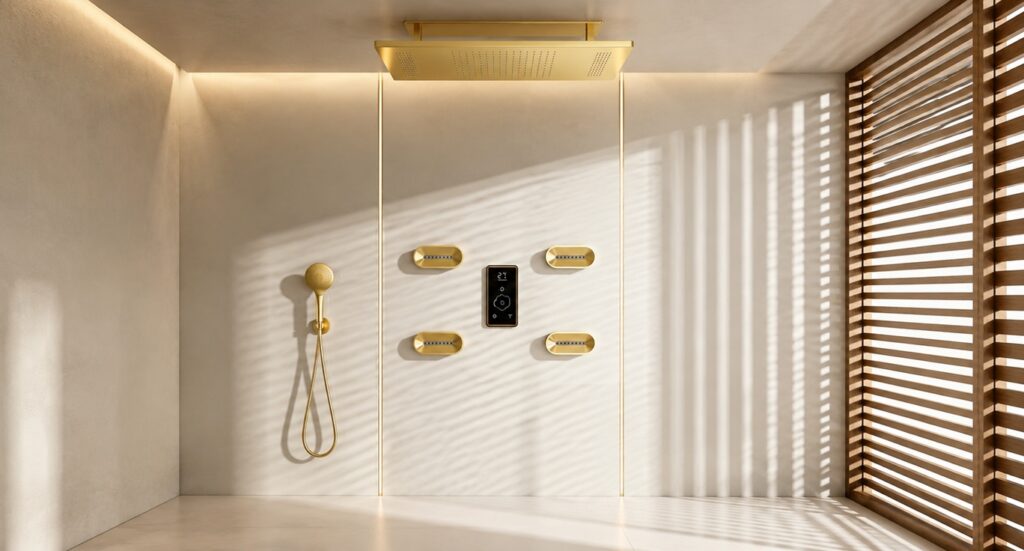
A satisfying shower depends on more than gallons per minute. Spray distribution, droplet size, nozzle pattern, spray force, head geometry and the user’s distance from the outlet all influence perceived performance. EPA WaterSense addresses this distinction by requiring qualifying showerheads to meet both water-efficiency and performance criteria. For projects pursuing water reduction, the design objective should therefore be efficient experience, not indiscriminate flow reduction.
BathSelect™ organizes rainfall, thermostatic, digital, LED, handheld and body-spray configurations within its Complete Luxury Shower Systems collection, allowing project teams to compare complete system types rather than treating every shower component as an isolated purchase.
Drainage is part of the water experience
Luxury shower design often concentrates attention above the floor, but drainage determines how the environment behaves under actual use. Large-format showers, multiple outlets and curbless layouts require sufficient drainage capacity, correct floor pitch, waterproofing continuity and careful threshold planning. Water that lingers on a floor, escapes the wet zone or overwhelms a drain undermines both comfort and material longevity.
2. Temperature: The Difference Between Heat and Thermal Control
Warm water is expected. Stable water is engineered. The more sophisticated the shower environment becomes, the more important temperature management becomes because sudden pressure or supply changes can alter the mixed-water temperature delivered to the user.
Thermostatic and pressure-balancing technologies address different aspects of this problem. The design team must review the valve type, flow capacity, outlet arrangement, maximum-temperature setting and the manufacturer’s commissioning requirements rather than assuming that every mixer provides the same level of control.
Digital controls change the relationship between the person and the valve
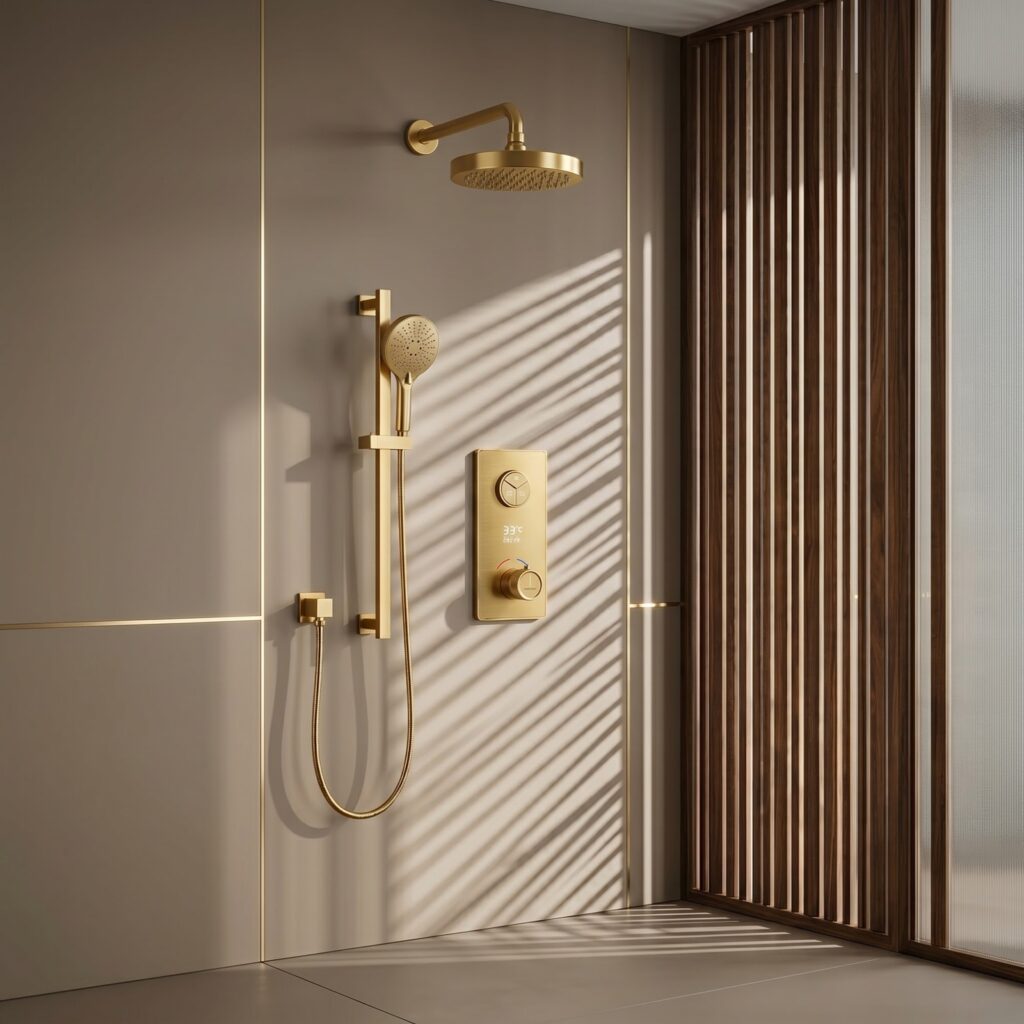
Traditional controls ask the user to infer temperature through handle position and repeated adjustment. Digital interfaces can make temperature visible, separate temperature from outlet selection, and provide clearer feedback. That does not eliminate the underlying plumbing requirements; it changes the interface through which the user interacts with them.
For deeper technical planning around digital mixing, controllers, diverters, wiring and commissioning, see the BathSelect™ Smart Showers Technical FAQ.
3. Light: The Bathroom Is a Visual Environment Before It Is a Fixture Schedule
Bathrooms ask the eye to perform very different tasks within a small area. A person may move from low ambient light to bright mirror illumination, from reflective polished metal to matte stone, and from a dry vanity zone into a shower where water droplets and steam alter contrast. Lighting therefore influences not only appearance but visual orientation and perceived comfort.
A high-performing scheme usually layers light rather than relying on one bright ceiling source. General illumination establishes spatial clarity, vertical or mirror lighting supports grooming, integrated lighting can identify controls or create emphasis, and lower-intensity ambient light can soften the room during evening use.
Color temperature changes the reading of materials
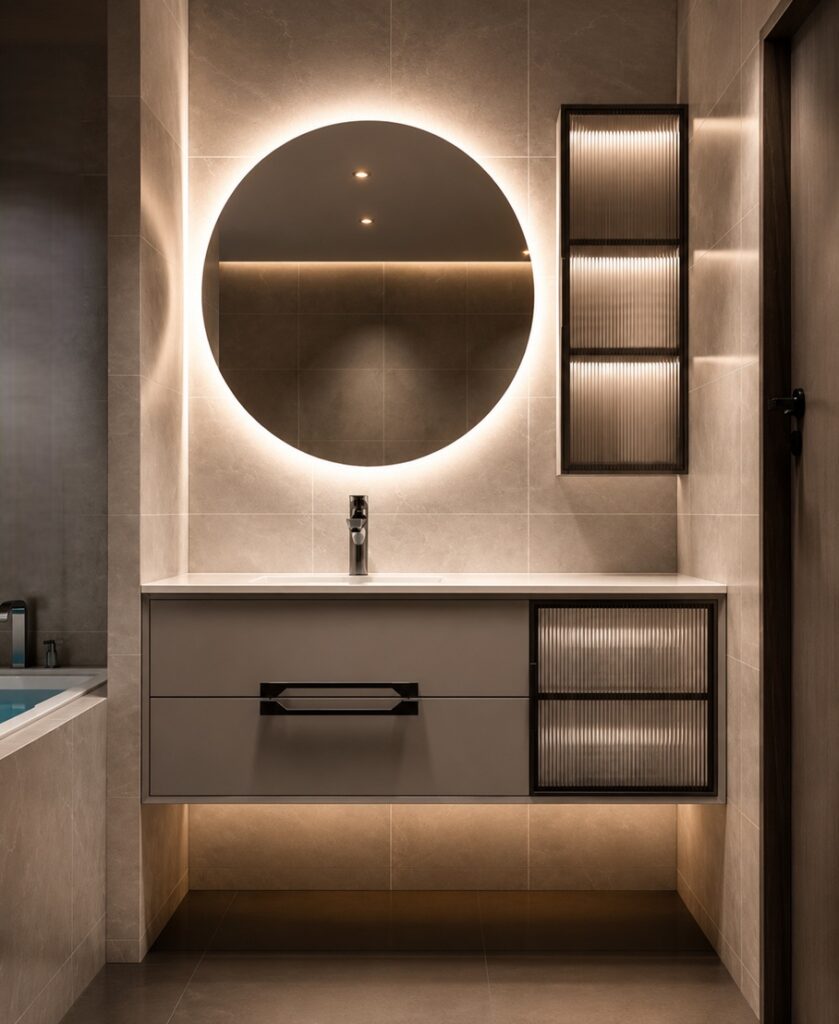
Warm light generally enriches brass, gold, bronze, warm stone and wood tones, while cooler light can make chrome, white ceramic and blue-gray materials appear crisper. This means fixture finish selection and lighting specification should be reviewed together. A finish approved under showroom lighting may read differently under the actual bathroom’s luminaires, mirror lighting and daylight conditions.
Integrated shower lighting should support orientation, not visual noise
LED rainfall and digital shower systems can create atmosphere, but the most successful applications maintain a clear hierarchy: the user should still be able to identify controls, understand water status and move safely through the wet area. Technology is most luxurious when it feels calm and legible.
4. Materials: Luxury Is What Survives Water, Touch and Time
Bathroom materials live in a demanding microclimate. Water, humidity, cleaning agents, mineral deposits, hand oils and repeated wiping act on every visible surface. The scientific question is therefore not simply “Which finish looks best?” but “How will this finish behave under this project’s actual use and maintenance conditions?”
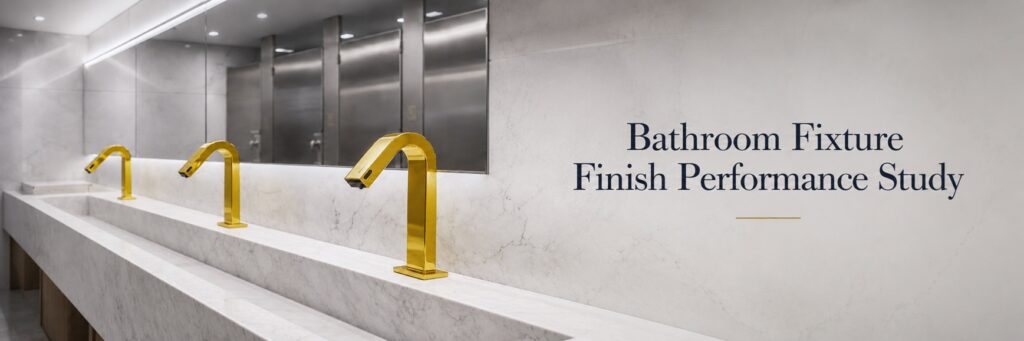
Five questions every finish selection should answer
| Question | Why it matters | Project implication |
|---|---|---|
| What is the substrate? | The base material affects strength, corrosion behavior and repairability. | Review construction, not only the finish name. |
| How is the finish applied? | Different coating and plating systems can respond differently to abrasion and chemicals. | Follow manufacturer cleaning guidance. |
| What will touch it? | Handles and high-contact surfaces experience oils, friction and repeated cleaning. | Prioritize tactile durability at control points. |
| What water reaches it? | Mineral content and droplets can create visible spotting or scale. | Maintenance frequency should inform finish selection. |
| How will it age visually? | Some projects prefer a pristine appearance; others accept evolving patina. | Set owner expectations before approval. |
Gold, brushed gold, matte black, chrome, brushed nickel and bronze can all support a luxury specification, but they create very different relationships with light, stone, wood and cleaning regimes. Material intelligence means selecting the finish that supports the architecture and lifecycle—not simply the finish that is fashionable at the moment.
5. Human Experience: The Bathroom Must Make Sense to the Body
The most advanced bathroom technology fails if the user cannot comfortably reach it, understand it or move around it. Human-centered bathroom design begins with the body: standing reach, seated reach, hand strength, balance, turning, stepping, visual recognition and the sequence in which a person encounters controls and fixtures.
Accessibility guidance is valuable even when a private luxury bathroom is not legally required to meet every commercial accessibility provision. Clear floor space, predictable controls, thoughtful shower entry, handheld spray placement, usable reach ranges and reduced dependence on tight grasping can improve the environment for children, older adults, injured users and guests unfamiliar with the room.
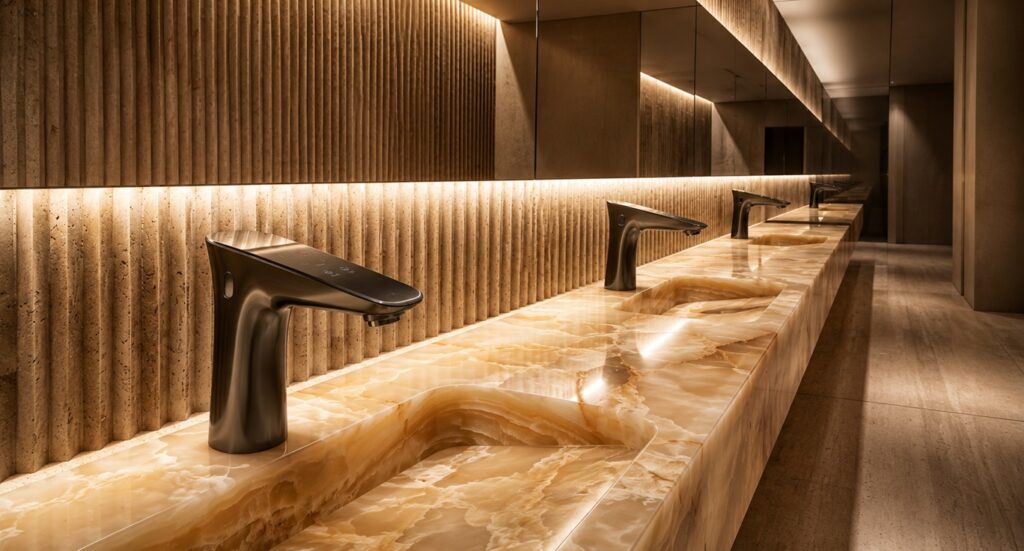
Touchless technology is an interface decision
A sensor faucet is not automatically superior simply because it is electronic. Detection area, response time, shutoff behavior, power architecture, maintenance access and basin geometry all influence the actual experience. When these are coordinated well, touchless operation can make interaction direct and intuitive. The U.S. Access Board notes that motion-activated faucets and dispensers can provide easier access and accommodate a broader range of users.
Vanity height, mirror position and storage create daily ergonomics
The vanity is the bathroom’s most repetitive task zone. Sink depth, counter height, faucet reach, mirror placement, drawer clearance, electrical outlets and lighting should be planned as a single ergonomic composition. BathSelect™ offers a broad Bathroom Vanities & Sinks resource for comparing wall-mounted, freestanding, single- and double-basin configurations.
6. The Hidden Science: Water Quality, Stagnation and Building Operation
In residential bathrooms, water quality may seem separate from design. In hotels, healthcare environments, large residences, multifamily projects and buildings with complex distribution systems, it becomes part of the operational strategy. The CDC identifies showers and sink faucets among devices through which building water can become aerosolized and notes that water management programs are important in many building types.
This does not mean every luxury bathroom requires a complex water-management program. It means designers should understand that low-use branches, dead legs, temperature regimes, maintenance access and commissioning can influence building-water performance. High-end fixtures should be integrated into a plumbing system that is designed to be used, maintained, flushed and serviced.
7. Wellness: Why Water, Heat, Light and Material Feel Different Together
Wellness-oriented bathrooms are often described with words such as spa, serenity and retreat. Those ideas become more useful when translated into physical design decisions. Thermal stability can reduce distraction. Gentle transitions between dry and wet zones improve spatial confidence. Lighting can support different times of day. Quiet controls reduce cognitive load. Warm tactile materials can change perceived comfort. A well-positioned hand shower can make bathing easier. A deep soaking tub can create a completely different posture and sensory experience from a standing shower.
The WELL Building Standard is useful as a broader conceptual reference because its framework treats water, light, thermal comfort, materials, sound and mind as separate but connected environmental concepts. A luxury bathroom is one of the clearest places in architecture where several of these ideas converge within a few square meters.
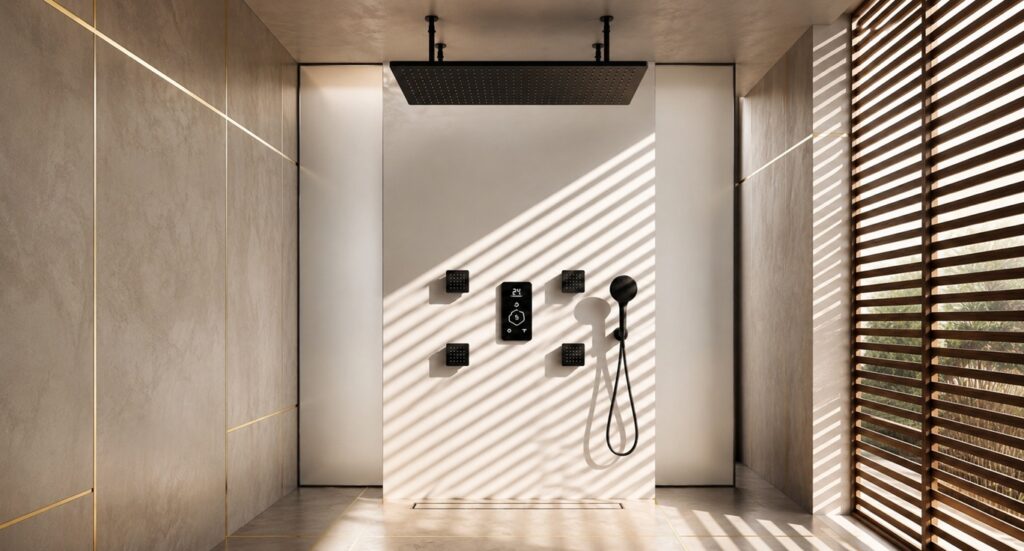
Bathing and soaking create different sensory conditions
A shower is dynamic: moving water, standing posture, changing spray patterns and rapid transitions. A bathtub is more static and immersive, creating a different thermal and ergonomic experience. For hospitality suites and spa-oriented bathrooms, BathSelect™ maintains a dedicated Hospitality Bathtub Series covering freestanding and hydromassage configurations with project-planning considerations such as dimensions, loading, drainage and service access.
8. The Luxury Bathroom as a Coordinated Specification
One of the most common design mistakes is to specify the bathroom in fragments. The architect selects the shower, the interior designer chooses the finish, the electrical designer locates lighting, the plumbing engineer sizes supply, and the contractor resolves conflicts in the field. A stronger process coordinates these decisions before installation.
| System | Coordinate early | Typical failure if isolated |
|---|---|---|
| Shower | Flow, valve capacity, outlets, hot-water demand, drainage | Weak simultaneous performance or unstable temperature |
| Thermal controls | Valve type, maximum setting, commissioning, access | Unpredictable operation or difficult maintenance |
| Lighting | Mirror location, wet-zone rating, controls, daylight, finish reflectance | Glare, poor grooming light or distorted material appearance |
| Vanity | Height, sink, faucet reach, mirror, storage, outlets | Awkward posture, splash or drawer/plumbing conflicts |
| Bathtub | Dimensions, loading, filler reach, drainage, access | Uncomfortable entry, service difficulty or structural conflict |
| Finishes | Lighting, cleaning agents, water chemistry, touch frequency | Premature aesthetic deterioration |
| Accessibility | Clearances, reach, controls, shower entry, handheld location | A beautiful room that is difficult for many people to use |
BathSelect™ Professional Resource Paths
For readers moving from design research into fixture selection, the following BathSelect™ resources connect the concepts in this article to specific bathroom planning categories.
Rainfall, thermostatic, digital, handheld and body-spray configurations for residential, hospitality and commercial planning.
Digital mixing, smart controls, diverters, wiring, commissioning and project-level shower planning.
High-performance shower system configurations organized around premium residential and project applications.
Vanity, sink, storage, mounting and plumbing coordination across contemporary bathroom layouts.
Freestanding, soaking and hydromassage bath planning for premium hospitality and wellness environments.
Central access to shower systems, hospitality fixtures, touchless products and broader architectural bathroom categories.
Independent Professional References
This article is intended as design education, not a substitute for project-specific code review, plumbing engineering or manufacturer installation instructions. The following live professional sources provide deeper guidance on water efficiency, accessibility, thermal control, wellness and building-water management.
Technical FAQ: The Science Behind Luxury Bathroom Design
What makes a shower feel luxurious besides high water flow?
Perceived shower quality is influenced by spray geometry, droplet distribution, nozzle pattern, spray force, coverage, temperature stability and the user’s distance from the outlet. EPA WaterSense performance criteria reinforce the principle that efficiency and satisfactory spray performance should be considered together.
Why are thermostatic or pressure-balancing valves important?
They help manage changes in supply conditions and reduce the risk of unsafe or uncomfortable temperature shifts. The 2024 International Plumbing Code requires qualifying shower valves to use balanced-pressure, thermostatic or combination technologies and to include a means for limiting the maximum setting to 120°F (49°C).
Does a larger rainfall showerhead always require more water?
No. Physical size alone does not define flow rate. Performance depends on the product’s flow characteristics, nozzle design and available pressure. Project teams should review the specified flow rate and valve capacity rather than infer water demand from head dimensions.
How should lighting be coordinated with bathroom finishes?
Review key finishes under lighting conditions similar to the final room. Warm and cool color temperatures, mirror illumination and daylight can change the perceived tone of metals, stone, tile and cabinetry. Lighting and finish approval should therefore be coordinated rather than treated as separate aesthetic decisions.
Are touchless faucets useful for accessible bathroom design?
They can be. The U.S. Access Board notes that motion-activated or touch-free faucets and dispensers can provide easier access and accommodate a broader range of users. Basin geometry, detection range and maintenance access still need to be coordinated.
Why does a multi-outlet shower require early plumbing coordination?
Multiple outlets can increase simultaneous flow demand. The design team should review supply sizing, pressure loss, valve and diverter capacity, hot-water generation, drainage and the intended operating combinations before walls and ceilings are closed.
What should hospitality projects consider beyond fixture appearance?
Hospitality teams should also consider guest intuitiveness, accessibility, cleaning, service access, replacement strategy, hot-water delivery, water management, finish maintenance and how quickly staff can understand and service controls.
How does sustainability fit into luxury bathroom design?
Luxury and efficiency are not opposites. WaterSense and LEED both demonstrate frameworks in which water-use reduction is paired with performance. A strong specification aims to reduce waste while preserving the comfort, control and visual quality expected from a premium bathroom.
Conclusion: The Best Luxury Bathrooms Feel Effortless Because Their Complexity Was Resolved in Advance
A beautifully designed bathroom may appear simple, but that simplicity is usually the result of careful coordination. Water pressure, flow, temperature, drainage, lighting, finish behavior, ergonomics, accessibility and maintenance have all been considered before the user turns a handle or steps under the shower.
That is the deeper science of luxury bathroom design. The objective is not to place the greatest number of features into one room. It is to make every feature support the same experience: water that feels controlled, temperature that feels predictable, light that feels appropriate, materials that feel intentional and controls that make immediate sense to the human body.
BathSelect™ approaches premium bathroom planning through this systems perspective—connecting showers, digital controls, vanities, faucets, bathtubs and finish choices to the architectural environment in which they must perform.
Editorial note: Codes, standards and manufacturer requirements vary by jurisdiction and project. Architects, engineers, contractors and owners should verify current local requirements and product-specific installation documentation before specification or construction.