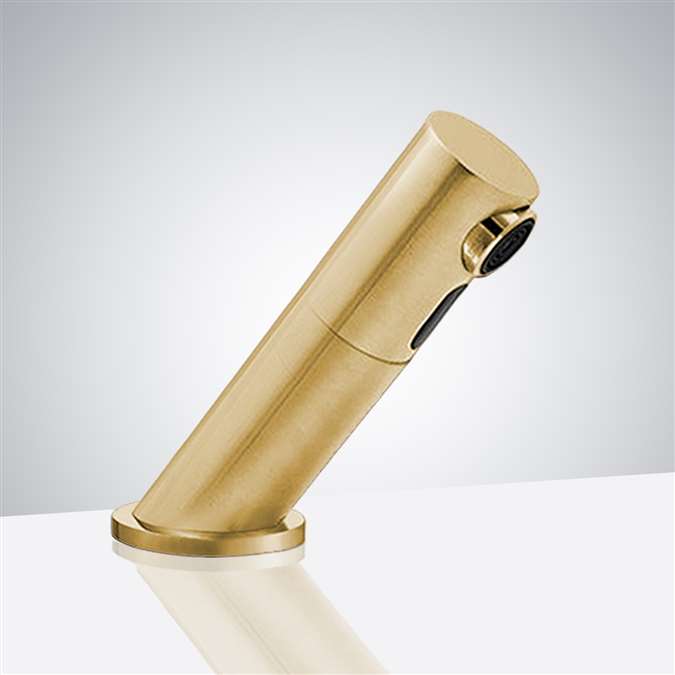
Installed Right, Once: Why Rough-In Tolerances and Torque Specs Decide Whether a Warranty Claim Gets Approved
Most of what fails in a fixture’s first year isn’t a manufacturing defect. It’s a rough-in that was off by a few millimeters, a fitting torqued past spec, or a connection sealed the wrong way — problems engineered out at the factory and reintroduced on-site.
Six articles in this library have covered what happens before a fixture leaves the factory — the alloy, the plating, the flow design, the tolerances, the serviceable cartridge, the spec language that locks all of it in. Installation is the last mile, and it’s the stage most likely to undo everything upstream. A perfectly engineered cartridge, torqued a few extra turns past spec during a rushed install, can crack a seal seat that would otherwise have lasted a decade.
Why rough-in accuracy matters more than it looks like it should
The rough-in is the plumbing groundwork set before finishes go in — supply line locations, drain positions, wall-mount heights — done well before the actual fixture is installed. It’s tempting to treat rough-in dimensions as approximate, since a lot of wall-mounted fixtures have some adjustment built in. But that adjustment range exists to absorb ordinary field variance, not to correct a rough-in that’s meaningfully off. Push a fixture to the edge of its adjustment range to compensate for a rough-in error, and you’ve quietly introduced stress on a connection that was engineered to sit centered, not maxed out — exactly the kind of hidden strain that shows up as a leak eighteen months later, long after the crew has moved to the next project.
Torque: the single most common cause of avoidable failure
Every threaded connection on a fixture — supply line fittings, cartridge retaining nuts, mounting hardware — has a torque specification for a reason. Under-tighten a compression fitting and it weeps under pressure. Over-tighten it, and on a brass fitting that’s often worse: cross-threading, a cracked ferrule, or a distorted valve seat that no amount of correct torque afterward will fix. Hand-tight-plus-a-quarter-turn is a reasonable rule of thumb for many compression fittings, but it’s a rule of thumb, not a substitute for the actual torque spec on the installation instructions — especially on cartridge retaining nuts, where the acceptable range is often narrower than installers assume.
Sealant: the small choice with the biggest downstream effect
Thread tape and pipe dope (paste sealant) aren’t interchangeable, and using the wrong one — or too much of either — is a quiet, common cause of early failure. Over-wrapped tape can build up enough thickness to prevent a fitting from seating fully, leaving a connection that looks tight but isn’t sealed correctly. Excess paste sealant can migrate into a cartridge or valve body during assembly and interfere with moving parts. The right answer is almost always whatever the fixture’s installation instructions specify — which is itself a good argument for keeping IOM (installation, operation, and maintenance) documentation on hand at the job site rather than defaulting to whatever the crew used on the last project.
| Error | Where it shows up | Timeframe |
|---|---|---|
| Rough-in outside tolerance, adjustment maxed out | Stress leak at supply connection | 6–24 months |
| Over-torqued cartridge retaining nut | Cracked seat, drip or bind on handle | Weeks to months |
| Excess paste sealant migrates into cartridge | Sticking or reduced flow | Weeks |
| Under-torqued compression fitting | Slow weep, hidden water damage | Immediate to months |
Before install
Confirm rough-in dimensions against the fixture’s IOM before finishes go in — not after, when correction means opening a wall.
During install
Use a torque wrench or driver on critical connections rather than judging by feel, particularly on cartridge retaining hardware.
Why this is also a warranty issue, not just a performance one
Most fixture warranties exclude damage caused by improper installation — which means an installation error doesn’t just risk a leak, it can void the coverage that was supposed to protect the property from exactly that outcome. For a facility manager overseeing a multi-unit renovation, that makes installation documentation worth treating as seriously as the product spec itself: confirming the installing contractor is actually working from the current IOM, not institutional habit, and that torque-critical connections are verified rather than estimated.
A fixture engineered to last twenty years can still fail in year one — not because the engineering was wrong, but because the install undid it.
The practical takeaway threads back through this entire library: the alloy, the plating, the flow design, and the tolerances only deliver their intended lifespan if the installation respects the numbers they were built to. Rough-in tolerance and torque spec aren’t fine print — they’re the last engineering decision in the chain, just made on-site instead of at the factory.
See how proper installation connects to warranty coverage
Installation is where the warranty terms this library has referenced actually get tested for the first time.