
0.35 vs 0.5 vs 1.0 GPM Commercial Touchless Faucets: Which Flow Rate Should Engineers Specify?
Lower flow does not automatically mean better specification. Commercial touchless faucet flow should be selected around handwashing function, facility water goals, pressure conditions, user expectations and applicable plumbing requirements. This guide compares three commonly considered flow ranges for architects, plumbing engineers and facility teams.
What Changes When GPM Changes?
Strong conservation potential. Best evaluated with the actual outlet technology and expected user experience.
A key public-lavatory reference point and EPA’s current recommended efficiency threshold.
More water delivery, but not the default efficiency target for typical non-private public lavatories.
0.35 vs 0.5 vs 1.0 GPM
| Flow | Primary Advantage | Engineering Concern | Typical Decision Logic |
|---|---|---|---|
| 0.35 GPM | Lowest water volume of the three. | Outlet design and perceived washing performance become especially important. | Consider where aggressive conservation goals justify ultra-low-flow specification. |
| 0.5 GPM | Balances public-lavatory efficiency with practical handwashing. | Pressure compensation and outlet quality still matter. | Strong starting point for many commercial public-restroom designs. |
| 1.0 GPM | Greater water delivery. | Higher consumption per activation period. | Specify only when project conditions justify increased flow. |
Why 0.35 GPM Can Work—And Why It Is Not Automatically Better
A 0.35 GPM outlet reduces water volume by 30% compared with a 0.5 GPM outlet over an equal run time. That is meaningful when multiplied across large restroom portfolios. But specification cannot stop at arithmetic. Spray pattern, pressure compensation, sensing duration and basin geometry influence how the faucet feels in actual use.
For an airport, stadium, university or large office facility, the right question is therefore not “What is the lowest GPM available?” It is “What is the lowest practical flow that delivers acceptable handwashing performance under our operating conditions?”
Touchless Faucets Worth Reviewing for Flow-Rate Planning
The following products illustrate different approaches to commercial flow specification. Product configurations should be reconfirmed before procurement.

Fontana Tivoli Automatic Hands Free Chrome Sensor Faucet
Why it stands out for specification: Fontana’s commercial platform allows the outlet to be selected around project water-flow requirements rather than forcing the designer into one fixed configuration. The manufacturer lists built-in aerator options from 0.5 through 1.5 GPM, adjustable sensing, hardwired/battery capability and optional temperature mixing.
That flexibility makes the Fontana Tivoli Automatic Hands Free Sensor Faucet particularly useful when a design team wants one faucet aesthetic while coordinating different operating requirements across a commercial portfolio.
Explore Fontana Tivoli →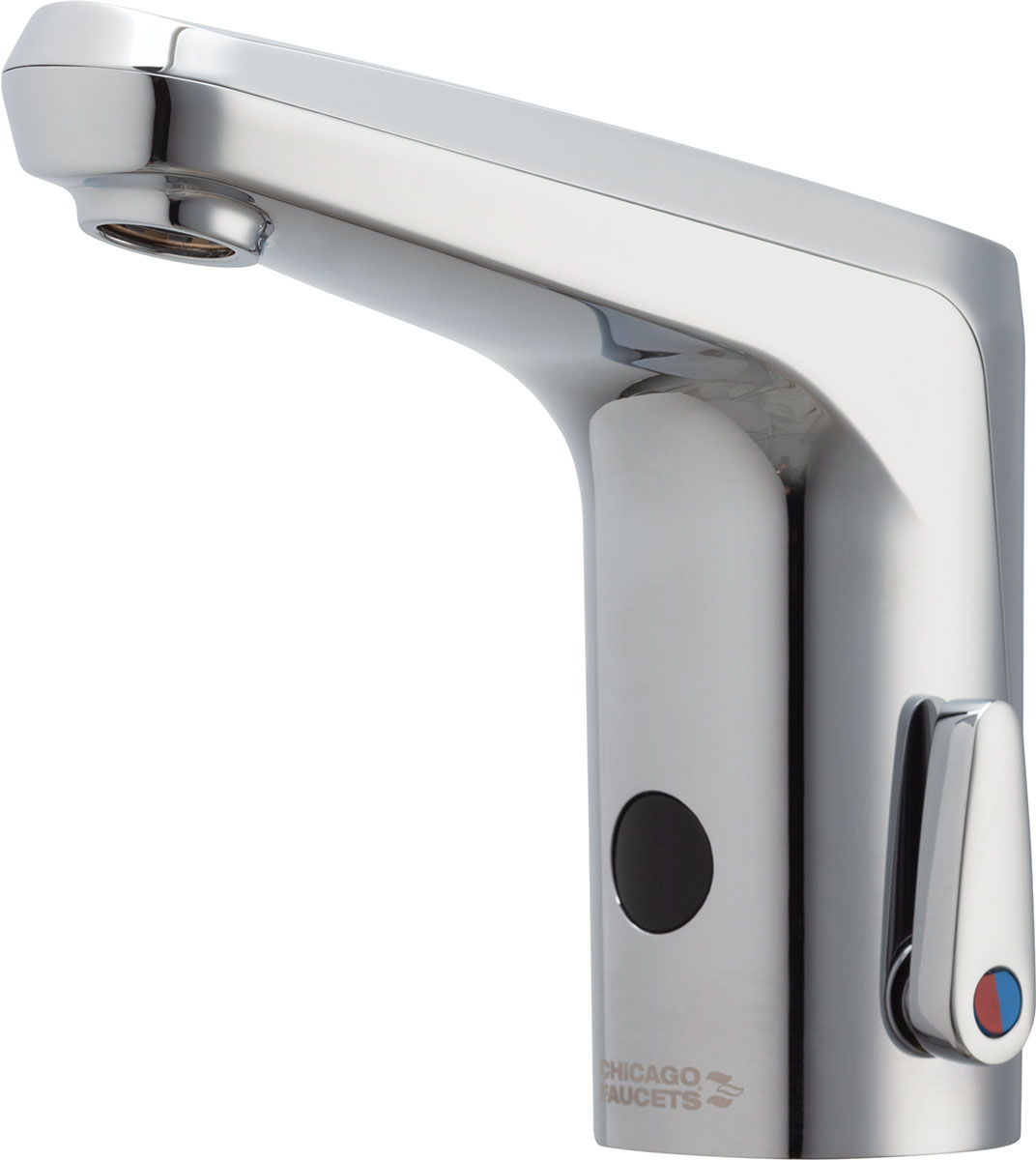
Chicago Faucets E-Tronic® 80
This series is an excellent engineering comparison platform because Chicago Faucets publishes pressure-compensating 0.35 and 0.5 GPM outlets plus 0.5, 1.0 and 1.5 GPM laminar options. AC, DC and long-term power configurations are also available.
Review E-Tronic 80 →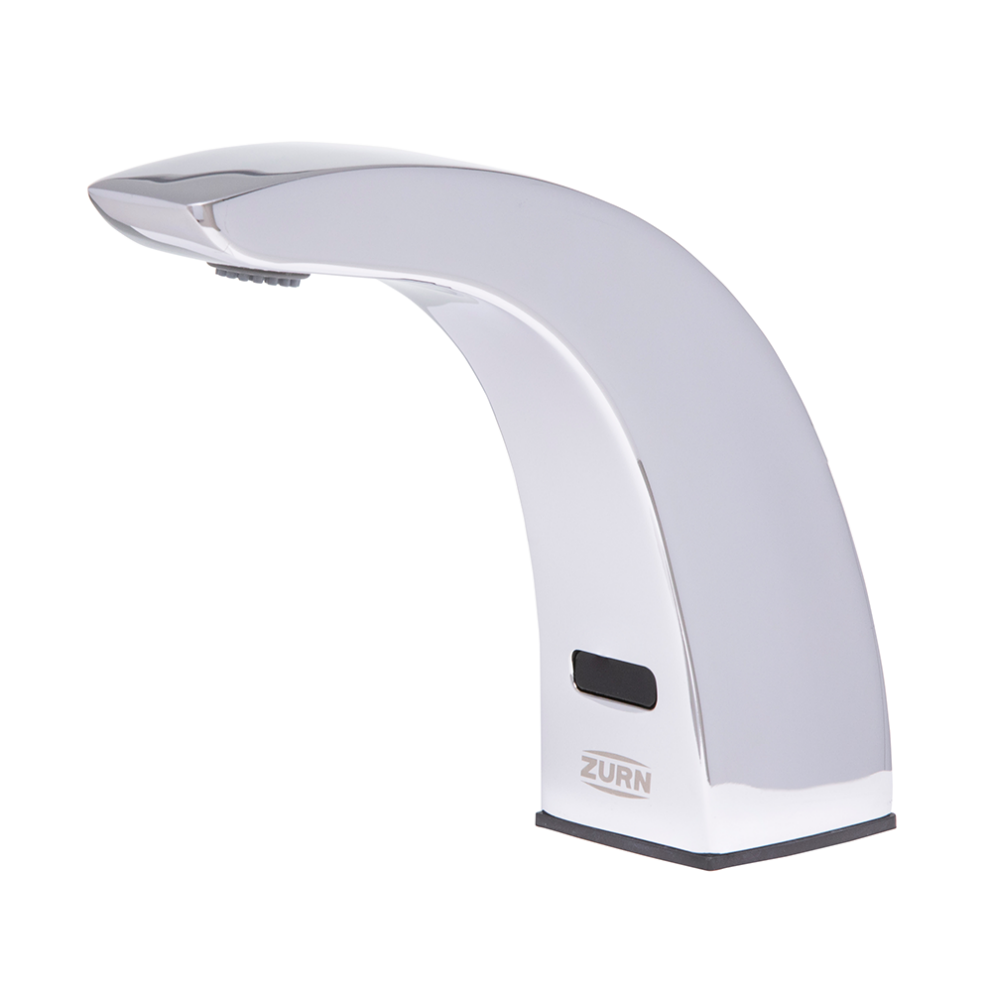
Zurn AquaSense® Gear-Driven Sensor Faucet
Zurn states that the platform ships standard with a high-efficiency 0.5 GPM flow rate, with other rates available. Its gear-driven ceramic cartridge and optional hydropower architecture add lifecycle considerations beyond GPM alone.
Review Zurn AquaSense →Product-image policy: Every displayed image is paired with the identified manufacturer product page. Products without a verifiable image/page relationship are excluded rather than replaced with generic imagery.
Where Each Flow Rate Makes Sense
Airports and transportation: 0.35–0.5 GPM deserves serious evaluation because activation volume compounds rapidly across very high fixture counts.
Office and education: 0.5 GPM provides a logical baseline for public handwashing while still requiring review of pressure, spray pattern and maintenance.
Luxury hotels and premium commercial facilities: public lobby restrooms can still target efficient commercial flow. Guest-room private lavatories are a different application and should not automatically inherit public-lavatory flow assumptions.
Healthcare: flow selection should be coordinated with infection-control objectives, clinical requirements, outlet type and the facility’s plumbing engineering criteria.
GPM Is Only One Line in the Specification
A commercial touchless faucet schedule should also identify pressure-compensating outlet type, sensor range, timeout, electrical source, mixing strategy, service access and applicable certifications. Two faucets labeled “0.5 GPM” can behave differently when outlet geometry and pressure control differ.
Commercial Brands to Include in Specification Research
Commercial Faucet Flow-Rate FAQ
Is 0.35 GPM better than 0.5 GPM?
It uses less water during equal run time, but engineers should also evaluate spray quality, pressure behavior and user acceptance.
What does EPA recommend for public lavatories?
EPA currently identifies 0.5 GPM or less as efficient for faucets installed in non-private public toilet facilities.
Can a 0.5 GPM public faucet carry WaterSense?
Not under the current WaterSense program. Public lavatory faucets are presently an ineligible product category.
Does lower flow reduce sensor reliability?
Flow rate and sensing are separate design parameters. Sensor reliability depends on detection and control architecture rather than GPM alone.
Why specify a pressure-compensating outlet?
It is intended to control flow more consistently as supply pressure varies, supporting predictable fixture performance.
Should every restroom in a building use identical GPM?
Not necessarily. Public, private, clinical and specialty spaces can have different functional and regulatory requirements.
Engineering References
U.S. EPA — Bathroom Faucet Efficiency
Current EPA guidance distinguishing public and private lavatory faucet efficiency.
U.S. EPA — Ineligible WaterSense Products
Confirms public lavatory faucets are not currently eligible for WaterSense labeling.
U.S. Department of Justice — 2010 ADA Standards
Federal accessibility reference for commercial restroom design coordination.
American Society of Plumbing Engineers
Professional technical resource for plumbing engineering and specification practice.
Start at 0.5 GPM—Then Engineer the Exception
For a typical non-private commercial lavatory, 0.5 GPM is a defensible efficiency starting point. Move toward 0.35 GPM when project water goals and outlet performance support it. Move above 0.5 GPM only when the application provides a clear functional reason.
Explore Fontana Tivoli Touchless Faucet →Independent editorial disclosure: CommercialTouchlessFaucets.com provides informational engineering analysis. Verify current manufacturer data, codes, certifications and authority-having-jurisdiction requirements before final specification or procurement.
Continue Your Commercial Flow-Rate Research
Selecting 0.35, 0.5 or 1.0 GPM requires more than comparing water volume. Engineers and facility teams should consider outlet technology, pressure stability, activation duration, basin geometry, user expectations and the operating conditions of each restroom.
Maximum conservation potential with greater emphasis on spray quality and user acceptance.
A practical starting point for many non-private commercial lavatory applications.
Greater water volume that should be supported by a clear project-specific requirement.
Engineering principle: specify flow rate and outlet performance together. Two faucets carrying the same GPM rating can produce different washing and splash-control results because of pressure compensation, spray geometry and basin coordination.
Related Water-Efficiency and Specification Guides
These BathSelect Blog resources expand the decision beyond GPM by examining automatic shutoff, commercial performance, power systems, facility planning and fixture selection.
Do Automatic Faucets Actually Save Water?
Examine how automatic shutoff, activation duration, sensing quality, maintenance and user behavior influence actual water savings.
Review Evidence Efficient Restroom DesignReducing Water Waste with Sensor Faucets
Coordinate sensor timing, aerator selection, stream placement, sink dimensions and maintenance access for efficient operation.
Efficiency Guide Commercial TechnologyCommercial Touchless Faucets Guide
Explore current touchless faucet concepts, dependable sensor performance and low-maintenance power configurations.
Commercial Guide AEC SpecificationCommercial Sensor Faucet Technical Review
Review automatic faucet performance, commercial suitability and specification considerations for architects and designers.
Technical Review Fixture SelectionChoosing a Commercial Sensor Faucet
Evaluate construction, flow control, hygiene, ADA considerations, installation requirements and service accessibility.
Selection Guide High-Traffic FacilitiesPlanning High-Use Commercial Restrooms
Coordinate faucet quantity, user circulation, sink spacing, maintenance, durability and accessibility in busy facilities.
Planning Guide Power and MaintenanceCommercial Self-Powered Sensor Faucets
Understand how water-powered configurations affect electrical planning, battery replacement and lifecycle maintenance.
Power Options Technical QuestionsTouchless Bathroom Faucet FAQ
Find practical answers covering faucet operation, sensing, power, cleaning, maintenance and installation.
View FAQGPM Is Only One Specification Line
A complete commercial faucet schedule should also identify the outlet type, operating pressure, sensor range, timeout, power source, mixing strategy, spout reach, basin relationship, maintenance access and applicable project certifications.
Explore Related BathSelect Faucet Resources
Move from engineering research to commercial faucet configurations, accessible options and installation documentation.