
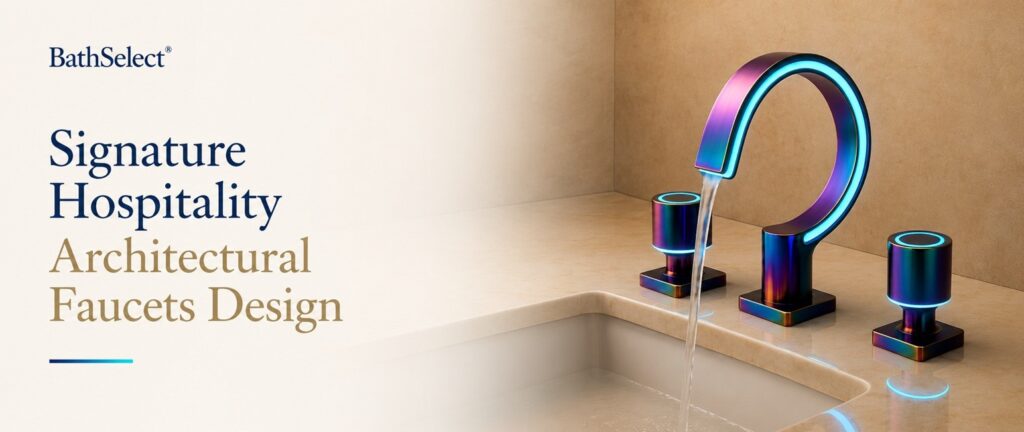
2026 AEC / MEP Specification Guide
Commercial Specification
Choosing between polished nickel, brushed nickel and polished chrome
requires more than comparing three metallic colors. Reflectivity, undertone, water-spot
visibility, fingerprint visibility, cleaning frequency, fixture construction and
coordination with surrounding materials all influence how a bathroom finish performs
after installation. This BathSelect™ review combines technical finish guidance with
real customer and professional project experiences involving brushed nickel and
polished chrome bathroom fixtures.
All three finishes can work beautifully on high-quality bathroom fittings. The better
choice depends primarily on whether the design calls for warm polished
reflectivity, softer satin texture, or crisp mirror-like brightness.
A highly reflective metallic finish generally selected when a bathroom needs a warmer
and more decorative alternative to polished chrome.
A directional satin finish that reduces glare and can make fingerprints, dried droplets
and minor handling marks less visually obvious.
A bright mirror-like finish that strongly reflects surrounding light and emphasizes
modern fixture geometry.
Polished nickel is chosen when designers want a bright metallic surface without
the distinctly cool visual impression associated with many polished chrome fixtures.
It can complement marble, warm stone, decorative cabinetry and transitional interiors.
Because polished nickel reflects light strongly, fingerprints, dried droplets and
surface residue may remain visible until the fitting is wiped. Buyers choosing the
finish should expect to maintain the polished appearance they selected it for.
The most important difference between polished nickel and brushed nickel is the way
their surfaces interact with light. Polished nickel emphasizes reflection. Brushed
nickel intentionally diffuses it.
Polished nickel works well when metallic brilliance is intended to become part of the
bathroom design. Decorative faucets, tub fillers and exposed shower fittings can
benefit from its brighter presentation.
Brushed nickel is often preferred where frequent handling or everyday bathroom use
makes visual maintenance important. Its satin texture can make fingerprints and light
spotting less prominent between cleanings.
These BathSelect customer and professional project reviews were selected because they
discuss finish appearance, coordination, cleaning exposure, fixture construction,
sensor performance or long-term bathroom use—not simply overall satisfaction.
Both residential and professional feedback specifically references brushed nickel
coordinating successfully with lighting, surrounding fittings and bathroom design.
That is valuable evidence beyond simple color preference.
Professional reviews discuss frequent cleaning and high-use environments. This supports
evaluating finish performance under actual maintenance conditions rather than only
judging appearance in product photography.
Reviewers repeatedly mention brass construction, sensor performance, installation and
flow behavior alongside surface finish. The decorative finish should never be evaluated
in isolation from the fitting underneath it.
Polished chrome and polished nickel are both reflective, which makes this comparison
more subtle than polished nickel versus brushed nickel. The biggest difference is
usually the character and visual temperature of the reflection.
Chrome produces a crisp, highly reflective surface that works particularly well with
glass, white tile, cool stone, contemporary cabinetry and minimalist bathroom
architecture.
Polished nickel can provide similar visual brilliance while introducing a warmer
metallic character. It is often considered when the bathroom uses marble, warm stone,
decorative cabinetry or transitional detailing.
The following reviews provide real-use evidence for the polished side of the comparison,
including standard chrome fixture appearance, commercial sensor use and complete
chrome rainfall shower-system performance.
BathSelect’s chrome reviews repeatedly highlight three characteristics that matter
when evaluating highly polished bathroom finishes: visual brightness,
coordination with surrounding bathroom materials and the condition of the surface
after repeated use.
Warm illumination can emphasize the warmer character associated with polished nickel
and brushed nickel. Chrome may appear more contrasting against warm stone, wood and
warmer tile palettes.
Polished chrome often appears particularly crisp under cooler light. Polished nickel
can retain high reflectivity while presenting a slightly warmer metallic impression.
Daylight often makes differences in reflectivity, brushing direction and undertone
easier to evaluate. Finish samples should ideally be viewed in the actual bathroom
before final specification.
No decorative finish prevents minerals from being left behind when hard water dries
on the fixture. The practical difference is primarily how visible those
deposits appear.
Because the surface is reflective, fingerprints, dried droplets and mineral residue
can interrupt the polished appearance. Regular gentle wiping helps preserve the
high-reflection finish.
Its directional satin texture can disguise light fingerprints, spotting and minor
handling marks. This does not mean deposits are absent; they may simply be less
visually prominent.
Both polished surfaces reward routine wiping. Chrome’s crisp mirror-like surface can
make spotting especially noticeable against a clean reflective background. Polished
nickel may present a warmer reflection, but fingerprints and residue can still remain
visible because the surface is polished rather than brushed.
You want a reflective luxury finish with a warmer metallic character, especially in
bathrooms using marble, warm stone, decorative cabinetry or transitional styling.
The bathroom receives frequent use, you prefer softer reflectivity, or fingerprints
and routine handling should remain less visually prominent between cleanings.
You want maximum crispness and reflection, particularly with glass, white tile,
contemporary cabinetry and minimalist bathroom architecture.
Evaluate brass or stainless construction, cartridge quality, thermostatic requirements,
connections and expected duty cycle. Decorative finish alone is not an engineering
specification.
Electroplated, brushed and PVD surface treatments can behave differently. Where finish
durability matters, review the actual product specification rather than relying on
finish color alone.
Hard water, disinfectants, cleaning frequency and abrasive products can influence
surface appearance. Maintenance expectations should be considered before installation.
Nickel undertones and brushing patterns can vary between manufacturers. When very close
finish coordination is required, samples or products from the same finish family can
reduce mismatch risk.
No. Polished nickel has a reflective surface, while brushed nickel uses directional
texture to reduce reflection and create a softer satin appearance.
Polished nickel is generally selected for a warmer metallic character. Polished chrome
typically appears cooler, brighter and visually crisper.
Yes, fingerprints and dried water marks can be visible because polished nickel is a
reflective surface. Routine gentle wiping helps maintain its appearance.
Its directional texture can make light water spots less visually noticeable than on
highly reflective surfaces. Mineral deposits can still form and should still be cleaned.
Polished chrome is strongly associated with contemporary and minimalist bathrooms.
Polished nickel can also work in modern interiors when a warmer or more decorative
metallic character is preferred.
Yes, but the contrast between a reflective and satin surface should look intentional.
Repeating each finish elsewhere in the bathroom can help the combination feel deliberate.
Yes. Its reflective but warmer character can work particularly well with premium
residential, five-star hospitality, marble-rich and transitional bathroom interiors.
Brushed nickel is usually more visually forgiving between cleanings because its texture
reduces the visibility of fingerprints and minor spotting. Actual care requirements
depend on the manufacturer’s finish system.
Not directly. Water pressure, flow, temperature control and valve performance depend
on fixture engineering, plumbing conditions and installation rather than decorative
finish color.
Construction quality, valve or cartridge design, coating quality, installation,
water conditions, serviceability and maintenance can all have a greater effect on
long-term ownership than finish selection alone.
This finish comparison combines BathSelect customer-review records with technical and
design analysis of polished nickel, brushed nickel and polished chrome bathroom
fixtures. Customer reviews were selected where the underlying record discussed
finish appearance, fixture coordination, cleaning exposure, construction,
installation, water delivery, durability or long-term use.
The customer database reviewed for this article does not contain reviews that
explicitly identify their purchased finish as polished nickel. For that reason,
no brushed nickel or polished chrome customer quotation has been relabeled as a polished
nickel ownership experience. Polished nickel is evaluated separately through finish,
design and maintenance analysis.
Reviewer metadata is displayed only where available in the underlying BathSelect review
record. If an individual review does not provide a profession, company, city, state or
province, the corresponding field is displayed as N/A. Professional
credentials or affiliations are not created simply to increase the perceived authority
of a review.
Product finish should also be evaluated together with base material, plating or coating
process, cartridge and valve quality, water conditions, cleaning products, installation
and manufacturer maintenance recommendations. These variables can have a greater
influence on long-term bathroom-fixture performance than decorative finish alone.
Polished Nickel vs Brushed Nickel vs Polished Chrome: Bathroom Fixture Finish Reviews
Polished Nickel vs Brushed Nickel vs Polished Chrome: Quick Comparison
Polished Nickel vs Brushed Nickel vs Polished Chrome
Evaluation
Polished Nickel
Brushed Nickel
Polished Chrome
Surface Character
Highly polished
Directional satin texture
Highly polished / mirror-like
Visual Temperature
Typically warmer
Warm to neutral
Typically cooler
Reflectivity
High
Lower
Very high
Fingerprint Visibility
More noticeable
Generally less noticeable
More noticeable
Water Spot Visibility
Visible on polished surface
Texture can disguise light spotting
Often highly visible
Design Character
Refined • Decorative • Transitional
Warm • Transitional • Contemporary
Modern • Minimalist • Contemporary
Daily Visual Maintenance
Regular wiping beneficial
More forgiving between wipe-downs
Regular wiping beneficial
Primary Advantage
Warm polished luxury
Softer low-glare practicality
Crisp reflective brightness
What Is Polished Nickel?
Reflective With a Warmer Character
Polished Surfaces Require Visual Upkeep
Polished Nickel vs Brushed Nickel: What Is the Difference?
Polished Nickel — Statement Finish
Brushed Nickel — More Forgiving Surface
Verified BathSelect™ Brushed Nickel Customer Reviews


What the Brushed Nickel Reviews Tell Us
Finish Coordination Matters
Cleaning Conditions Matter
Construction Still Matters More
Polished Chrome vs Polished Nickel
Polished Chrome
Polished Nickel
Verified BathSelect™ Polished Chrome Customer Reviews


What Chrome Customer Reviews Add to the Polished Chrome vs Polished Nickel Comparison
How Lighting Changes Polished Nickel, Brushed Nickel and Polished Chrome
Warm Bathroom Lighting
Cool White Lighting
Natural Daylight
Polished Nickel vs Brushed Nickel for Water Spots and Fingerprints
Polished Nickel
Brushed Nickel
Polished Chrome vs Polished Nickel for Daily Maintenance
Which Bathroom Finish Should You Choose?
Choose Polished Nickel If…
Choose Brushed Nickel If…
Choose Polished Chrome If…
What Architects, Designers and Contractors Should Specify Beyond Finish
Base Material & Valve Construction
Finish Process
Cleaning Environment
Fixture Coordination
Polished Nickel vs Brushed Nickel vs Polished Chrome FAQs
Is polished nickel the same as brushed nickel?
Is polished nickel warmer than polished chrome?
Does polished nickel show fingerprints?
Does brushed nickel hide water spots better?
Which is more modern: polished nickel or chrome?
Can polished nickel and brushed nickel be mixed?
Is polished nickel good for luxury bathrooms?
Which finish is easiest to keep looking clean?
Does finish affect faucet or shower performance?
What matters more than finish?
Continue Your BathSelect™ Finish Research
BathSelect™ Customer Review Methodology & Editorial Transparency