Faucets Of Different Types

Types of Bath Faucets
Nowadays, customers are looking for faucets that look appealing at same time practical for their homes. Bathroom faucets come in different types, including functions, installation methods, finishes and styles while not all faucet types work with every sink basin, so it’s important to consider the right options for the right choice. Bath faucets come in 3 different categories: Faucets Finishes; Faucet Handel; and Faucet Hole. They are outlined and explained below:Faucets Finishes:
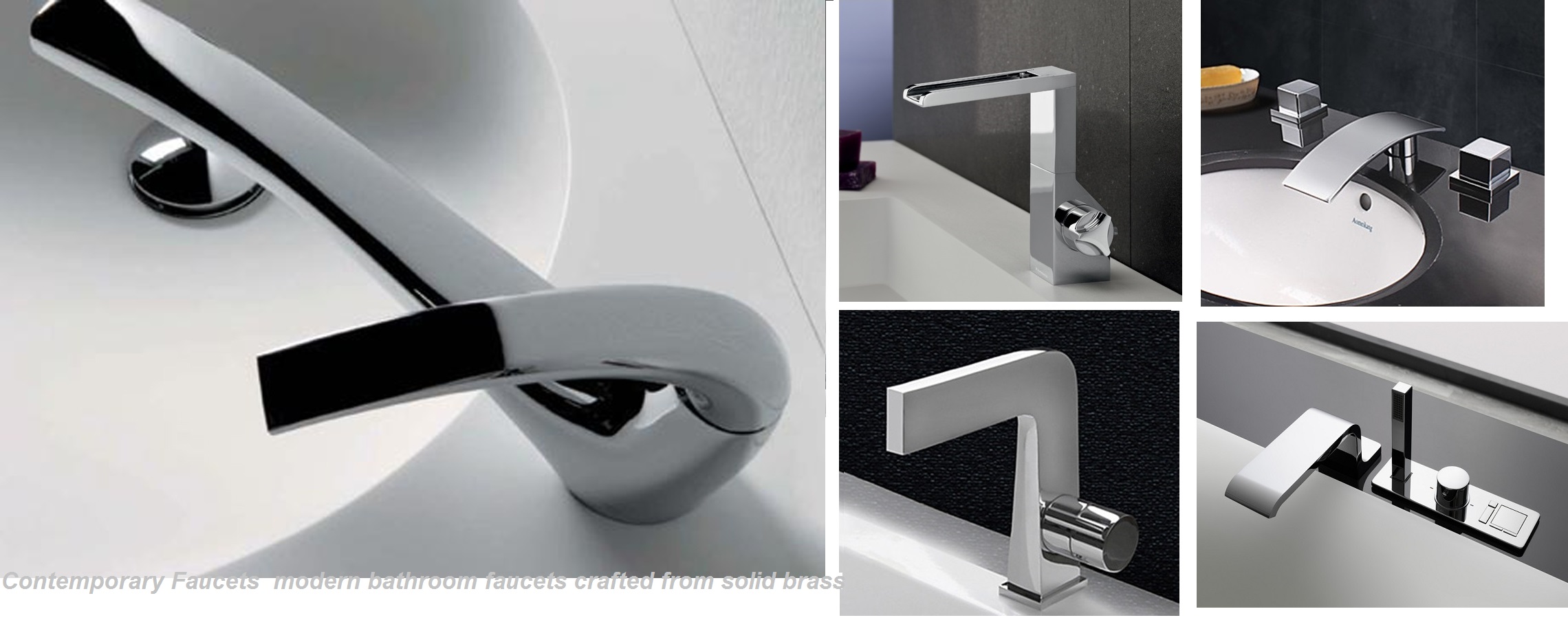
 Faucets are available in many finishes and colors including the venetian bronze; chrome; Brass; Brushed Nickle; black faucets; rose gold, brushed gold, white and oil rubbed bronze faucets.
Although faucet finishes seems to be the basics but there are more finishes than the normal basics. Will outline first the basic finishes:
Faucets are available in many finishes and colors including the venetian bronze; chrome; Brass; Brushed Nickle; black faucets; rose gold, brushed gold, white and oil rubbed bronze faucets.
Although faucet finishes seems to be the basics but there are more finishes than the normal basics. Will outline first the basic finishes:
- Chrome Faucets
- Bronze Faucets
- Brushed Nickel Faucets
- Satin Nickel Faucets
- Pewter Faucets
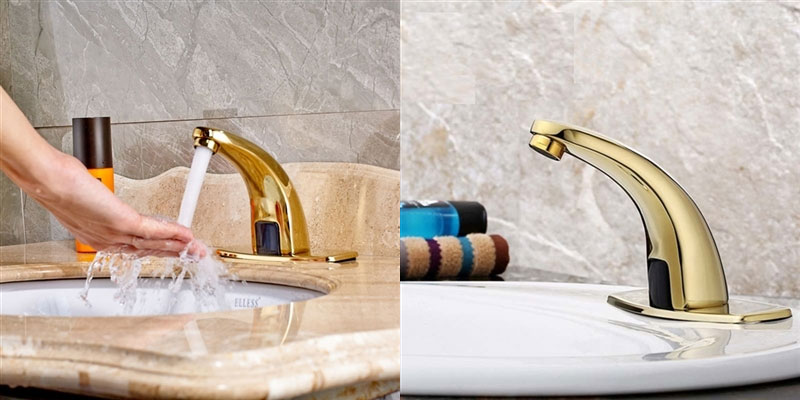
- Gold Faucets
- Rose Gold Faucets
- White Faucets
- Antique Faucets
- Black Faucets
Browse other Articles
Details: Junoshowers 67” Free Standing Acrylic Bathtub Floor Tub Filler
2024 Customer Review of Shower Mixer Valves
The Lazy DoctorSal Style Faucets
Types of Bathroom Faucets & Valves
How to Choose the Best Sensor Faucet for Your Commercial Project
Kraus Shower Set Installation Instructions
Best Matte Black Bathroom Fixtures Brands
Tools You Need for Installation
Best Smart and Digital Showers
5 Myths About Shower Wall Panels
Shower Massage Panels in Oil Rubbed Bronze Finish: The Sleek Look
Faucet Installation Instructions
What Are Eco-Friendly Shower Heads?
Selection & Installation Process for Bathroom Shower Fixtures
ADA Commercial Faucets and ADA Sensor Faucets: Best Savings
Bathroom with Dark Bronze Shower Heads
Brass: Shiny polished brass bathroom faucets look great in a traditional bathroom. Those light golden color lends a formal look to the bath. Brass also may come in unpolished, antique styles. Brass finishes normally recall classical, hand-formed, and naturally aged hardware in any shower. Brushed nickel: Like chrome, brushed nickel basin faucet are perfect for a modern bathroom. Brushed nickel has a warm, soft appearance that looks classic against white and coordinates well with other bathroom fixtures. They share the same silvery hue, but brushed nickel can look a bit warmer than chrome. Faucets with a traditional bronze finish have a brushed, rich texture. Oil-rubbed bronze finishes are also available for a darker textured faucet. Usually achieved through powder coating, oil-rubbed bronze finishes consist of a dark brown-black color with copper highlights, a nice contrast to lighter bathroom surroundings. Customers who like oil rubbed bronze faucets because they have been known to have a long life expectancy compared to most types of bathroom faucets, these taps have reputation of long life durability and maintenance free. Other options in bronze finishes include mocha and medium bronze.Top 23 Faucet Brands
- Kohler
- Moen
- Delta Faucet
- FontanaShowers
- American Standard
- Grohe
- BathSelect
- Hansgrohe
- TOTO
- Brizo
- JunoShowers
- Gerber Plumbing Fixture
- Jacuzzi
- Riobel
- Speakman
- Sloan
- Danze
- Rubinet
- Waterworks
- Rohl
- Fresca
- Ferguson
- Signature Hardware
Types of Bath Faucets & the Different Applications
 Faucet Handel: Faucets come in Single-Lever Faucets; Double-Handle Faucets;
Faucet Mounting: Deck Mount Faucet or Wall-Mount Faucets; Centered Faucets; or widespread Faucet. center-set or single-hole.
You will need to consider the following when choosing your faucets:
Faucet holes: If you’re replacing an existing faucet in your bathroom, be sure that the deck of the sink has at least as many mounting holes as is needed to fit/configure with the new faucet. If you have an extra hole, you can fill it with a plug usually most faucets comes with mounting plate so it will cover it, but on the other hand it is going to be difficult to drill new hole. Single-handle faucets (with an integrated handle and spout) need one hole for the handle/spout piece and may require a separate hole for a built-in soap dispenser. Traditional faucets with separate hot and cold taps require three holes for the taps and spout .
Faucet Handel: Faucets come in Single-Lever Faucets; Double-Handle Faucets;
Faucet Mounting: Deck Mount Faucet or Wall-Mount Faucets; Centered Faucets; or widespread Faucet. center-set or single-hole.
You will need to consider the following when choosing your faucets:
Faucet holes: If you’re replacing an existing faucet in your bathroom, be sure that the deck of the sink has at least as many mounting holes as is needed to fit/configure with the new faucet. If you have an extra hole, you can fill it with a plug usually most faucets comes with mounting plate so it will cover it, but on the other hand it is going to be difficult to drill new hole. Single-handle faucets (with an integrated handle and spout) need one hole for the handle/spout piece and may require a separate hole for a built-in soap dispenser. Traditional faucets with separate hot and cold taps require three holes for the taps and spout .
Types of Bath Faucets: the installation method
Faucets can be installed as single hole, or widespread faucets that have a spout with separate hot and cold water handles. All pieces appear to be separate. Widespread faucets are available from 6-inch to 16-inch drillings for three-hole predrilled installation basins. Center-set faucets (mini-widespread) are made for 4-inch predrilled with three-hole installation basins. They combine a spout and valves on a single base unit. Center-set faucets may have a single-handle mixing lever or two handles mounted onto a 6-inch plate. Single-hole faucets may have a single-handle mixing lever, two handles or may be touchless or touch-activated. Some single-hole faucets have an optional cover plate for predrilled 4-inch-drill installations. Wall-mounted taps are available for above-the-counter and freestanding basins that require a long spout for extended reach. Wall-mounted taps require a separate wall-mounted valve and drain for installation. Make sure the spout is long enough for adequate basin clearance.

 Here are few notes related to faucets you should consider in your selection process: Leaky taps is now a thing of the past with the latest top-notch technology valves and tough finishes are now common on all. Although side handles are harder to use, while single-handle faucets are easier to use, especially if your hands aren’t clean and you’re trying not to dirty the handle. Most sinks come with pre mounting holes drilled for faucets.
If you’re not changing the sinks, then diffenitly you will need to match what you have or get a base plate to cover any extra holes. It’s not a good idea to try to drill any additional holes in an existing sink since it may ruin your sink . Straight-spout models are compact and often inexpensive, but you might need to move the faucet to fit a big pot under it. Gooseneck models have higher clearances, but you need to determine your sink shape since they can cause splashing if your sink is shallow.
Always in your faucet selection process think about installation and repair, while replacing a faucet and a sink at the same time is easier because the faucet can be installed in the sink or counter before the sink is put in place. Fittings that can be tightened with a screwdriver also streamline installation. Long water-supply hoses let you make connections lower in the sink cabinet, where tools are easier to use. Though most faucets are guaranteed not to leak, if yours does, the manufacturer will give you only the replacement part. It’s up to you to install it. Better valves and tougher finishes are now common on all these faucets.
Here are few notes related to faucets you should consider in your selection process: Leaky taps is now a thing of the past with the latest top-notch technology valves and tough finishes are now common on all. Although side handles are harder to use, while single-handle faucets are easier to use, especially if your hands aren’t clean and you’re trying not to dirty the handle. Most sinks come with pre mounting holes drilled for faucets.
If you’re not changing the sinks, then diffenitly you will need to match what you have or get a base plate to cover any extra holes. It’s not a good idea to try to drill any additional holes in an existing sink since it may ruin your sink . Straight-spout models are compact and often inexpensive, but you might need to move the faucet to fit a big pot under it. Gooseneck models have higher clearances, but you need to determine your sink shape since they can cause splashing if your sink is shallow.
Always in your faucet selection process think about installation and repair, while replacing a faucet and a sink at the same time is easier because the faucet can be installed in the sink or counter before the sink is put in place. Fittings that can be tightened with a screwdriver also streamline installation. Long water-supply hoses let you make connections lower in the sink cabinet, where tools are easier to use. Though most faucets are guaranteed not to leak, if yours does, the manufacturer will give you only the replacement part. It’s up to you to install it. Better valves and tougher finishes are now common on all these faucets.